
Most heating equipment makes heat. A heat pump does something more interesting: it moves heat that already exists. That distinction is why a single heat pump can cut a building’s heating electricity use by up to 75% compared to electric resistance heating (U.S. Department of Energy), and it’s why the technology is showing up in more residential and commercial installs every year. Understanding the mechanics matters whether the job is sizing a new system, explaining the equipment to a homeowner, or troubleshooting a call.
The Core Principle: Moving Heat, Not Making It
Heat naturally travels from warmer areas to cooler ones. A heat pump uses refrigerant and a compressor to reverse that direction on demand. In winter, it pulls heat from outdoor air (even cold air contains usable heat energy) and delivers it inside. In summer, it runs the cycle backward, extracting heat from indoor air and rejecting it outdoors.
The hardware that makes this possible has four main components:
- Evaporator coil: refrigerant absorbs heat from a heat source (outdoor air, ground, or water) and evaporates into a low-pressure gas
- Compressor: raises the pressure and temperature of the refrigerant gas
- Condenser coil: high-pressure refrigerant releases its heat to the delivery medium (indoor air or a hydronic loop), then condenses back to liquid
- Expansion valve (TXV or similar): drops pressure before the refrigerant returns to the evaporator, completing the cycle
Switching between heating and cooling modes is handled by a reversing valve. In heating mode, the outdoor coil acts as the evaporator and the indoor coil acts as the condenser. Flip the valve, and the roles swap.
Types of Heat Pumps
The heat source determines how the system is categorized. Each type has a different performance profile, installation requirement, and cost structure.
Air-Source Heat Pumps (ASHP)
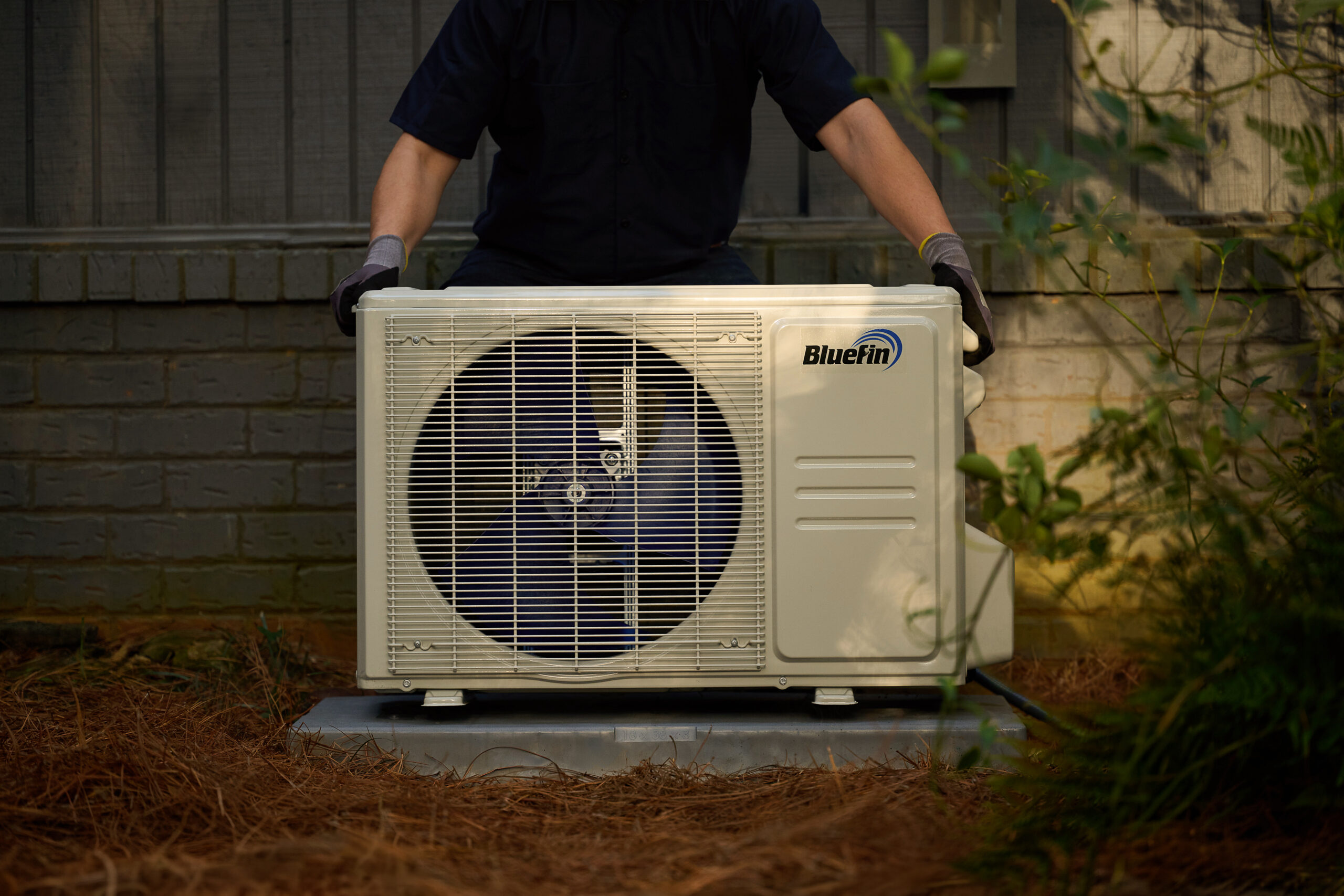
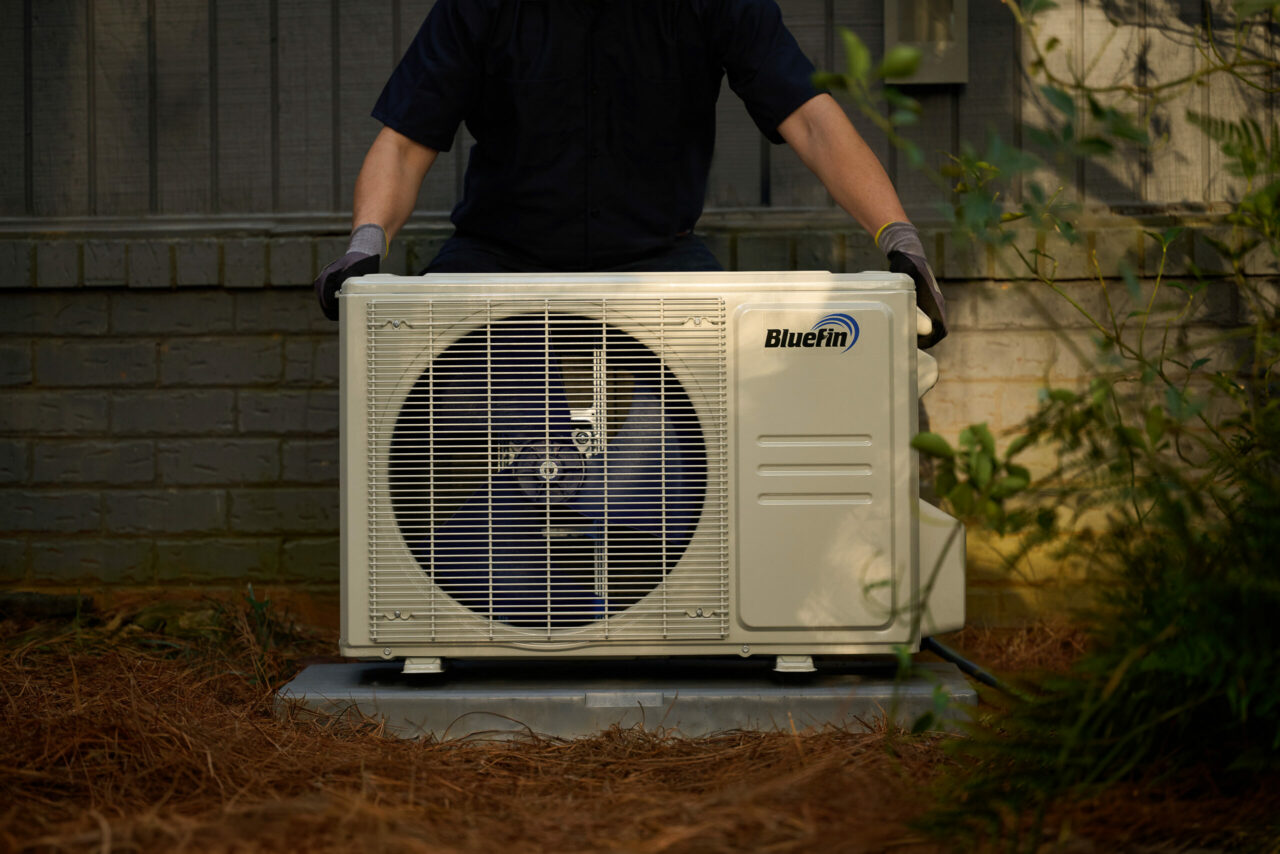
Air-source systems are the most common type. The outdoor unit exchanges heat with ambient air. Ducted systems connect to existing ductwork like a conventional split system. Ductless mini-split variants eliminate ducts entirely: one outdoor condenser connects to one or more indoor air handlers via a refrigerant line set and low-voltage control wiring. Mini-splits are the go-to retrofit for structures without ductwork and for zone-by-zone temperature control in multi-room buildings. Browse SupplyHouse’s full mini-split lineup at supplyhouse.com/Mini-Split-Air-Conditioners.
Standard air-source heat pumps begin losing efficiency when outdoor temps drop below 25°F to 30°F. Cold-climate models, designated under the ENERGY STAR Cold Climate label, are engineered to maintain at least 1.75 COP and 70% heating capacity at 5°F. For more detail on sizing and selecting a ductless system, see How to Choose the Right Mini-Split System on this blog.
Ground-Source (Geothermal) Heat Pumps
Ground-source systems exchange heat with the earth rather than outdoor air. Underground loop temperatures stay relatively stable year-round (typically 45°F to 75°F depending on geography), so efficiency doesn’t swing with outdoor weather the way air-source systems do. Installation costs run several times higher than air-source, but payback periods of 5 to 10 years are common depending on local energy costs, and ground loops carry an estimated service life of 50+ years (DOE).
Heat Pump Water Heaters (HPWH)
Heat pump water heaters apply the same refrigeration cycle to domestic hot water production. Rather than generating heat with electric resistance elements, the unit draws heat from surrounding air and transfers it to the tank. Units like the A.O. Smith Voltex series and Rheem ProTerra models achieve Energy Factors (EF) above 3.5, representing a significant reduction in water heating electricity compared to conventional electric tanks. Full selection available at supplyhouse.com/Heat-Pump-Water-Heaters.
Dual-Fuel (Hybrid) Systems
A dual-fuel system pairs an air-source heat pump with a gas furnace. The heat pump handles the majority of the heating load in mild to moderate temperatures. When outdoor temps drop to the point where the heat pump’s efficiency falls, a control switches over to the gas furnace automatically. Both systems share the same ductwork. For regions with cold winters and existing gas infrastructure, this is a practical way to capture heat pump efficiency without sacrificing reliability during extreme cold.
How Heat Pump Efficiency Is Measured
Because heat pumps handle both heating and cooling, two separate ratings define their efficiency. The Department of Energy updated testing procedures in January 2023 to better reflect real-world installed conditions, adding external static pressure to test procedures. The new metrics use SEER2 and HSPF2 designations.
| Rating | What It Measures | Federal Minimum (Split System) | ENERGY STAR Threshold |
| SEER2 | Cooling efficiency over the season (BTU output / watt-hours consumed) | 14.3 SEER2 | 15.2 SEER2 |
| HSPF2 | Heating efficiency over the season (BTU output / watt-hours consumed) | 7.5 HSPF2 | 8.1 HSPF2 (package); 8.5 HSPF2 (mini-split) |
| COP | Heating efficiency at a fixed test condition (ratio of heat output to electrical input) | N/A (used for cold-climate and geothermal ratings) | Cold climate: 1.75 COP at 5°F minimum |
Unlike gas furnaces, which produce heat by burning fuel and top out at 98% combustion efficiency, heat pumps transfer existing heat energy. That’s why efficiency ratings of 300% to 500% (a COP of 3 to 5) are achievable in moderate conditions: for every unit of electricity consumed, 3 to 5 units of heat energy are delivered into the building.
Upgrading from an older 8 SEER system to a modern 15.3 SEER2 unit can reduce cooling energy consumption by roughly 50%. In heating mode, the savings depend heavily on climate and backup heat strategy.
The Reversing Valve and Mode Switching
The four-way reversing valve is what allows a single refrigerant circuit to serve as both a heater and an air conditioner. In cooling mode, high-pressure refrigerant flows through the indoor coil (acting as the condenser), rejecting heat to outdoor air, while the indoor coil acts as the evaporator and absorbs heat from the room. Reverse the valve, and the outdoor coil becomes the evaporator, absorbing heat from outdoor air; the indoor coil becomes the condenser, releasing that heat into the building.
On heat pump thermostats, the O or B terminal controls the reversing valve. Wiring it to the wrong terminal causes the system to heat on a call for cooling and vice versa. Always reference the equipment’s wiring diagram before connecting control wires.
Inverter-Driven vs. Single-Stage Compressors
Single-stage compressors run at full capacity or not at all. Inverter-driven (variable-speed) compressors modulate their output continuously to match the building’s load. In practice, this means:
- Less temperature swing: inverter units maintain setpoint more precisely because they don’t cycle on and off
- Lower operating costs: running at partial capacity uses less electricity than repeatedly cycling at full capacity
- Quieter operation: high-speed starts are eliminated
- Better dehumidification at partial load: slower fan speeds allow more moisture to condense on the coil
Most current mini-split and high-efficiency ducted heat pumps use inverter compressors. Single-stage systems are still available at lower price points and work well in climates with relatively consistent loads.
Installation Considerations for Trade Professionals
A heat pump installation involves more planning checkpoints than a straight furnace or AC swap. Work through the following before quoting or specifying:
- Load calculation first. A heat pump sized too large will short cycle. One sized too small will run the auxiliary heat strip constantly in heating mode. Run a proper Manual J or use a heat loss model. For detailed guidance, see How to Calculate Heat Loss on this blog.
- Check low-ambient ratings. If the install is in a climate that sees sustained temps below 25°F, confirm the unit’s rated heating capacity and COP at low ambient. Cold-climate models maintain usable output down to -13°F to -22°F on some platforms.
- Electrical service. Most ducted heat pump systems require 240V/30A to 50A single-phase service. Mini-splits vary from 115V/15A (small single-zone) up to 240V/30A+ for larger multi-zone systems. Confirm ampacity at the panel before specifying equipment.
- Refrigerant compliance. As of January 1, 2025, the AIM Act transition away from R-410A is underway. New systems are shipping with A2L refrigerants including R-32 and R-454B. Installers handling A2L refrigerants must use equipment and fittings rated for mildly flammable refrigerants and follow updated EPA Section 608 and ASHRAE 15 procedures.
- Thermostat compatibility. Heat pumps require a thermostat with a dedicated O/B reversing valve terminal and, for systems with electric auxiliary heat, a W2 or AUX/E terminal. Not all multi-stage thermostats are heat-pump compatible. Confirm staging requirements before ordering controls. See the full thermostat selection at supplyhouse.com/Thermostats.
- Defrost cycle. Air-source heat pumps in heating mode will ice the outdoor coil at low ambient temps and high humidity. All modern units have a defrost board that initiates a short reverse-cycle defrost. The system briefly switches to cooling mode to melt the ice, then returns to heat. Auxiliary heat energizes during defrost to keep supply air temperature from dropping. Verify defrost board function during commissioning.
Heat Source Comparison at a Glance
| Feature | Air-Source (Ducted) | Mini-Split (Ductless) | Ground-Source (Geo) |
| Heat source | Outdoor air | Outdoor air | Ground/water loop |
| Cooling capability | Yes | Yes (heat pump models) | Yes (with reversing valve) |
| Ductwork required | Yes | No | Typically yes |
| Cold-climate performance | Moderate (standard); high (cold-climate models) | High (inverter cold-climate models) | High (stable ground temp) |
| Relative install cost | Moderate | Moderate to low | High |
| Typical SEER2 range | 14.3 to 22+ | 18 to 30+ | EER: 16.1 to 30+ (geothermal scale) |
FAQs
Can a heat pump replace a furnace entirely?
In moderate climates, yes. In regions with sustained temperatures below 0°F, a heat pump alone may not cover design-day heating load, and a dual-fuel or backup electric resistance system is typically required. Cold-climate heat pumps have pushed the practical range significantly lower, but load calculations and local design temperatures should drive the decision.
How does a heat pump heat a building when it’s cold outside?
Outdoor air at 20°F still contains significant heat energy. Refrigerant in the outdoor coil boils at temperatures well below that, absorbing heat from the air and carrying it inside. The compressor then raises refrigerant pressure and temperature before rejecting that heat indoors. The process works as long as there’s a temperature differential, which exists until outdoor temps approach the refrigerant’s evaporation point.
What’s the difference between SEER2 and HSPF2?
SEER2 measures cooling efficiency over a typical cooling season. HSPF2 measures heating efficiency over a typical heating season. Both are expressed as a ratio of BTU output to watt-hours consumed. Higher numbers mean more output per unit of electricity. As of January 2023, both metrics use DOE’s updated M1 test procedure, which applies higher static pressure to better reflect field conditions.
Does a heat pump dehumidify?
In cooling mode, yes. The indoor coil runs below the dew point of the return air, and moisture condenses on the coil and drains away. High-efficiency inverter units running at partial speed often dehumidify more effectively than single-stage units because the coil stays cold longer without overcooling the space.
What refrigerant do current heat pumps use?
New residential systems are transitioning from R-410A (being phased out under the AIM Act) to A2L refrigerants, primarily R-32 and R-454B. A2L refrigerants have lower global warming potential but are mildly flammable, requiring updated installation and service procedures. Check equipment specifications for the refrigerant type before servicing or adding charge.
What is emergency heat on a heat pump thermostat?
Emergency heat bypasses the heat pump and runs only the auxiliary electric resistance heater. It’s not a normal operating mode and costs significantly more to run. Use it only when the heat pump has failed and the system needs temporary backup heat. Running on emergency heat continuously on a working heat pump system burns unnecessary electricity.
How does a heat pump water heater differ from a standard electric water heater?
A standard electric water heater uses resistance elements to generate heat at roughly 1:1 efficiency (1 kWh in, roughly 1 kWh of heat out). A heat pump water heater draws heat from surrounding air and transfers it to the tank, achieving efficiency factors of 3.5 and above, meaning 3.5 kWh of heat delivered for every 1 kWh consumed. The tradeoff: the unit needs adequate surrounding air volume (typically a minimum of 700 to 1,000 cubic feet of surrounding space) and draws that air cooler as it operates. See the full heat pump water heater selection at supplyhouse.com/Heat-Pump-Water-Heaters.
What’s the purpose of the defrost cycle?
When a heat pump operates in cold, humid conditions, moisture from outdoor air freezes on the outdoor coil, restricting airflow and reducing heat transfer. The defrost board monitors coil temperature and outdoor conditions, then initiates a short reverse-cycle defrost that melts the ice. Auxiliary heat energizes during defrost to prevent cold air from dumping into the space. Defrost cycles typically last 1 to 10 minutes and occur on demand.
Is a mini-split a heat pump?
Heat pump models are, yes. Mini-splits come in two configurations: cooling-only (acts only as an air conditioner) and heat pump (reversing valve allows both heating and cooling). Most residential mini-split installations specify the heat pump variant to get year-round conditioning from a single system. Cooling-only models cost less upfront but require a separate heating source.
Does ductwork quality affect heat pump performance?
Yes, significantly. Leaky or undersized ductwork reduces delivered capacity and forces the system to run longer, cutting into efficiency gains. Before installing a heat pump on an existing ducted system, assess duct condition, seal any leaks, and verify that static pressure falls within the equipment’s rated range. Ductless mini-splits eliminate this variable entirely, which is one reason they often outperform their rated efficiency in the field.
The Comfort Cycle
A heat pump doesn’t make heat. It moves it, and that distinction is why the equipment can deliver 3 to 5 BTUs of heating for every BTU of electricity consumed. Whether the install is a ductless mini-split in a converted garage, a cold-climate ducted system replacing a gas furnace, or a heat pump water heater in a utility room, the underlying cycle is the same: refrigerant absorbs heat from one place and releases it somewhere else.
For trade professionals, the fundamentals covered here connect directly to sizing decisions, refrigerant handling, thermostat wiring, and client conversations about efficiency. Browse the full heat pump lineup at supplyhouse.com/Heat-Pumps, or explore complete heat pump systems at supplyhouse.com/Heat-Pump-Systems. SupplyHouse stocks Bluefin, Comfort-Aire, LG, and more with fast nationwide shipping.