
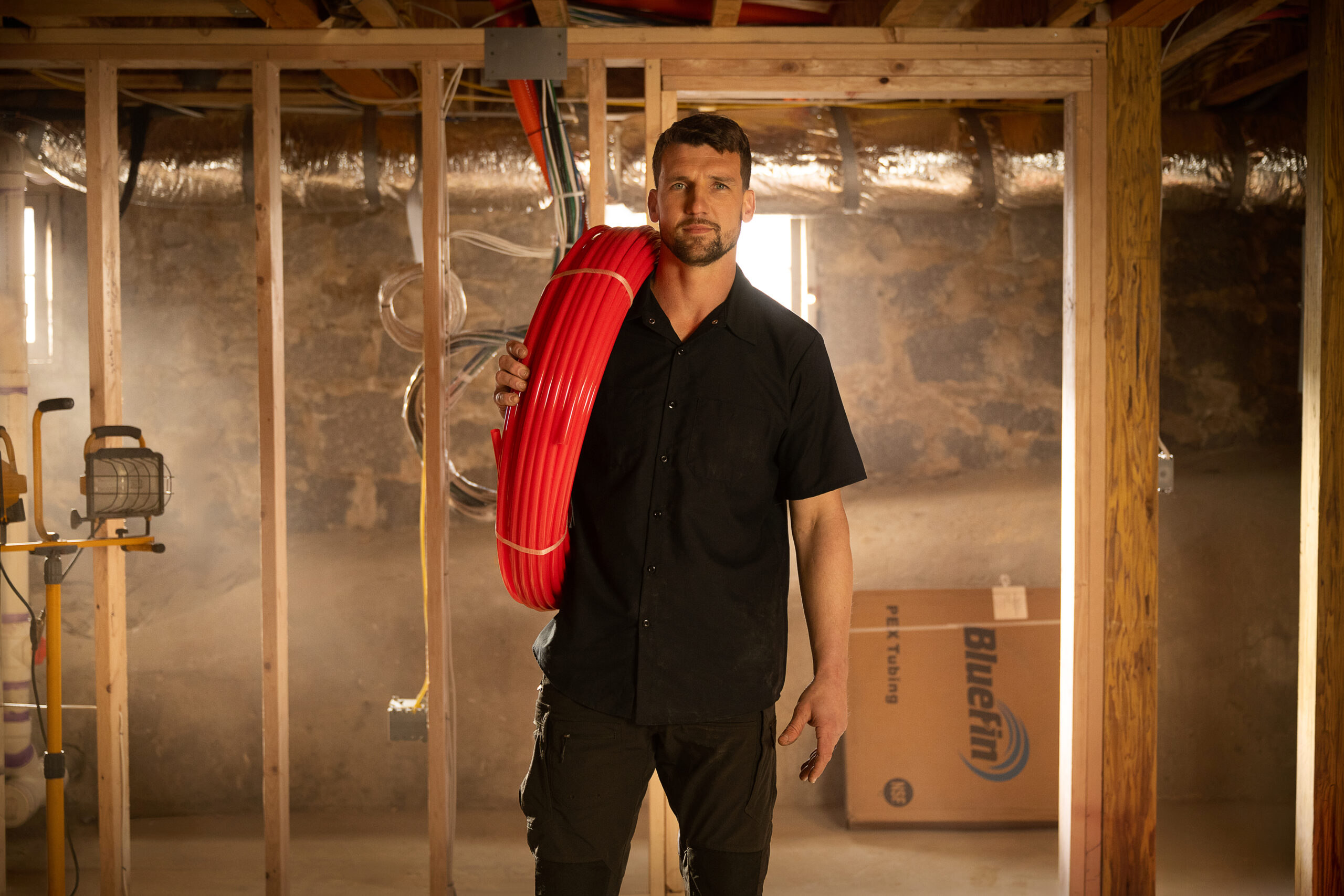
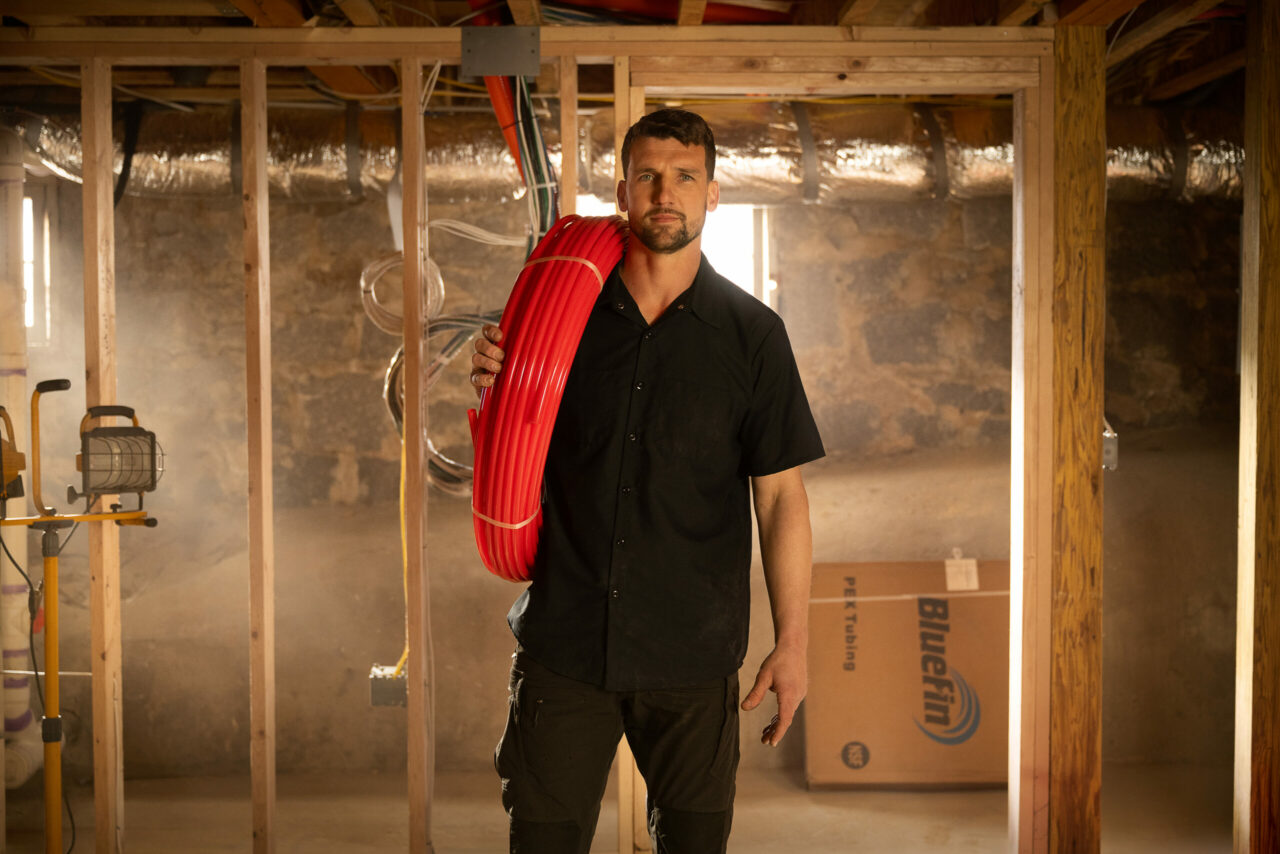
The question comes up on nearly every hydronic heating job: does the application call for oxygen barrier PEX or non-barrier? Get it wrong by using non-barrier PEX in a closed-loop ferrous system and the damage happens slowly and expensively. Cast iron circulator pumps corrode. Boiler heat exchangers rust out from the inside. Most boiler manufacturers void the warranty outright when non-barrier tubing is found in a closed-loop installation.
What Oxygen Barrier PEX Actually Is
Standard PEX is cross-linked polyethylene. Flexible, pressure-rated, excellent for potable water. It is also permeable to oxygen. Oxygen molecules from the atmosphere slowly diffuse through the tube wall into circulating water, even through concrete, even when the pipe is buried.
Oxygen barrier PEX has an additional outer layer of EVOH (ethylene vinyl alcohol) polymer, which blocks oxygen diffusion. The definitive confirmation that a tube carries this barrier is the DIN 4726 marking printed directly on the tubing. Oxygen barrier PEX also has a noticeably glossy surface finish compared to the matte surface of standard PEX.
Color does not indicate barrier status. Both types come in red, white, blue, and orange. Color is for installation identification only. Always check for the DIN 4726 stamp.
Why Oxygen Destroys Hydronic Systems
In a closed-loop hydronic system, the same water circulates continuously. When fresh water fills the system initially, it carries dissolved oxygen. That oxygen reacts with ferrous metals (cast iron pump housings, steel boiler components, iron radiators) to form iron oxide. Once that initial oxygen is consumed, corrosion stops. The system reaches a chemically stable, oxygen-depleted state. The water turns dark brown or black, which is normal and indicates a healthy de-oxygenated system.
The problem with non-barrier PEX: atmospheric oxygen continuously diffuses through the tube walls into the water, replenishing what corrosion reactions consume. The system never reaches that stable state. Corrosion continues indefinitely. Most boiler manufacturers void the equipment warranty when non-barrier PEX is used in a direct-connected closed loop.
When Oxygen Barrier PEX Is Required
Use oxygen barrier PEX in every closed-loop hydronic heating system that includes ferrous components:
- Radiant floor heating
- Hydronic baseboard heating
- Fan coil systems connected to a boiler
- Snow and ice melt systems
- Boiler supply and return piping
- Any system where the same water continuously recirculates with cast iron or steel components
| Brand | Type | Available Sizes |
| Bluefin Oxygen Barrier PEX | PEX-a and PEX-b | 3/8″, 1/2″, 5/8″, 3/4″, 1″ |
| Uponor hePEX | PEX-a (Engel method) | 3/8″ to 1-1/4″ |
| Mr. PEX | PEX-a | 1/4″ to 2″ |
All three meet DIN 4726 and are pressure-rated at 100 PSI at 180 degrees F. Browse oxygen barrier PEX options at SupplyHouse.
For the full range of radiant heat tubing, see PEX radiant heat tubing at SupplyHouse.
When Non-Barrier PEX Is the Right Choice
Non-barrier PEX is correct for:
- Potable water supply systems (domestic hot and cold)
- Open-loop heating systems (continuous fresh water supply)
- Any application where the pipe carries drinking water
In a domestic water system, fresh water is continuously supplied from the main. Oxygen will always be present. The oxygen barrier would accomplish nothing. Non-barrier PEX carries NSF/ANSI 61 and NSF 14 certifications for drinking water contact. Oxygen barrier PEX is not approved for potable water applications.
PEX-AL-PEX: A Different Kind of Oxygen Barrier
PEX-AL-PEX is a three-layer tubing with an internal aluminum layer sandwiched between two PEX layers. The aluminum provides an oxygen barrier but also gives the tube memory. It holds its bent shape instead of springing back like standard PEX. PEX-AL-PEX is the standard choice for Warmboard and radiant panel systems, boiler room near-piping, and baseboard and fan coil connections.
Note on fittings: PEX-AL-PEX requires its own fitting system and a chamfering tool for proper connection. Standard PEX crimp and clamp fittings do not work with it. Plan the connection system before specifying.
The Edge Cases That Trip Up Experienced Installers
All-Non-Ferrous Closed Systems
It is possible to build a closed-loop hydronic system entirely from non-ferrous components. In that configuration, non-barrier PEX will not cause corrosion because there is nothing ferrous to corrode. In practice, the cost premium for all-non-ferrous components almost always exceeds the cost difference between barrier and non-barrier PEX.
For circulator pumps at SupplyHouse, cast iron models cost significantly less than their bronze counterparts.
Mixed-Barrier Systems
A system with one zone in non-barrier PEX connected to a closed boiler circuit creates a real problem. The solution is a heat exchanger to hydraulically separate the non-barrier zone from the ferrous components, eliminating the oxygen pathway.
Glycol Systems
Antifreeze inhibitors in a glycol-water mix break down faster in the presence of oxygen. Non-barrier PEX in a glycol system means more frequent inhibitor testing and replacement. If the inhibitors degrade, glycol itself becomes corrosive.
Quick Reference Decision Chart
| Application | Barrier PEX Required? |
| Closed-loop radiant floor heating with ferrous components | Yes, required |
| Closed-loop hydronic baseboard with cast iron circulators | Yes, required |
| Snow and ice melt systems | Yes, required |
| Domestic hot water supply | No |
| Domestic cold water supply | No |
| All-non-ferrous closed-loop system | Not required (but often used anyway) |
| Open-loop wood boiler system | Not required (use inhibitor) |
| Glycol-filled closed loop | Yes, strongly recommended |
For a deeper dive into hydronic system design, see How to Design a Hydronic Heating System on the SupplyHouse blog.
For converting old heating to radiant floor heat, see How to Convert Old Heating to Radiant Floor Heat.
Browse the full range of heating supplies at SupplyHouse including manifolds, mixing valves, and controls.
Frequently Asked Questions
Can non-barrier PEX be used for radiant floor heating?
Only if every component in the system (circulators, boiler, radiators, and all fittings) is non-ferrous. In practice, this is expensive and unusual. Oxygen barrier PEX is the standard choice for any closed-loop hydronic system with ferrous components.
What does DIN 4726 mean on PEX tubing?
DIN 4726 is the European standard confirming the tube meets oxygen diffusion barrier requirements for use in heating applications. Any oxygen barrier PEX suitable for a closed-loop hydronic system will carry this mark on the tube.
Is oxygen barrier PEX safe for drinking water?
No. Oxygen barrier PEX carries the EVOH outer layer and is not NSF-certified for potable water contact. Use non-barrier PEX with NSF/ANSI 61 certification for domestic water supply lines.
How can barrier and non-barrier PEX be told apart in the field?
Color does not indicate barrier status. The surface finish does: oxygen barrier PEX is noticeably glossier. The definitive check is the printing on the tube. Barrier PEX shows DIN 4726. Potable non-barrier PEX shows NSF 14 and NSF 61.
Does PEX-AL-PEX count as oxygen barrier PEX?
Yes. The aluminum layer in PEX-AL-PEX provides an oxygen barrier and is approved for use in closed-loop hydronic systems. It also holds its bent shape, which makes it valuable in specific installation scenarios.
What size oxygen barrier PEX is used for radiant floor loops?
Half-inch (1/2″) oxygen barrier PEX is by far the most common size for in-floor radiant loops. Three-quarter-inch (3/4″) is standard for snow melt systems and supply/return lines to baseboard radiators. One-inch serves primary supply and return connections to the boiler and manifolds.
Why do boiler manufacturers void warranties for non-barrier PEX?
Because corrosion damage from oxygen infiltration is a known failure mode that shortens boiler lifespan, and the damage is directly traceable to the tubing choice. Manufacturers protect themselves from warranty claims on equipment that failed due to an installation practice they explicitly prohibit.
What happens if non-barrier PEX was already installed in a closed system?
Options include isolating the non-barrier zone with a heat exchanger, converting all ferrous components to non-ferrous alternatives, or adding a continuous corrosion inhibitor. A heat exchanger isolation is usually the cleanest solution for a zone that cannot be repiped.
PEX It Right
The PEX choice question has a short answer: closed-loop hydronic system with ferrous components means oxygen barrier PEX, every time, no exceptions worth taking. Open-loop or potable water means non-barrier PEX with NSF certification. The cost difference between the two is minimal compared to the cost of a failed circulator pump or voided boiler warranty. SupplyHouse carries Bluefin, Uponor hePEX, and Mr. PEX oxygen barrier tubing in all standard sizes and coil lengths, alongside the manifolds, circulator pumps, and heating controls to complete any hydronic or radiant heat installation.