
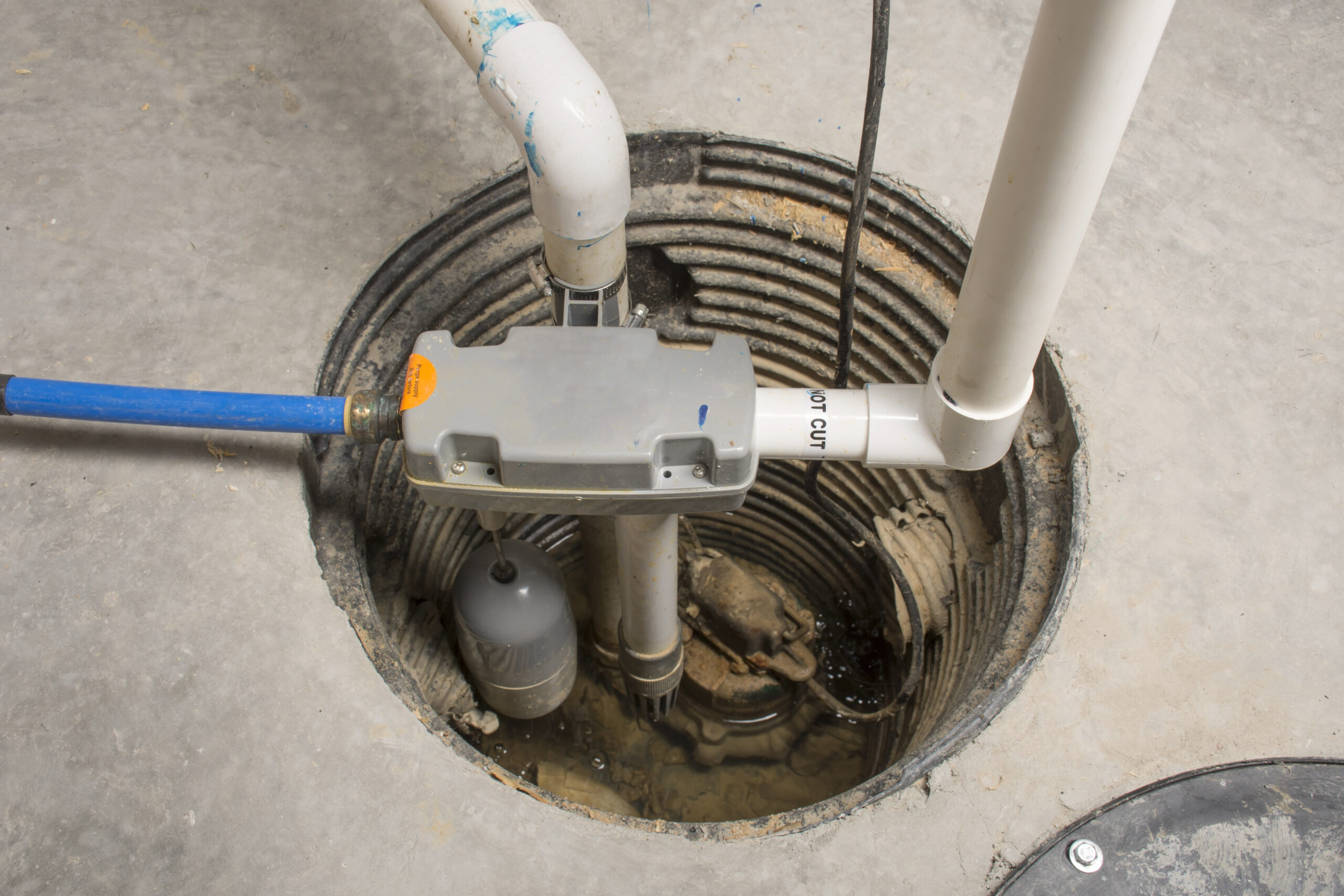

A Practical Guide for Basements That Stay Dry
A sump pump is either invisible or unforgettable.
Invisible when it works.
Unforgettable when it fails at 2 a.m. during the first hard rain of the season.
Most flooded basements trace back to something simple. A stuck float. A leaking check valve. A pump that was undersized from day one.
Testing a sump pump takes ten minutes. Replacing one takes about an hour if the discharge piping was installed by someone thinking about the next replacement.
Here is how to handle both correctly.
What a Sump Pump Test Should Actually Confirm
Looking into the basin is not testing.
A real test confirms:
- The motor receives steady power
- The float travels freely
- The pump moves water at its rated output
- The check valve stops backflow
- Water exits well away from the foundation
Miss one of those and the system is a liability, not protection.
How Often Should a Sump Pump Be Tested?
In active groundwater areas:
- Every 3 to 4 months
- Before the rainy season
- After discharge repairs
- After extended dry periods
Most residential sump pumps last 7 to 10 years. Heavy cycling can cut that down to 5.
A pump that runs every two minutes during light rain is not heroic. It is short cycling and wearing itself out.
For additional upkeep insight, see 3 Useful Sump Pump Maintenance Tips.
How to Test a Sump Pump the Right Way
Step 1: Start With What Usually Goes Wrong
Open the basin and inspect:
- Gravel blocking the float
- Sludge lifting the pump off level
- Float tether rubbing the basin wall
- Discharge pipe glued solid without a union
- No check valve
Float obstruction causes more failures than motor burnout.
Clean the basin floor. The pump must sit flat. Crooked pumps vibrate and switches misbehave.
Step 2: Confirm Power Is Not the Weak Link
Check:
- Outlet power
- GFCI
- Breaker
- Cord condition
Most 1/3 HP pumps draw between 4 and 8 amps. Long, undersized cords introduce voltage drop that shortens motor life.
Hardwired connections are better. Extension cords are not a long term solution.
Step 3: Perform a Full Water Test
Lifting the float by hand proves very little.
Pour water into the basin and watch the full cycle.
Look for:
- Smooth float rise
- Immediate start
- Steady water drop
- Clean shutoff
Typical 1/3 HP performance:
- Around 2,500 GPH at 5 feet of head
- Around 2,000 GPH at 10 feet of head
Head height matters more than the horsepower label.
For a deeper breakdown, see How to Size a Sump Pump.
Step 4: Listen After Shutdown
Water should not rush back into the pit.
If it does:
- The check valve may be leaking
- The discharge may be partially blocked
- The float travel may be too short
Short cycling is one of the fastest ways to burn out a motor.
Step 5: Check for Air Lock
Symptoms:
- Motor runs
- No discharge outside
- Basin level barely drops
A 3/16 inch relief hole below the check valve prevents trapped air from blocking flow.
No relief hole can leave the impeller spinning in air while water rises.
Step 6: Confirm Exterior Discharge
Walk outside. Always.
Confirm:
- Water flows downhill
- Line is not crushed
- Termination is not near the foundation
- Winter freeze risk is addressed
A perfect pump inside means nothing if discharge returns to the footing.
Watch the Full Walkthrough
Quick Reference: Sump Pump Testing Checklist
| Item | What Good Looks Like | What Failure Looks Like |
| Power | Immediate start | Humming or no start |
| Float | Smooth travel | Sticking or rubbing |
| Pumping | Steady drop in water level | Slow movement |
| Check Valve | No backflow | Water returns after shutoff |
| Discharge | Water exits away from house | Pooling near foundation |
Most service calls trace back to one of these five.
Pedestal vs Submersible: Choosing Correctly
Submersible Pumps
- Installed inside the basin
- Quieter
- Cast iron or thermoplastic housing
- Preferred in finished spaces
Browse Submersible Sump Pumps
Cast iron models handle heat better under continuous operation.
Pedestal Pumps
- Motor above the basin
- Easier visual inspection
- Louder
Example: Zoeller M81 Pedestal Pump
How to Replace a Sump Pump Properly
Materials That Prevent Future Headaches
- Properly sized Sump Pump
Every sump system should include a union.
Replacement Steps
- Disconnect power.
- Loosen union or cut discharge high enough to rebuild properly.
- Remove pump and clean basin.
- Set new pump flat and confirm float clearance.
- Install check valve with arrow facing up.
- Add relief hole if required.
- Test with water before sealing basin.
Replacement should take under an hour when the system is built correctly.
Most Common Sump Pump Failure Causes
- Stuck float switch
- Failed check valve
- Missing relief hole causing air lock
- Undersized pump
- Frozen discharge line
- No backup during outage
Nearly all of these are preventable.
Frequently Asked Questions
How long does a sump pump last?
Most residential pumps last 7 to 10 years. High groundwater shortens that window.
Can a sump pump run continuously?
Yes during heavy storms. Continuous operation during mild rain suggests undersizing or discharge restriction.
Does every sump pump need a check valve?
Yes. Without one, discharged water falls back into the basin and forces repeated cycling.
What size sump pump should be installed?
Base selection on total dynamic head:
- 1/3 HP for moderate lift
- 1/2 HP for higher inflow or lift above 10 feet
- 3/4 HP for aggressive groundwater
Basement square footage does not determine pump size. Lift does.
Should a backup system be installed?
In regions with storm related outages, a backup pump is strong insurance.
Installation Best Practices Summary
- Install a check valve
- Include a union
- Use solid discharge piping
- Size for head height
- Test before sealing
- Consider a backup
Nine out of ten sump pump failures start with a shortcut during installation.
Dry basements are not accidental. They are built that way.