
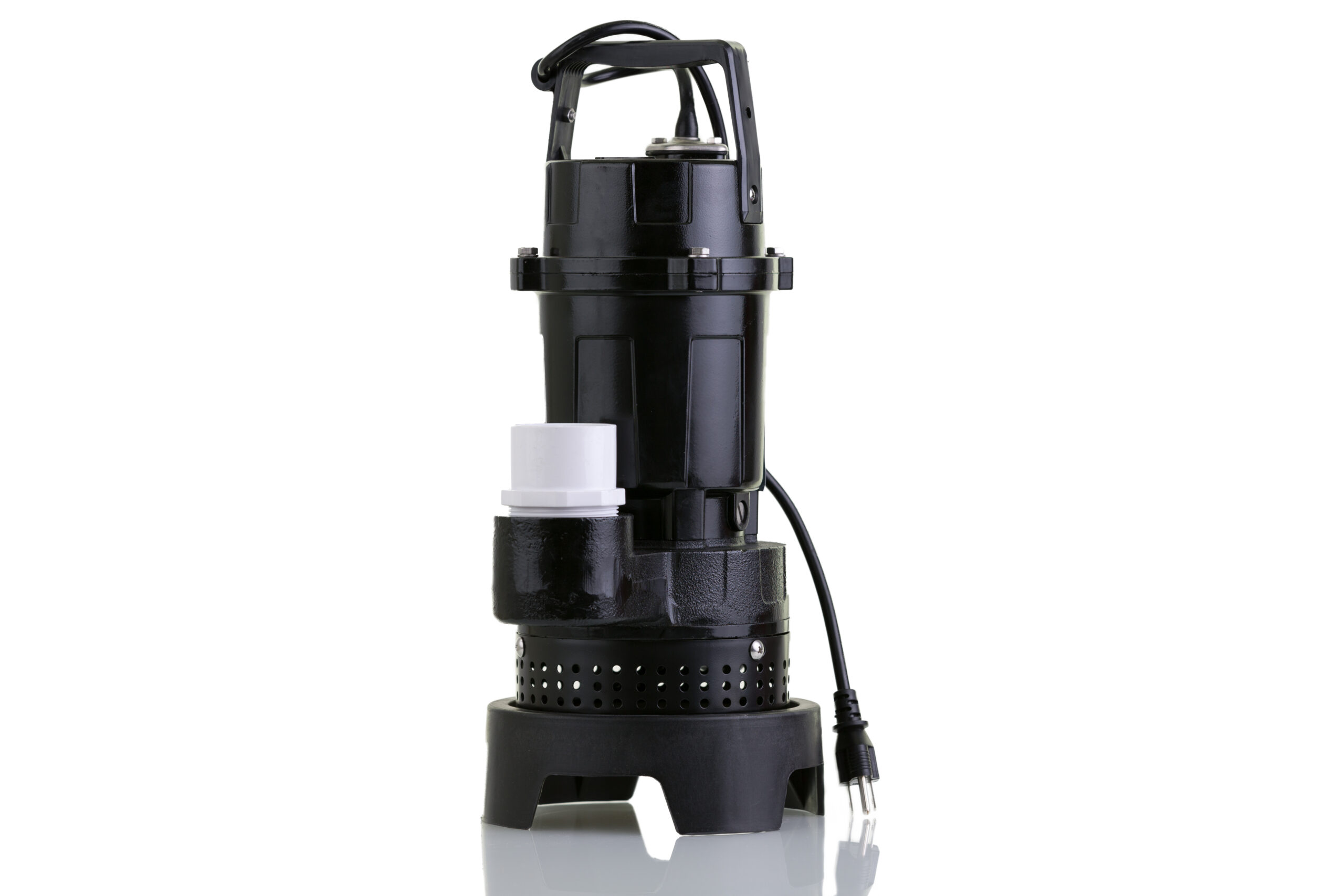
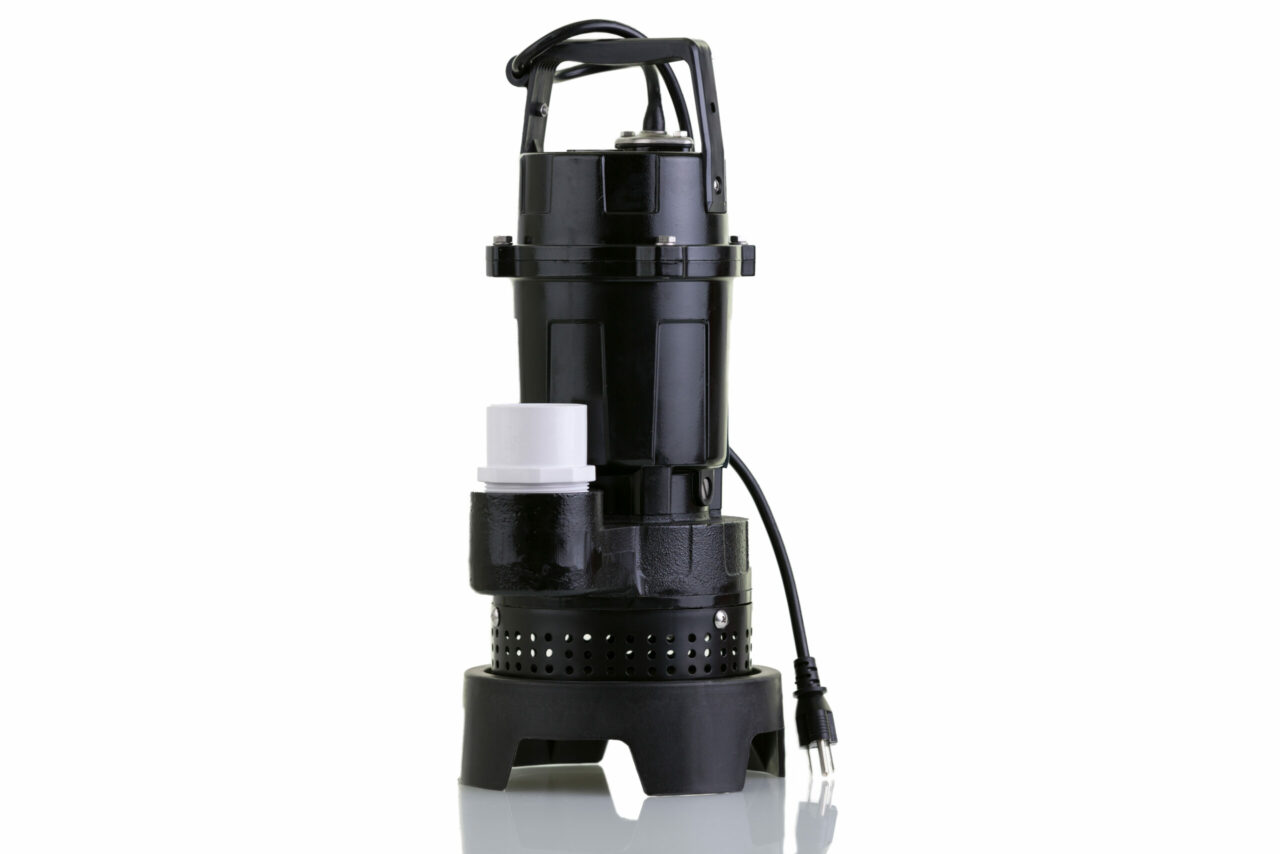
A sump pump keeps basements dry and foundations protected. The wrong size short-cycles and fails early. The right size moves the required water at the actual lift height with steady runtime and fewer callbacks. Sizing takes three numbers: gallons per minute, total head, and a small safety margin.
What a Sump Pump Does
A sump pump removes groundwater collected in a pit before it reaches the slab. A float switch turns the pump on, water leaves through a discharge line, and the pit resets for the next cycle.
Two common styles:
| Type | Typical Use | Advantage |
| Submersible | Permanent installation in the pit | Quieter and higher flow |
| Pedestal | Shallow pits or tight spaces | Easy service access |
Further basics: Sump Pumps: The Basics
Step 1: Measure Water Volume & Estimate Flow Rate
Determine how much water enters the pit during a cycle.
- Wait for a normal rain event. When the pump turns on, unplug it.
- Measure how many inches the water level rises before the float would activate again.
- Calculate gallons per cycle:
Gallons = (π × radius² × height) ÷ 231
Example: 18-inch pit diameter (9-inch radius) and 8-inch rise
= (3.14 × 9² × 8) ÷ 231 ≈ 8.8 gallons per cycle.
During a storm, if the pit cycles four times per minute, required flow ≈ 8.8 × 4 = 35 GPM.
- Observe how often your pump cycles during the rain event to calculate your GPM.
Example: Observe how often your pump cycles during the rain event to calculate your GPM. Example: During a storm, if the pit cycles four times per minute, required flow ≈ 8.8 × 4 = 35 GPM.
Step 2: Calculate Total Head
Total head is the vertical lift plus friction losses.
- Vertical lift: bottom of pit to the highest point of discharge outdoors
- Friction: add 1 foot of head per 10 feet of horizontal pipe as a simple allowance
- Add 1 to 2 feet for each pair of 90° elbows
Example: 8 ft pit depth + 3 ft above grade + 20 ft horizontal + two 90° elbows
Total head ≈ 8 + 3 + 2 + 2 = 15 ft
Step 3: Match Flow to Head on a Pump Curve
Pump cartons list flow at zero lift. Real performance drops as head increases. Open the manufacturer curve and find the point where required GPM intersects total head. Choose a model that delivers the target flow at that head with about 25 percent margin.
Shop options: Sump Pumps
Step 4: Pit Size, Voltage, and Horsepower
- Pit diameter: 18 to 24 inches helps prevent short cycling
- Voltage: Most residential pumps use 120 V
- Horsepower guidelines:
- 1/4 HP for shallow lift and light inflow
- 1/3 HP for typical homes at 10 to 15 ft head
- 1/2 HP for heavier flow or 15 to 25 ft head
- 3/4 to 1 HP for deep pits or high inflow
Oversizing can cause rapid on-off cycles and switch wear. Undersizing can lead to continuous running and overheating.
Step 5: Discharge, Pipe Size, and Check Valve
Correct discharge design keeps flow up and stress down.
- Pipe size: Use 1-1/2 inch PVC unless the manufacturer specifies otherwise
- Layout: Short and straight runs reduce friction
- Termination: Discharge at least 10 ft from the foundation and direct water downslope
- Check valve: Install above the pump to stop backflow and short cycling
Parts and hardware:
Step 6: Backup Systems and Alarms
Storms often bring power loss. Backup plans keep water moving.
- Battery backup pumps with deep-cycle batteries
- Water-powered backups on municipal supply
- High-water alarms for early warnings
Browse categories: Pump Accessories
Related reading: 3 Useful Sump Pump Maintenance Tips and Liberty’s SumpJet: The Ultimate Failsafe Sump Pump
Example Sizing Walkthrough
| Description | Value |
| Pit diameter | 18 inches |
| Water rise per cycle | 8 inches |
| Cycles per minute in storm | 3 |
| Flow required | 8.8 × 3 = 26 GPM |
| Total head | 15 ft |
| Recommended pump | 1/3 HP delivering ≥ 33 GPM at 15 ft head |
Result: Flow meets demand with margin, runtime is steady, switch cycles are reasonable.
Quick Selection Table
| Head (ft) | Light Flow (GPM) | Medium Flow (GPM) | Heavy Flow (GPM) | Recommended HP |
| 0–10 | 15 | 25 | 40 | 1/4–1/3 HP |
| 10–15 | 20 | 30 | 50 | 1/3–1/2 HP |
| 15–25 | 25 | 40 | 60 | 1/2–3/4 HP |
| 25+ | 30 | 50+ | 70+ | 3/4–1 HP |
Values reflect typical curves across common residential pumps. Always confirm against the chosen model’s published performance curve.
Extra Detail for Pros and Serious DIY
Friction and equivalent length
- Each 90° elbow roughly equals 5 to 7 ft of straight 1-1/2 inch PVC for quick math
- Corrugated discharge hose increases loss; smooth PVC carries more at the same head
Switch types
- Vertical float switches reduce hang-ups in narrow basins
- Wide-angle tethered floats need larger pits for reliable travel
Basins and covers
- 18 to 24 inch diameter with vented covers help odor control and safety
- Sealed covers matter near finished spaces to limit humidity and debris
Freeze prevention at the outlet
- Outdoor discharge should slope to daylight
- In cold regions, consider an air-gap fitting and a secondary route to prevent ice block at the outlet
Code reminders
- Some jurisdictions require air gaps, backflow protection, or storm to daylight only
- Discharge to sanitary lines is often prohibited
Outdoor drainage options: Outdoor Drainage
Maintenance That Extends Life
- Test the float switch quarterly
- Clean pit sediment and check the impeller twice a year
- Inspect the check valve every spring
- Keep the discharge outlet clear of snow, mulch, and debris
- Replace batteries on backup systems annually
Materials Checklist
- Sump pump sized from the calculation
- Basin or liner, 18 to 24 inches
- 1-1/2 inch PVC discharge pipe
- Check valve and unions
- Discharge fittings and hangers
- Battery or water-powered backup
- Pit cover and hardware
Shop the essentials:
Sump Pumps | Pump Accessories and Check Valves | PVC Fittings
Frequently Asked Questions
How is horsepower chosen?
Horsepower follows head and flow. Most homes work with 1/3 or 1/2 HP. Deeper pits or higher inflow can justify 3/4 to 1 HP after checking the curve.
Can a pump be too powerful?
Oversized pumps short-cycle and wear switches. Right-sized pumps run longer, cooler, and last longer.
Should the discharge pipe match the outlet size?
Matching the outlet size keeps friction down. Reducing diameter drops flow and raises motor load.
Is a backup pump necessary?
Any space at risk of damage benefits from a backup and a high-water alarm, especially in storm-prone regions.
How long does a sump pump last?
Seven to ten years is common with regular cleaning, switch testing, and a clean discharge path.
Bottom Line
Correct sump pump sizing is straightforward. Measure gallons per minute during real weather, calculate total head with an allowance for friction, and pick a model that hits the target on the performance curve with modest margin. Oversize the basin, not the motor. Keep the discharge smooth and the check valve close to the pump. Add a backup and an alarm for storm nights.
Trades benefit from fewer callbacks and cleaner installs. Homeowners benefit from a dry basement and a pump that starts every time.