
Outdoor faucets do more than fill watering cans. Garden hoses, pressure washers, chemical sprayers, and irrigation attachments all connect to the same faucet. Without backflow protection, contaminated water can be pulled backward into the plumbing system.
A hose bib vacuum breaker, also called an anti-siphon device, prevents that from happening. The device allows water to flow outward but blocks reverse flow if pressure drops in the supply line.
Installation is simple, and replacement takes only a few minutes. The important part is understanding how the device works and installing it correctly, so it continues to protect the water supply.
What a Hose Bib Vacuum Breaker Does
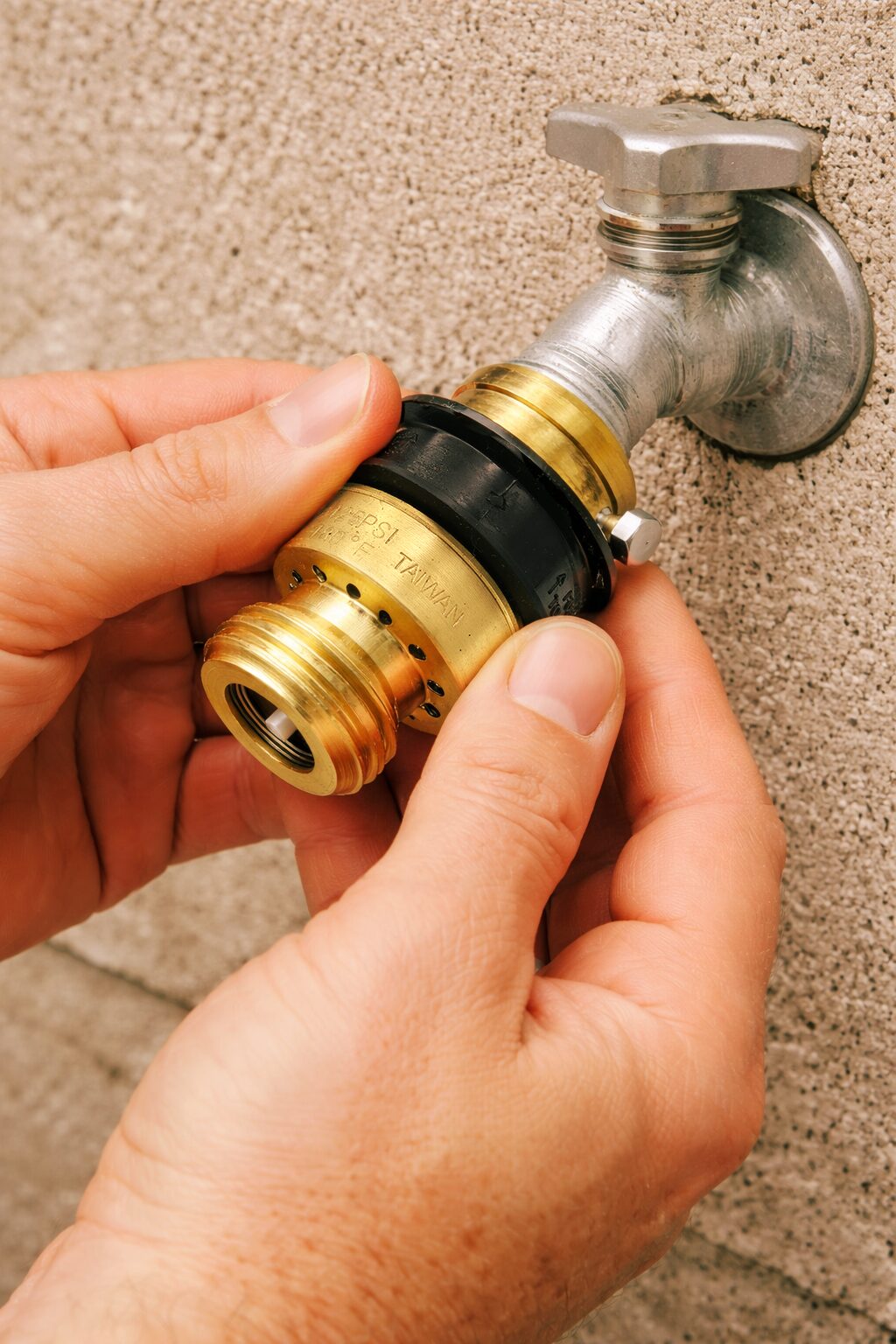
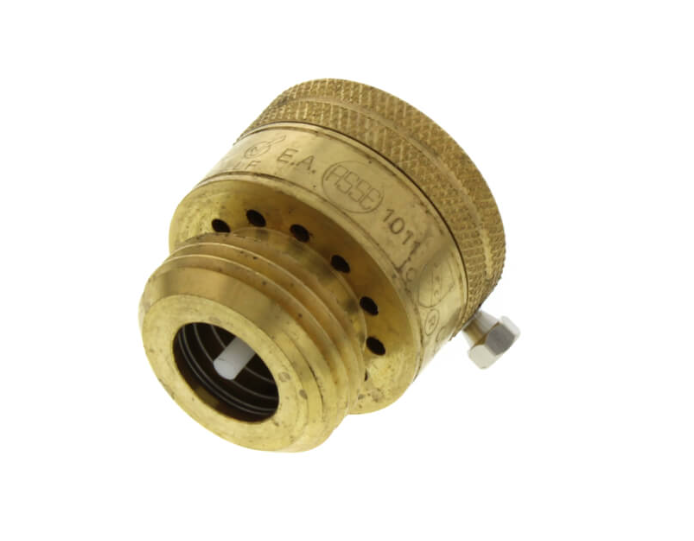
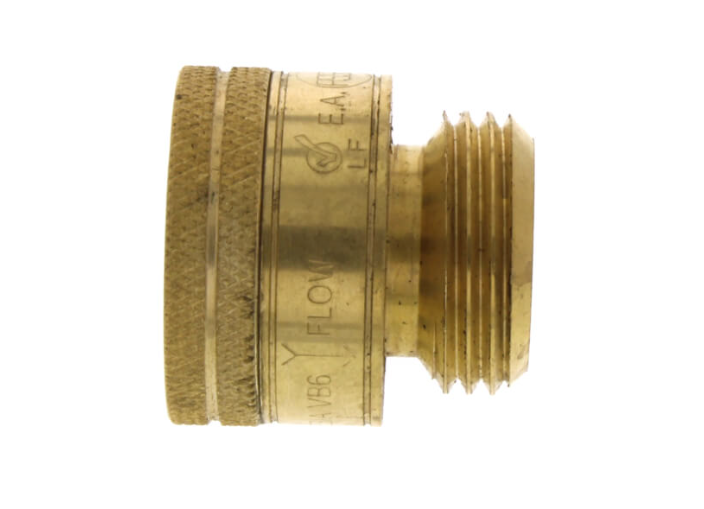
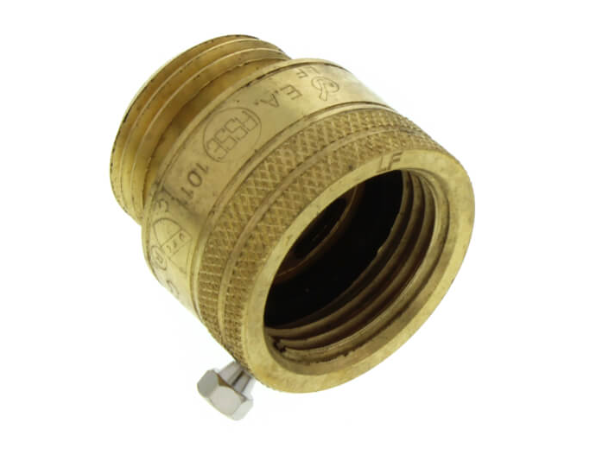
A hose bib vacuum breaker is a small backflow prevention device that threads onto the outlet of an outdoor faucet.
Inside the device is a spring-loaded check mechanism. When water flows outward, the internal valve stays open. If water pressure drops or reverse pressure occurs, the mechanism closes and breaks the siphon.
Without that protection, contaminated water from a hose submerged in fertilizer, pesticides, or standing water could be pulled back into the plumbing system.
Plumbing codes in many regions require anti-siphon protection on outdoor faucets for this reason. For deeper context on backflow basics, see Backflow Preventer’s & Why The Water Company Plays For Keeps.
Signs a Vacuum Breaker Needs Replacement
Vacuum breakers eventually wear out. Mineral buildup, internal seal wear, or freezing conditions can cause failure.
Common symptoms include:
| Symptom | Likely Cause | Solution |
| Water sprays from top vents during use | Internal seal worn | Replace vacuum breaker |
| Device leaks constantly | Cracked body or seal failure | Replace device |
| Water flows backward when hose submerged | Internal check failure | Replace device immediately |
| Device frozen or cracked after winter | Freeze damage | Replace device |
A brief spray from the vents during shutoff is normal for some designs. Continuous spraying usually indicates seal wear.
Types of Hose Bib Vacuum Breakers
Most outdoor faucet vacuum breakers fall into two categories.
Screw-On Vacuum Breaker
Threads directly onto the faucet outlet.
Characteristics:
- Easiest installation
- Often includes a tamper-resistant set screw
- Common for retrofits on existing hose bibbs
Common product category reference: Hose Connection Vacuum Breakers.
Integrated Anti-Siphon Faucet
The vacuum breaker is built into the faucet body.
Characteristics:
- Internal backflow protection
- Often used on frost-free sillcocks
- Replacement typically requires replacing the internal assembly or the faucet
Background reading: What are Sillcocks and Hose Bibbs?
The steps below apply to screw-on hose bib vacuum breakers, which are the most common retrofit solution.
Tools and Materials
Installation typically requires only basic tools.
Tools:
- Adjustable wrench
- Small screwdriver or hex key for set screw
- Pliers
Materials:
- Replacement hose bib vacuum breaker, examples include Bluefin 3/4″ MHT Hose Bibb Vacuum Breaker or Zurn 3/4″ Hose Bibb Vacuum Breaker.
- PTFE tape if recommended by manufacturer
- Towel or rag for cleanup
A replacement device must match the faucet thread size, usually 3/4-inch hose thread.
Step 1: Turn Off the Faucet
- Close the outdoor faucet completely.
- Disconnect any hose or attachment from the faucet before installing the vacuum breaker. Installing over a hose connection will prevent proper sealing.
- Inspect the faucet outlet threads for debris or corrosion.
- Clean threads if necessary so the vacuum breaker can seat correctly.
Seasonal tip for outdoor plumbing start-up: How to De-Winterize Outdoor Faucets and Irrigation Systems.
Step 2: Thread the Vacuum Breaker Onto the Faucet
- Align the vacuum breaker with the faucet outlet and thread it on by hand.
- Turn the device clockwise until snug.
- Hand tightening is usually sufficient. A light wrench adjustment may be used if the manufacturer allows it.
- Avoid excessive force. Hose thread connections seal with a washer inside the device.
Category reference for selecting the right style and approvals: Hose Connection Vacuum Breakers.
Step 3: Secure the Tamper-Resistant Set Screw
Many vacuum breakers include a small set screw designed to prevent removal.
Procedure:
- Locate the set screw on the side of the vacuum breaker.
- Tighten the screw until it contacts the faucet body.
- Some designs break off when fully tightened to prevent tampering.
The set screw prevents accidental removal and helps meet plumbing code requirements.
Step 4: Test the Installation
- Turn the faucet on slowly.
- Check for leaks around the threads and around the vacuum breaker vents.
- Normal operation includes:
- Water flowing normally through the hose connection
- No continuous leaking from the top vents
- A brief release of water during shutoff may occur. Continuous vent spraying usually means the internal seal is worn.
Step 5: Confirm Proper Operation
A vacuum breaker protects against back-siphonage.
Proper operation means:
- Water flows freely outward
- Reverse flow is blocked
- Air enters the device if negative pressure occurs
Submerging the hose end in a bucket and shutting off the faucet can help verify operation. Water should not siphon backward through the hose.
For a wider overview of backflow device types, see The World of Backflow Preventers: Backflow’s Gotta Go!.
Common Installation Mistakes
Several common mistakes reduce effectiveness.
| Mistake | Result |
| Installing over damaged faucet threads | Leaks or poor sealing |
| Over-tightening the device | Damaged threads or cracked body |
| Removing the internal washer | Connection leaks |
| Skipping the set screw when required | Device can be removed or loosened |
| Leaving a hose attached during freezing weather | Freeze damage |
Outdoor faucet attachments should always be removed before freezing temperatures.
When Replacement Is Better Than Repair
Vacuum breakers are inexpensive and designed for replacement rather than rebuild.
Replacement is recommended when:
- The body is cracked
- Internal check valve fails
- Continuous vent leakage occurs
- The device freezes and splits
- Mineral buildup prevents normal operation
Replacing the entire device usually takes less time than attempting internal repair.
Shopping path for compatible replacements: Hose Connection Vacuum Breakers.
Hose Bib Backflow Protection and Plumbing Codes
Backflow prevention is required in many jurisdictions.
Outdoor faucets are considered high-risk connections because hoses often contact:
- Soil
- Fertilizers
- Chemical sprayers
- Standing water
A vacuum breaker protects the potable water system by preventing contaminated water from siphoning backward.
Local plumbing codes often require anti-siphon protection on all exterior faucets.
Troubleshooting After Installation
Water sprays from the vacuum breaker
Possible causes:
- Internal seal worn
- Debris inside device
- Excessive water pressure
Replacement is usually the fastest solution.
Vacuum breaker leaks at faucet connection
Possible causes:
- Washer missing or damaged
- Faucet threads worn
- Device not fully tightened
Check the washer and reinstall it.
Low water flow through hose
Possible causes:
- Internal check valve obstruction
- Mineral buildup
- Incorrect device size
Replacing the vacuum breaker usually resolves flow restrictions.
FAQs
What is the difference between a vacuum breaker and an anti-siphon valve?
Both prevent backflow caused by siphoning. A vacuum breaker introduces air into the system when pressure drops, stopping reverse flow.
Can a vacuum breaker be removed after installation?
Some models include a tamper-resistant set screw designed to prevent removal. The screw head may break off during installation.
Do all outdoor faucets need a vacuum breaker?
Many plumbing codes require backflow protection on outdoor faucets because hoses frequently contact contaminated water sources.
Why does water come out of the vacuum breaker vents?
Small bursts during shutoff are normal. Continuous leakage usually means the internal seal is worn.
How long do hose bib vacuum breakers last?
Service life depends on water quality, usage, and winter conditions. Mineral buildup and freezing shorten lifespan.
Final Take
A hose bib vacuum breaker is a small device with an important job. It prevents contaminated water from being pulled back into the plumbing system during pressure changes.
Installation takes only a few minutes. The process involves threading the device onto the faucet, securing the set screw if required, and testing for leaks. Regular inspection and occasional replacement keep outdoor faucets protected against backflow and help maintain safe water quality throughout the plumbing system.