

A Practical Storm Prep Guide for Safer Electrical Protection
Storm season exposes weak points fast. Outdoor receptacles fill with moisture. Garage outlets trip. Basement circuits shut down. Pumps stop running. Freezers go quiet.
Many of those issues trace back to one small device: the GFCI outlet.
Knowing how to check and reset GFCI outlets before storm season prevents nuisance outages, protects equipment, and reduces emergency calls once heavy rain and lightning arrive.
Here is a step by step process built for field reality, not theory.
What Is a GFCI Outlet and Why It Trips During Storms
A GFCI, ground fault circuit interrupter, monitors current imbalance between hot and neutral conductors.
If as little as 4 to 6 milliamps leaks to ground, the device trips within milliseconds.
Storm conditions increase trip likelihood because of:
- Moisture intrusion in exterior boxes
- Condensation in garages and basements
- Damaged insulation on outdoor wiring
- Lightning induced voltage surges
- Failing downstream receptacles
A GFCI that trips is not defective by default. It is doing its job.
Repeated tripping, however, signals a condition that needs correction before heavy rain season begins.
Storm Season GFCI Inspection Checklist
| Inspection Point | What to Look For | Why It Matters |
| Exterior outlet covers | Cracks, loose gaskets | Water intrusion causes trips |
| Reset/Test buttons | Sticking or loose feel | Internal wear |
| Downstream outlets | No power | GFCI may protect multiple devices |
| Basement circuits | Damp boxes | High moisture increases nuisance trips |
| Garage receptacles | Corrosion | Condensation damage |
Run this checklist before forecasted storms, not during.
How to Check a GFCI Outlet Before Storm Season
Step 1: Locate All GFCI Outlets
GFCIs are commonly found in:
- Bathrooms
- Kitchens
- Garages
- Basements
- Exterior walls
- Near sump pumps
One GFCI may protect several downstream outlets. If an outdoor outlet has no power, the tripped device may be inside the garage or basement.
Map them now. Save time later.
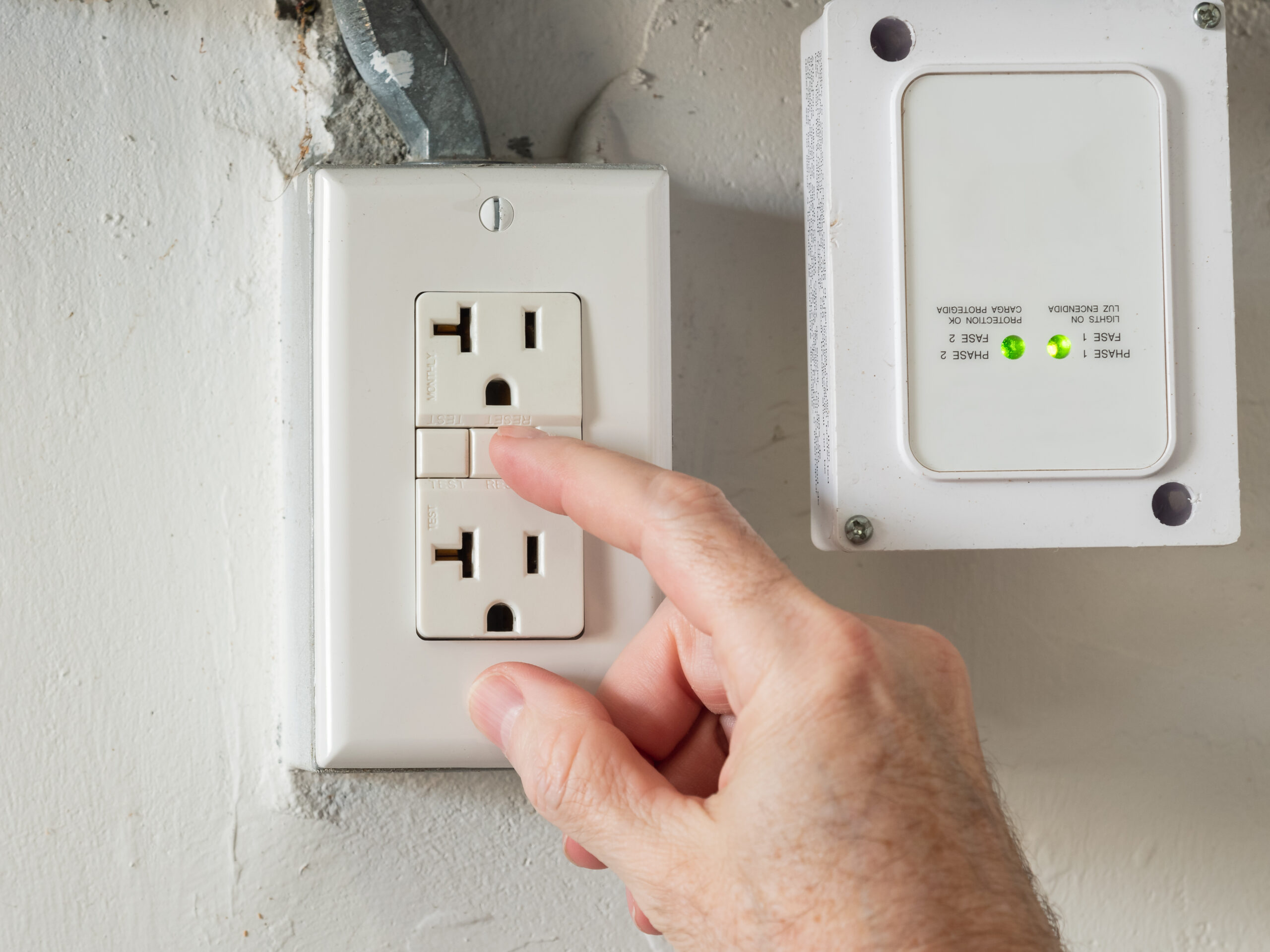
Step 2: Perform a Manual Test
Press the Test button.
Expected result:
- Audible click
- Reset button pops outward
- Power to the outlet shuts off
If nothing happens, the device may be failed or not wired correctly.
To restore power, press the Reset button firmly until it clicks.
If the outlet does not reset, continue troubleshooting.
Step 3: Check for Moisture Intrusion
Remove the cover plate if safe to do so and inspect for:
- Condensation
- Rusted screws
- Corrosion on terminals
- Damp insulation
Exterior boxes should use weather resistant covers rated for in use conditions.
If upgrading is needed, browse weather resistant and tamper resistant GFCI outlets at SupplyHouse:
https://www.supplyhouse.com/Electrical-Outlets-13054000
Moisture is the most common cause of GFCI tripping during storm season.
Step 4: Inspect Exterior Covers
Outdoor receptacles should have bubble style covers that remain sealed even when cords are plugged in.
Flat covers are not storm protection.
If seals are cracked or warped, replace them before heavy rain hits.
Step 5: Confirm Downstream Power
After resetting the primary GFCI, check:
- Outdoor outlets
- Garage outlets
- Basement outlets
A tripped GFCI can silently disable critical equipment.
Sump pump failure during a storm is not a coincidence. It is often a tripped GFCI upstream.
How to Reset a GFCI Outlet That Will Not Reset
If a GFCI will not reset, work through this sequence:
- Unplug all devices on that circuit
- Press Reset firmly
- If it trips immediately, inspect for moisture
- If still tripping, check for damaged downstream wiring
Common causes:
- Water inside exterior box
- Failed appliance plugged into circuit
- Neutral to ground fault
- Internal device failure
If replacement is necessary, choose a properly rated GFCI receptacle from SupplyHouse:
https://www.supplyhouse.com/GFCI-Receptacles-21610000.
Why GFCIs Trip After Heavy Rain
Search data spikes every year for “GFCI tripped after rain.”
Reasons include:
- Water bridging hot to ground
- Wet extension cords outdoors
- Flooded landscape lighting transformers
- Condensation inside metal boxes
High humidity alone can trigger nuisance trips in aging devices.
Storm season exposes marginal installations.
GFCI vs Standard Outlet: Why Replacement Matters
Standard outlets do not provide ground fault protection.
Modern electrical codes require GFCI protection in wet and damp locations because they prevent shock hazards that standard receptacles cannot detect.
If exterior outlets are still standard type, upgrading improves safety significantly before storm season.
Browse code compliant electrical devices in the SupplyHouse electrical outlet category:
https://www.supplyhouse.com/GFCI-Receptacles-21610000.
When to Replace a GFCI Outlet
Replace a GFCI if:
- Reset button will not stay engaged
- Device fails manual test
- Visible corrosion exists
- Device is more than 10 years old
- Trips repeatedly with no load connected
Electrical components degrade over time, especially in humid environments.
Replacement is often faster than extended diagnostics.
Storm Electrical Safety Checklist
Before storm season begins:
- Replace cracked exterior covers
- Verify sump pump outlet protection
- Inspect garage receptacles
- Confirm outdoor extension cords are rated for exterior use
- Label protected downstream outlets
Preparation takes less than an hour. Cleanup after flooding does not.
Frequently Asked Questions
Why does my GFCI outlet keep tripping when it rains?
Moisture intrusion is the most common cause. Water can enter through damaged covers, cracked boxes, or improperly sealed conduit entries.
Can lightning trip a GFCI outlet?
Yes. Voltage fluctuations and induced surges can trigger sensitive protection devices.
Should a sump pump be on a GFCI outlet?
Code requirements vary by jurisdiction. Many installations use GFCI protection, but nuisance trips can create risk. Local code and inspection authority guidance should always be followed.
How often should GFCI outlets be tested?
Monthly testing is recommended. At minimum, test before storm season and after major weather events.
What happens if a GFCI fails?
A failed GFCI may not trip during a ground fault, which removes shock protection. Replace immediately if testing does not produce proper response.