
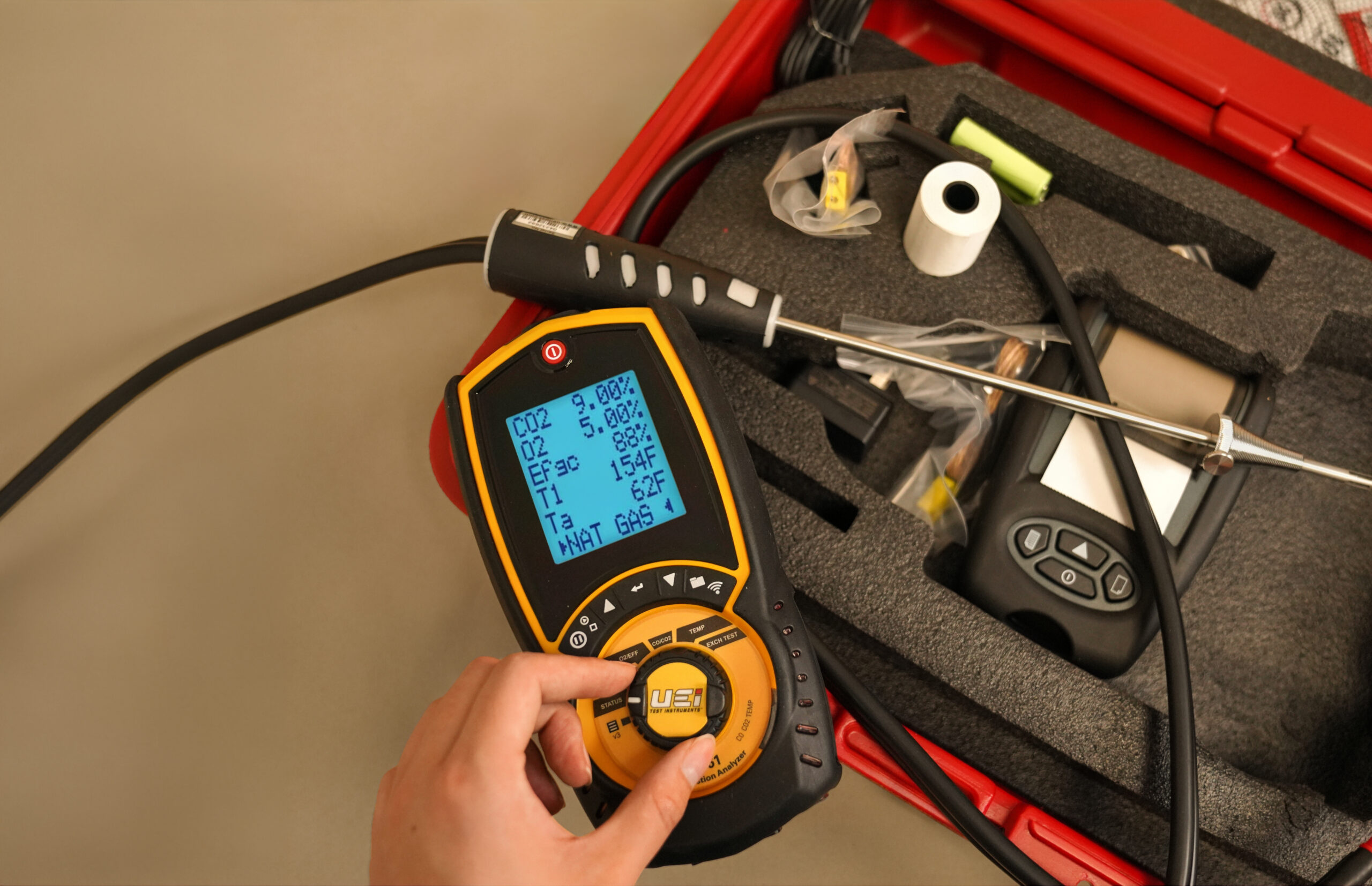

Two furnaces. Same house. Both 95% efficient natural gas units. One runs clean. The other spikes to about 600 ppm of carbon monoxide every time it lights.
It isn’t a hypothetical. It’s the case National Comfort Institute instructor Adam Mufich walked through in Contracting Business on Nov. 3, and it lands right as heating season picks up. His takeaway fits on a sticky note for every service truck: “Identical equipment doesn’t guarantee identical performance.” The only way to know what a furnace is doing is to test that furnace.
What the Test Actually Looked Like
The test in the article is a solid template for any gas furnace call:
- Install a test port in the PVC flue pipe.
- Insert the analyzer probe with the pump running, then cycle the heat on.
- Watch light-off closely. The first 60 seconds show whether the burners light clean.
- Monitor the run cycle. Take three measurements over 15 minutes and look for trends. CO and O2 should stay stable.
- Watch the shutdown. In the article, the techs cycled the burners off by pulling the flame sensor wire and kept watching the analyzer as the burners went out.
Follow the furnace manufacturer’s instructions and the test instrument’s procedures for port placement and sealing. A test that leaves an unsealed hole in a vent creates its own problem.
What the Numbers Showed
The problem furnace told its story in stages:
| Test Stage | What the Analyzer Showed |
| Light-off | CO spiked to about 600 ppm, then dropped below 100 ppm |
| Run cycle | CO climbed while O2 fell |
| Stack temperature and temperature rise | Nothing unusual |
| After adjustment | CO held below 100 ppm; O2 stabilized just over 10% |
The third row is the one to remember. Stack temperature and temperature rise looked normal. A tech checking only those numbers would have called it a healthy furnace.
The fix was simple once the analyzer pointed to it. Reducing gas pressure, by backing out the adjustment screw a little over half a turn, brought CO down and let O2 settle. A manometer confirms gas pressure against the manufacturer’s spec before and after any adjustment.
Tools for the Test
A full combustion test needs two instruments on the truck:
- A combustion analyzer. The Testo 310 II residential combustion analyzer kit covers residential flue gas testing, and the UEi C163 kit adds pressure measurement and a printer for leaving a record with the customer. The full combustion analyzer lineup covers other options.
- A manometer for checking and adjusting gas pressure. The manometer category has digital options from several brands.
Printed or saved results are worth the extra minute. A before-and-after record shows the customer exactly what changed and protects the company if questions come up later.
Layered CO Protection in the Home
Testing finds problems at the time of the visit. Protection covers the rest of the season. Two layers are worth discussing with homeowners.
CO alarms. Working alarms are the baseline in any home with fuel-burning equipment. Models like the Kidde COBDL with low CO alerts add a low-level alert on top of the standard alarm.
CO shutoff switches. A newer layer reached distribution this month. ACHR News reported on Nov. 9 that DiversiTech is now the exclusive North American distributor of the Respiro CO/PRO, a carbon monoxide shutoff switch for fuel-burning furnaces and water heaters. It uses two independent sensors, one in the HVAC supply duct and one in the air around the appliance and its venting. When it detects elevated CO, it cuts power to the connected equipment, which stops CO production at the source.
The difference from an alarm is timing. An alarm warns occupants after CO has already spread through the house. A shutoff switch stops the appliance. PM Magazine’s Nov. 9 coverage quoted DiversiTech’s Aaron Engel describing it as a proactive approach that “complements existing alarm and detection systems.” It doesn’t replace alarms. It adds a layer.
Neither report listed CO thresholds, certifications, or installation requirements. Get those from the manufacturer’s documentation before recommending one to a customer.
Make Combustion Testing Standard on Every Call
The lesson from the two-furnace house goes beyond one adjustment screw. A few habits make combustion testing routine instead of occasional:
- Test every fuel-burning appliance individually, even matched equipment in the same home.
- Record light-off, run-cycle, and shutdown readings, not just a single snapshot.
- Check gas pressure with a manometer whenever readings look off.
- Leave a printed or digital record with the customer.
- Recommend CO alarms on every call, and bring up shutoff protection where it fits the home.
Combustion testing also belongs on no-heat calls. SupplyHouse’s guide on how to troubleshoot a furnace that’s not heating covers the diagnostic side, and a combustion check is a good final step once the furnace is running again.
Frequently Asked Questions
Why test both furnaces if they’re the same model?
Identical equipment can perform differently. In the Contracting Business case, one of two matching 95% furnaces in the same house spiked to about 600 ppm CO at light-off while the other ran clean.
When during the cycle should CO be measured?
At light-off, during the run cycle, and at shutdown. The article’s test watched the first 60 seconds, took three readings over 15 minutes, and monitored the burners as they shut off.
Can a furnace have normal stack temperature and still produce high CO?
Yes. In the case described, stack temperature and temperature rise were not unusually high even though CO spiked at light-off and climbed during the run cycle.
What fixed the high CO reading in that case?
Reducing gas pressure by backing out the adjustment screw a little over half a turn. CO dropped below 100 ppm and O2 stabilized just over 10%.
What is a CO shutoff switch?
A device that monitors carbon monoxide and cuts power to a fuel-burning appliance when it detects elevated levels. The Respiro CO/PRO, distributed by DiversiTech, uses sensors in the supply duct and around the appliance and venting.
Does a CO shutoff switch replace CO alarms?
No. The manufacturer positions it as a complement to existing alarms and detection systems, not a replacement.
What tools does a combustion test require?
A combustion analyzer for flue gas readings and a manometer for gas pressure. A printer or app for recording results helps document the work.
What appliances does the CO/PRO work with?
Fuel-burning furnaces and water heaters, according to coverage of the launch.
Testing, Not Guessing
Two matching furnaces in one house proved the point: the only reliable reading is the one taken on the appliance in front of the tech. Test light-off, run cycle, and shutdown, check gas pressure when the numbers drift, and leave a record behind. Then talk about layered protection, from low-level CO alarms to the new shutoff switches. Every furnace earns its own test.