
Every fall, hydronic heating systems across the country fire up for the first time in months and immediately start making noise. Banging pipes. Gurgling baseboards. Radiators that are hot at the bottom and cold at the top. Zones that won’t heat. All of it traces back to one thing: air. Air infiltrates hydronic systems during the off-season, during repairs, and through micro-leaks in fittings. Getting it out before the heating season locks in is one of the most valuable fall service tasks a technician can do.
Why Air Gets Into Hydronic Systems
- Temperature and pressure changes: Water can hold more dissolved gas when it is cooler and under higher pressure. When system water is heated or its pressure decreases, dissolved gases can come out of solution as bubbles. These bubbles may collect at high points if they are not captured by an effective air separator..
- Maintenance work: any repair that opens the system introduces air.
- Low system pressure: insufficient fill pressure allows air to enter through micro-leaks, particularly at pump seals and valve packing.
- Missing or failed air elimination: systems without automatic air vents or with a failed air separator accumulate air over time.
- PEX without oxygen barrier: non-barrier PEX allows atmospheric oxygen to diffuse into the system over time.
Symptoms of Air in the System
| Symptom | Likely Cause |
| Gurgling or rushing sound in pipes or baseboards | Air pocket moving through the system with circulating water |
| Banging or knocking at startup | Large air pocket being displaced rapidly |
| Radiator or baseboard hot at supply end, cold at return end | Air lock blocking full flow through the emitter |
| Zone runs but room doesn’t heat | Air lock preventing flow in that zone |
| Circulator pump is noisy or vibrating more than usual | Pump cavitating due to air in the inlet |
| System pressure drops repeatedly | Air being expelled through auto vents and pressure dropping as water replaces it |
Step 1: Check System Pressure First
Before bleeding, verify the system is at correct operating pressure. Most residential hydronic systems are filled to 12 to 15 PSI cold. The pressure gauge is typically near the boiler, on the fill valve assembly. Low pressure means air has entered or water has been lost. High pressure (above 25 to 30 PSI cold) means the expansion tank may have failed.
Related: Expansion Tanks: What Are They and Why Are They Important? for expansion tank diagnostics and replacement guidance.
If the system is low, bring it to the correct fill pressure through the boiler fill valve before bleeding. Bleeding a low-pressure system just pulls more air in.
Step 2: Bleed Individual Radiators and Baseboards
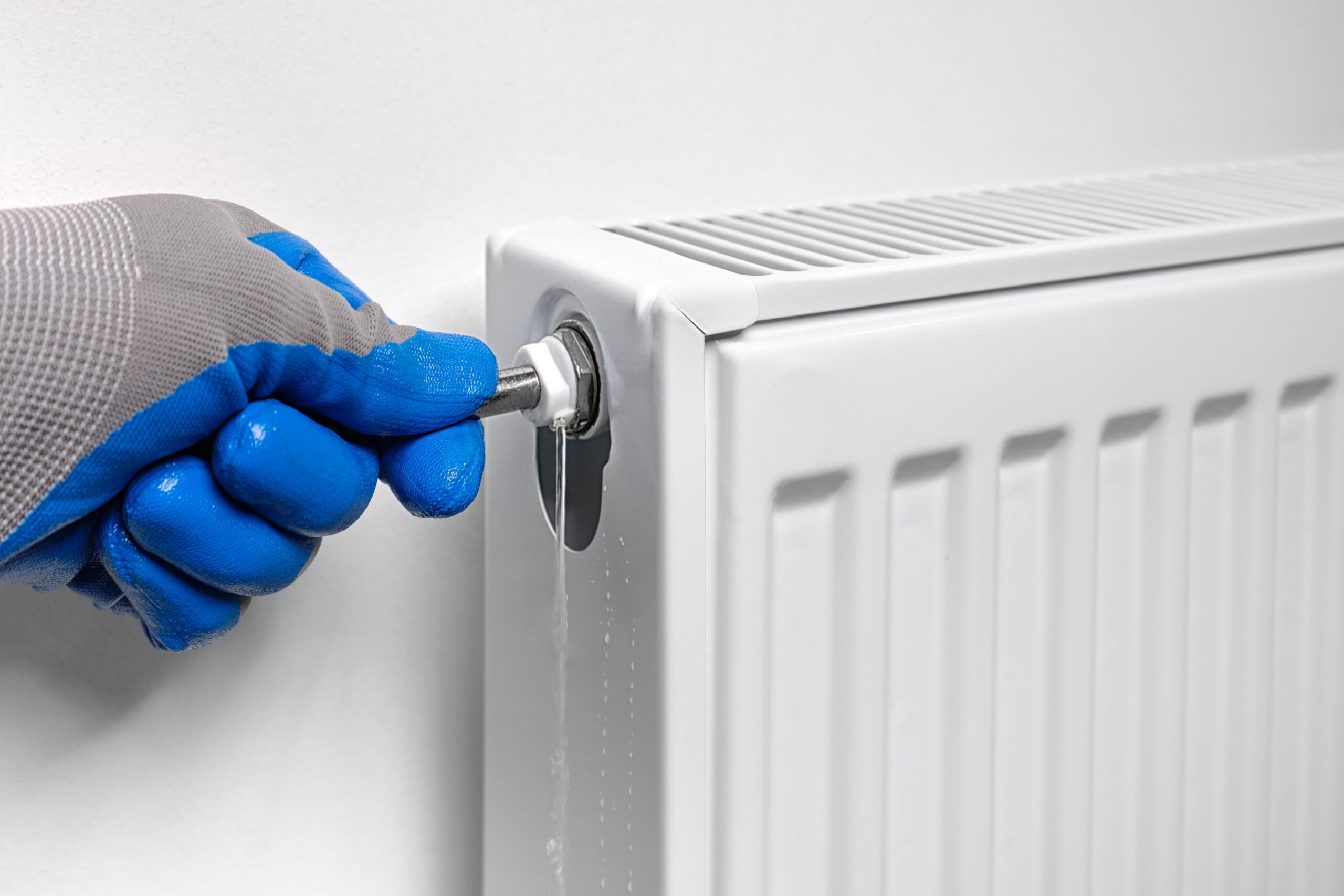
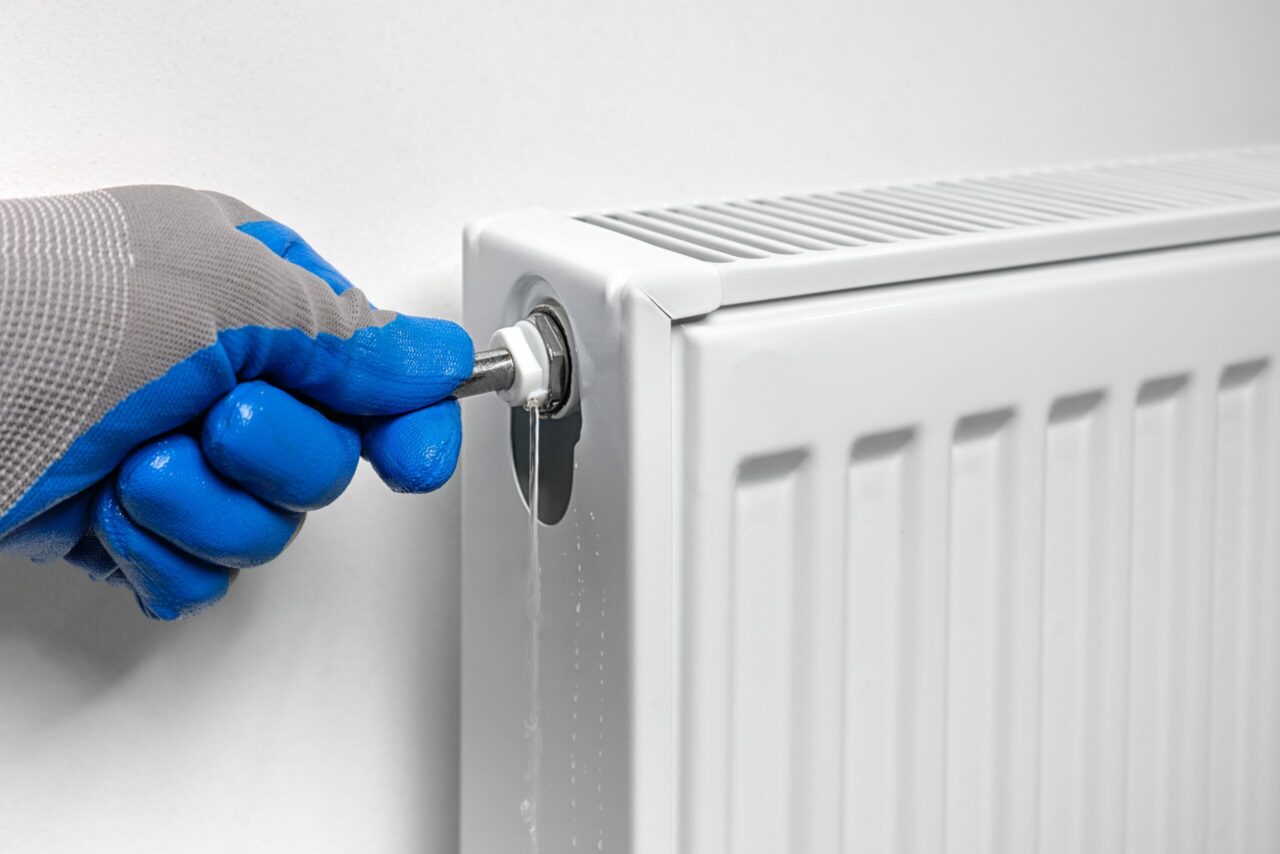
Use this method when air is localized to one or two zones and the system has individual bleed valves on radiators or baseboard end caps.
Tools needed: bleed key or small flat screwdriver, a cloth or small container to catch water.
- Run the system briefly to identify noisy or unevenly heated emitters. Then shut off the boiler and circulator and allow the water and emitters to cool before opening any manual bleed valve.
- Locate the bleed valve on the radiator or baseboard end cap.
- Place a cloth or container under the bleed valve.
- Open the bleed valve slowly. Air will hiss out first. Keep the valve open until water flows steadily with no air bubbles.
- Close the bleed valve. Wipe the area dry and check for leaks.
- Recheck system pressure after bleeding multiple units. Add water through the fill valve if pressure has dropped.
Work from the highest points in the system first. Air rises and collects at high points. On multi-story systems, bleed upper-floor emitters before lower ones.
Step 3: Perform a Full System Purge
A full purge is needed after any work that opened the system: pump replacement, valve replacement, or adding a zone. This method uses fill water pressure to push air out through a drain valve.
Prerequisites: system has a purge or drain valve at the low point of each zone, and a backflow preventer on the fill line.
- Shut off the boiler.
- Close the zone’s isolation valves except the one being purged.
- Connect a hose to the zone’s purge valve and run it to a drain.
- Open the purge valve and open the fill valve on that zone. Fresh water enters, pushing air and old water out through the drain.
- Run water until the discharge runs clear and bubble-free, typically one to two minutes per zone.
- Close the purge valve before closing the fill valve to maintain positive pressure in the zone.
- Repeat for each zone, then restore system pressure to 12 to 15 PSI cold and restart the boiler.
Step 4: Clear a Pump Air Lock
Air trapped in or around a circulator can reduce or stop water flow. The circulator may run hot, make unusual noises, or fail to produce the expected pressure differential.
- Shut off power to the boiler and circulator. Allow the system to cool before beginning service.
- Verify that the system is properly filled and pressurized and that the necessary isolation and zone valves are open.
- Purge the affected zone through the system’s designated purge valve. Do not loosen any screw, plug, or motor fastener unless the circulator manufacturer specifically identifies it as a manual air vent.
- Close the purge valve, restore the correct system pressure, and restart the circulator. Confirm that water is flowing and the unusual noise has stopped.
The Taco 007-F5 Cast Iron Circulator does not have a manual bleed screw. Taco instructs technicians to fill the system and operate the circulator for five minutes to help purge remaining air from its bearing chamber. Its replaceable cartridge allows the circulator to be serviced without replacing the entire unit. The Taco 007e ECM Circulator uses up to 85% less electricity than the traditional 007 and includes an automatic air-purging mode. Browse all circulator pumps at SupplyHouse.
Glycol Systems: Special Considerations
Hydronic systems filled with propylene glycol antifreeze are bled identically to water-only systems with one key difference: adding plain water makeup dilutes the freeze protection. Always test glycol concentration after adding makeup water.
SupplyHouse carries Hercules Cryo-Tek Antifreeze/Glycol (5 gal) and Cryo-Tek 100 for maximum freeze protection. Browse all heating supplies at SupplyHouse.
Frequently Asked Questions
How do I know if the noise is air or a failing pump?
Bleed the system first. Most gurgling and banging in hydronic systems is air-related and disappears after a thorough bleed. If noise persists after confirmed full bleeding and correct system pressure, move to pump diagnostics: check amp draw, vibration, and temperature differential across the pump.
The system keeps losing pressure after bleeding. What does that mean?
Repeated pressure loss can indicate a system leak, relief-valve discharge, an improperly adjusted or defective fill valve, or another source of water loss. A failed or incorrectly charged expansion tank may cause pressure to rise when the system heats and can lead to relief-valve discharge, but the tank should not be assumed to be the cause without testing.
Why is one baseboard always cold even after bleeding?
A consistently cold baseboard after successful bleeding usually indicates a flow balance issue, a stuck zone valve, or a clogged baseboard element. Open the end caps and check that the fins are not packed with dust or debris.
Should I add chemical inhibitor when refilling after a purge?
Yes, especially in systems that have shown signs of corrosion (rust-colored water at purge) or have been topped off multiple times with fresh water. A glycol-inhibitor system maintains pH and protects ferrous components year-round.
Can I bleed the system while cold (boiler off)?
Yes, but it’s less effective. Bleeding a hot, running system moves air to the bleed points faster and gives a clearer indication of when air stops and water begins flowing.
What is the correct system fill pressure for a residential boiler?
Typically 12 to 15 PSI cold. Operating pressure (system hot) should not exceed 25 PSI for most residential systems.
Back in the Flow
Air is the most common cause of hydronic heating complaints at the start of every heating season. A thorough fall bleed, combined with a check of auto air vents and correct system pressure, sets the system up for quiet, even heat all winter. It’s the kind of preventive work that prevents the 9 PM no-heat call in December.
Browse circulator pumps and heating supplies at SupplyHouse. Related: How to Design a Hydronic Heating System for full-system reference.