
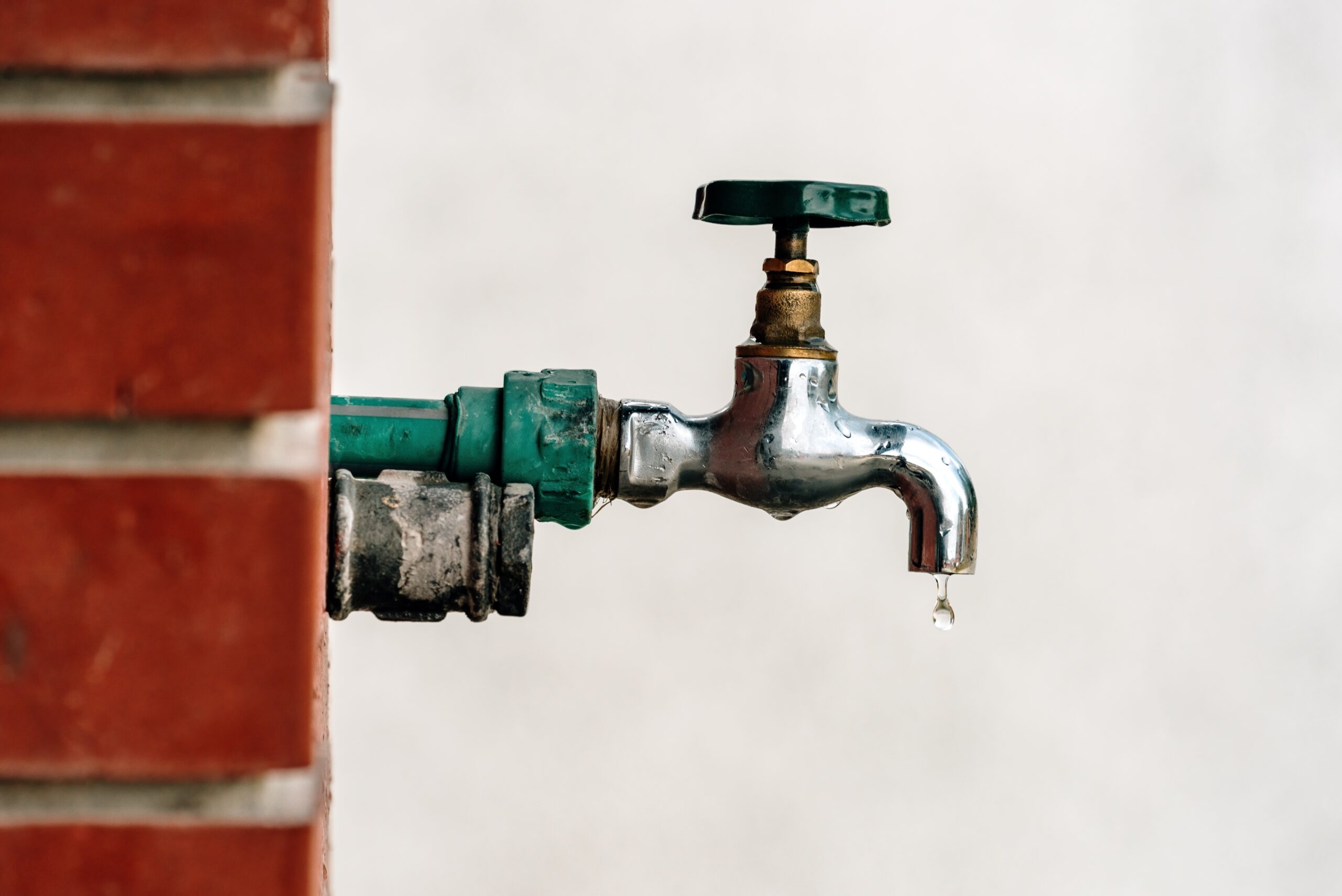

An outdoor faucet that refuses to shut off usually traces back to four parts: the packing nut, the stem assembly, the washer, or the valve seat. All four components control how water seals inside a hose bibb or sillcock.
Most repairs take less than an hour once the leaking point is identified. A small drip often comes from a worn washer. Water around the handle usually points to the packing. A faucet that never tightens often means the stem has worn threads.
Correct diagnosis prevents unnecessary replacement.
Quick Diagnosis: What Is Actually Failing
| Symptom | Likely Cause | Repair |
| Water leaking around handle | Packing nut loose or packing worn | Tighten or repack |
| Dripping from faucet spout | Worn washer or damaged seat | Replace washer or seat |
| Handle spins without resistance | Stripped stem or handle | Replace stem |
| Faucet never fully stops | Washer cut or seat pitted | Replace washer and inspect seat |
| Water appears inside wall | Split body or wall-side connection failure | Shut water and inspect immediately |
Water appearing inside the home requires immediate shutoff and inspection of the interior connection.
How an Outdoor Faucet Actually Stops Water
Most outdoor faucets use a compression shutoff design.
- Turning the handle moves the stem inward.
- The stem presses a rubber washer against the valve seat.
- The washer seals the opening and stops water flow.
Failure occurs when one of these components wears out or cannot seal against the seat.
Common outdoor faucet types include:
- Compression hose bibb
- Frost-free sillcock
- Quarter-turn outdoor valve
Packing nut, washer, stem, and seat repairs apply mainly to compression and frost-free designs.
Tools and Parts Needed
Tools:
- Adjustable wrench
- Second wrench for back-up
- Screwdriver
- Pliers
- Wire brush or abrasive pad
- Flashlight
- Bucket or towel
Common replacement parts:
- Replacement washers
- Replacement stem assembly
- Packing material or packing kit, including options like EPDM packing
- Replacement seat (if removable), plus brand repair components like bibb seats and seal kits
- PTFE tape or thread sealant when reassembling threaded components
Matching the washer size and stem design to the faucet model avoids repeat repairs.
Step 1: Shut Off the Water Supply
Close the shutoff feeding the outdoor faucet. Many homes have a dedicated shutoff inside the basement or crawlspace. If no shutoff exists:
- Close the home’s main water supply.
- Open the outdoor faucet to release pressure.
- Open a nearby indoor fixture briefly to drain remaining pressure.
A hose connected to the faucet should be removed before starting repairs.
A solid spring start-up routine helps catch these failures early. Relevant checklist: How to De-Winterize Outdoor Faucets and Irrigation Systems.
Step 2: Identify the Leak Location
Careful observation saves time.
Leak around the handle
Water appears near the stem while the faucet operates.
Cause: packing nut or packing failure.
Drip from the spout
Water continues dripping even when the faucet is closed.
Cause: washer or valve seat damage.
Handle rotates without tightening
Handle turns but does not compress the washer.
Cause: worn or stripped stem.
Fix 1: Tighten the Packing Nut
Packing prevents water from escaping around the valve stem.
- Place a wrench on the valve body to hold it steady.
- Turn the packing nut clockwise slightly.
- Adjust in small increments.
- Restore water and test the faucet.
Proper adjustment stops stem leaks while allowing the handle to turn smoothly.
Over-tightening creates excessive friction on the stem.
Fix 2: Repack the Valve Stem
Old packing can dry out or deteriorate.
Procedure:
- Shut off water and relieve pressure.
- Remove the handle.
- Remove the packing nut.
- Extract old packing with a small pick or screwdriver.
- Install new packing material or packing rings around the stem.
- Reinstall the packing nut and tighten moderately.
- Restore water and test.
Graphite packing and packing cord are common materials for hose bibb repairs. Model-specific options exist, including EPDM packing.
Fix 3: Replace the Washer
A worn washer is the most common reason an outdoor faucet drips continuously.
Steps:
- Shut off water supply.
- Remove handle screw and handle.
- Remove bonnet nut and pull out the stem assembly.
- Inspect the washer at the end of the stem.
- Replace with a washer of the same size and thickness using bibb washers.
- Reinstall the stem and reassemble the faucet.
A washer that appears shredded or uneven usually indicates seat damage.
Fix 4: Inspect and Repair the Valve Seat
The valve seat forms the sealing surface for the washer. Mineral deposits or corrosion can create pits that prevent a seal. Cleaning often solves minor damage.
Cleaning method:
- Use a small brush or abrasive pad to remove mineral buildup.
- Flush debris briefly before reinstalling the stem.
Some hose bibbs use a replaceable seat. Seat and seal options are commonly sold as brand repair parts, including seal kits and replacement bibb seats.
Seat replacement process:
- Insert a seat wrench into the valve body.
- Remove the threaded seat.
- Install the new seat and tighten firmly.
- Replace the washer before reassembly.
Integral seats that are heavily damaged usually require faucet replacement.
Fix 5: Replace the Stem Assembly
Stem replacement becomes necessary when mechanical wear prevents proper shutoff.
Common symptoms include:
- Handle turns without resistance
- Stem threads worn or stripped
- Stem visibly bent
- Washer cannot reach the seat correctly
Replacement stems must match the faucet brand and model. Model identification may be stamped on the valve body.
Special Case: Frost-Free Outdoor Faucets
Frost-free sillcocks place the shutoff seat deeper inside the wall.
Common shutoff failures include:
- Worn washer at the end of the long stem
- Debris blocking the seat
- Stem wear preventing full closure
- Freeze damage to the valve barrel
Repair kits exist for specific models. Example: Woodford RK-24 repair kit. Another example for certain frost-free designs: SharkBite stem repair kit.
A hose left connected during winter can cause internal damage that appears months later as a faucet that will not shut off.
Visible cracking or internal leaks usually mean replacement is the practical repair.
Special Case: Quarter-Turn Outdoor Faucets
Quarter-turn faucets use a ball valve instead of a washer and seat.
Failure points include:
- Internal seal wear
- Debris inside the valve body
- Damaged cartridge or ball assembly
Many quarter-turn outdoor faucets are not designed for internal rebuild. Replacement often requires less time than attempting repair.
Troubleshooting Chart
| Symptom | First Repair | Second Repair |
| Leak at handle | Tighten packing nut | Repack stem |
| Drip from spout | Replace washer | Inspect seat |
| Handle spins | Replace stem | Replace valve |
| Faucet still will not shut off | Replace washer and seat | Replace faucet |
Common Repair Mistakes
Several mistakes turn a simple repair into a larger job.
- Over-tightening the handle instead of replacing the washer
- Ignoring seat damage when installing a new washer
- Tightening the packing nut excessively
- Removing the faucet without holding a back-up wrench
- Attempting repairs without shutting off water supply
Proper diagnosis avoids repeated disassembly.
FAQs
Why does an outdoor faucet keep dripping after replacing the washer?
Seat damage or debris often prevents sealing. Inspect the seat whenever installing a new washer.
Can tightening the packing nut stop a drip at the spout?
No. Packing controls leakage around the stem. Drips at the spout come from washer or seat problems.
How tight should the packing nut be?
The packing nut should stop stem leakage while allowing smooth handle movement. Small adjustments are usually enough.
When is faucet replacement the better option?
Replacement becomes practical when the seat is integral and heavily pitted, the valve body is cracked, or repair parts are unavailable.
What stops water immediately during a repair?
Closing the interior shutoff feeding the faucet is the fastest method. If no shutoff exists, the home’s main water valve must be closed.
Conclusion
An outdoor faucet that will not shut off usually fails at a sealing surface. Packing controls stem leaks. Washers seal the water flow. Seats provide the sealing surface. Stems transfer handle movement to the washer.
Systematic inspection starting at the leak location leads to the correct repair quickly. Packing adjustments solve handle leaks. Washer and seat repairs stop spout drips. Stem replacement fixes worn mechanical parts.
Accurate diagnosis saves time and prevents unnecessary faucet replacement.