

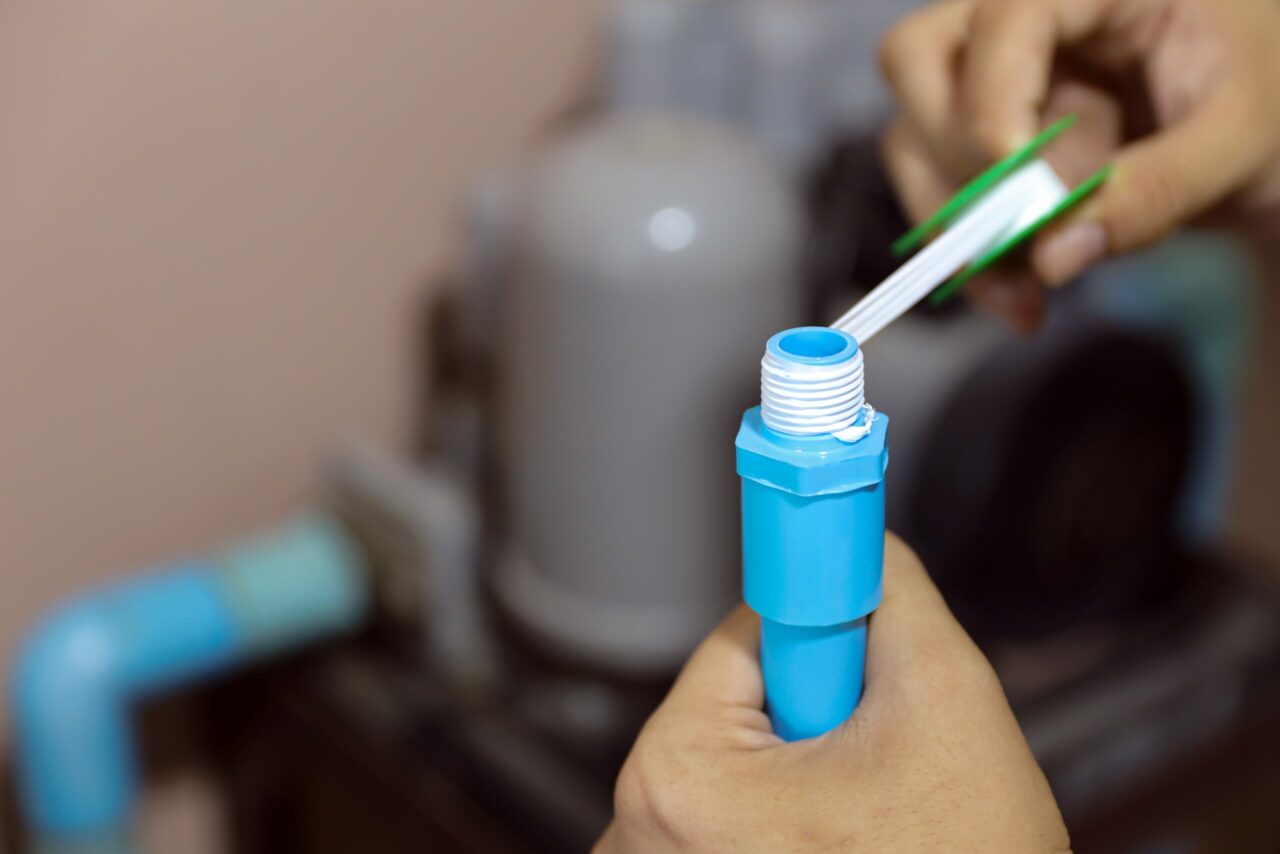
Threaded pipe connections fail for boring reasons. Most leaks trace back to dirty threads, the wrong sealant, or sloppy application. PTFE tape and thread sealant both work, but only when matched to the application and applied with restraint.
Gas piping, hydronic systems, compressed air, and domestic water all behave differently under pressure and temperature changes. Understanding when to use PTFE tape, when to use thread sealant, and how to apply each one correctly keeps threaded joints tight without overstressing fittings or cracking female threads, especially on black iron and malleable iron runs commonly built with black fittings and nipples like the ones found here:
https://www.supplyhouse.com/Black-Fittings-21774000
Quick answer for sealing threaded pipe correctly
- Clean male threads before applying any sealant
- Wrap PTFE tape clockwise, starting one thread back
- Use tape thickness appropriate for the system
- Apply thread sealant in a thin, even coat
- Tighten fully without backing off
What PTFE tape actually does
PTFE tape fills the microscopic gaps between male and female threads while reducing friction during tightening. Reduced friction allows threads to seat fully without galling, especially on softer metals and plastic fittings.
PTFE tape works well for:
- Domestic water piping
- Compressed air systems
- Plastic threaded fittings
- Low-pressure gas systems where code allows
Supplyhouse carries multiple tape thicknesses and ratings in the Pipe Joint Tape section here:
https://www.supplyhouse.com/TFE-Pipe-Joint-Tape-492000
Product pages are also helpful when a job calls for a specific tape style. Blue Monster PTFE tape is a common pick when a thicker, higher-quality tape is needed:
https://www.supplyhouse.com/Blue-Monster-70885-TFE-Blue-Monster-1-2-PTFE-Thread-Seal-Tape
Yellow PTFE tape is often used for gas-rated applications where tape is permitted, and Supplyhouse stocks that option as well:
https://www.supplyhouse.com/Rectorseal-66689-1-2-x-260-PTFE-Thread-Seal-Tape-Yellow
Tape thickness matters. Thin tape requires more wraps. Thicker tape requires fewer wraps and provides better gap filling.
What thread sealant does differently
Thread sealant, commonly called pipe dope, seals threads while remaining flexible after assembly. Flexibility allows the joint to handle vibration, temperature swings, and pressure changes without losing seal integrity.
Thread sealant performs well in:
- Gas piping
- Hydronic heating systems
- High-temperature applications
- Metal-to-metal threaded joints
The Thread Sealants category on Supplyhouse includes non-hardening, gas-rated, and temperature-resistant formulas built for those conditions:
https://www.supplyhouse.com/Thread-Sealants-1861000
A solid example of a brush-in-cap sealant commonly used across metal and many plastic systems is Megaloc:
https://www.supplyhouse.com/Hercules-15806-Megaloc-Thread-Sealant-8-oz
PTFE tape vs thread sealant
Selecting the right sealing method prevents leaks and avoids cracked fittings.
| Application | Better choice | Reason |
| Domestic water | PTFE tape | Clean and easy |
| Plastic threads | PTFE tape | Lower cracking risk |
| Gas piping | Thread sealant | Better gap filling |
| Hydronic heating | Thread sealant | Handles thermal cycling |
| Vibration-prone systems | Thread sealant | Maintains flexibility |
Using both products together is rarely necessary and often creates uneven sealing.
How to apply PTFE tape correctly
Step 1: Clean the threads
Wipe male threads clean and dry. Dirt and oil prevent tape from conforming to thread grooves.
Step 2: Start one thread back
Leaving the first thread bare prevents tape from shredding and entering the system.
Step 3: Wrap clockwise
Wrap tape in the same direction the fitting tightens. Counterclockwise wrapping causes tape to unravel during assembly.
Step 4: Apply the correct number of wraps
- Standard white PTFE tape: 3 to 4 wraps
- Thicker gas-rated tape: 2 to 3 wraps
Press tape into the threads as it wraps to maintain full contact.
A real-world example of tape wraps called out in context shows up in the water heater install walkthrough, which references PTFE tape wraps on dielectric unions:
https://blog.supplyhouse.com/how-to-install-a-water-heater-correctly/
How to apply thread sealant correctly
Step 1: Clean the threads
Sealant bonds best to clean metal.
Step 2: Apply a thin, even coat
Cover male threads only. Excess sealant does not improve sealing and increases contamination risk.
Step 3: Avoid the first thread
Leaving the first thread clean prevents sealant from being pushed inside the pipe.
Step 4: Tighten fully
Once tightened, do not back off to align fittings. Backing off breaks the seal.
Common sealing mistakes and how to avoid them
| Mistake | Result | Better approach |
| Wrapping tape backward | Tape unravels | Wrap clockwise |
| Too many wraps | Split fittings | Use fewer wraps |
| Too much sealant | System contamination | Thin, even coat |
| Combining tape and sealant | Uneven sealing | Choose one |
| Backing off fittings | Leaks | Align before tightening |
Notes on plastic threaded fittings
Plastic threads require restraint. PTFE tape reduces friction, which lowers the risk of cracking female fittings.
Best practices for plastic threads:
- Use PTFE tape only
- Use fewer wraps than metal threads
- Tighten by hand, then one to two wrench turns
Thread sealant should only be used on plastic if the product documentation explicitly allows it.
A practical example that includes tape or sealant on threaded transitions shows up in the PEX transition guide:
https://blog.supplyhouse.com/how-to-connect-pex-to-other-pipe-types-copper-pvc-pb-faucets-toilets/
Another useful reference for PVC transitions and threaded adapters is here:
https://blog.supplyhouse.com/connecting-pex-to-pvc/
Why proper thread sealing matters long term
Threaded joints that seal correctly the first time stay sealed. Proper prep reduces stress on fittings, prevents microscopic leaks, and limits movement under pressure changes.
Most failures show up after the system heats, cools, or vibrates. Correct sealant choice and controlled tightening handle those conditions without drama.
Conclusion
Threaded connections are only as reliable as the prep behind them. Clean threads, the right sealant choice, and controlled application do more for leak prevention than brute force ever will.
PTFE tape handles light-duty and plastic applications cleanly. Thread sealant handles heat, vibration, and gas with more flexibility. Using either one correctly keeps fittings intact and joints sealed under real-world conditions.
Take a few extra seconds to prep threads and apply sealant with purpose. Those seconds save hours later, and keep systems tight long after pressure is applied.
Frequently Asked Questions About PTFE Tape and Thread Sealant
Should PTFE tape be wrapped clockwise or counterclockwise?
PTFE tape should always be wrapped clockwise, matching the tightening direction of the fitting.
Can PTFE tape be used on gas lines?
Gas-rated PTFE tape can be used where code permits. Many professionals choose thread sealant for gas due to better flexibility and vibration resistance.
Is it acceptable to use PTFE tape and thread sealant together?
Using both together is rarely beneficial and often leads to uneven sealing. One properly applied product works better.
How many wraps of PTFE tape should be used?
Standard tape typically requires three to four wraps. Thicker tape requires fewer wraps.
Why do threaded joints leak after tightening?
Leaks usually result from dirty threads, backing off fittings, or excessive sealant use.