
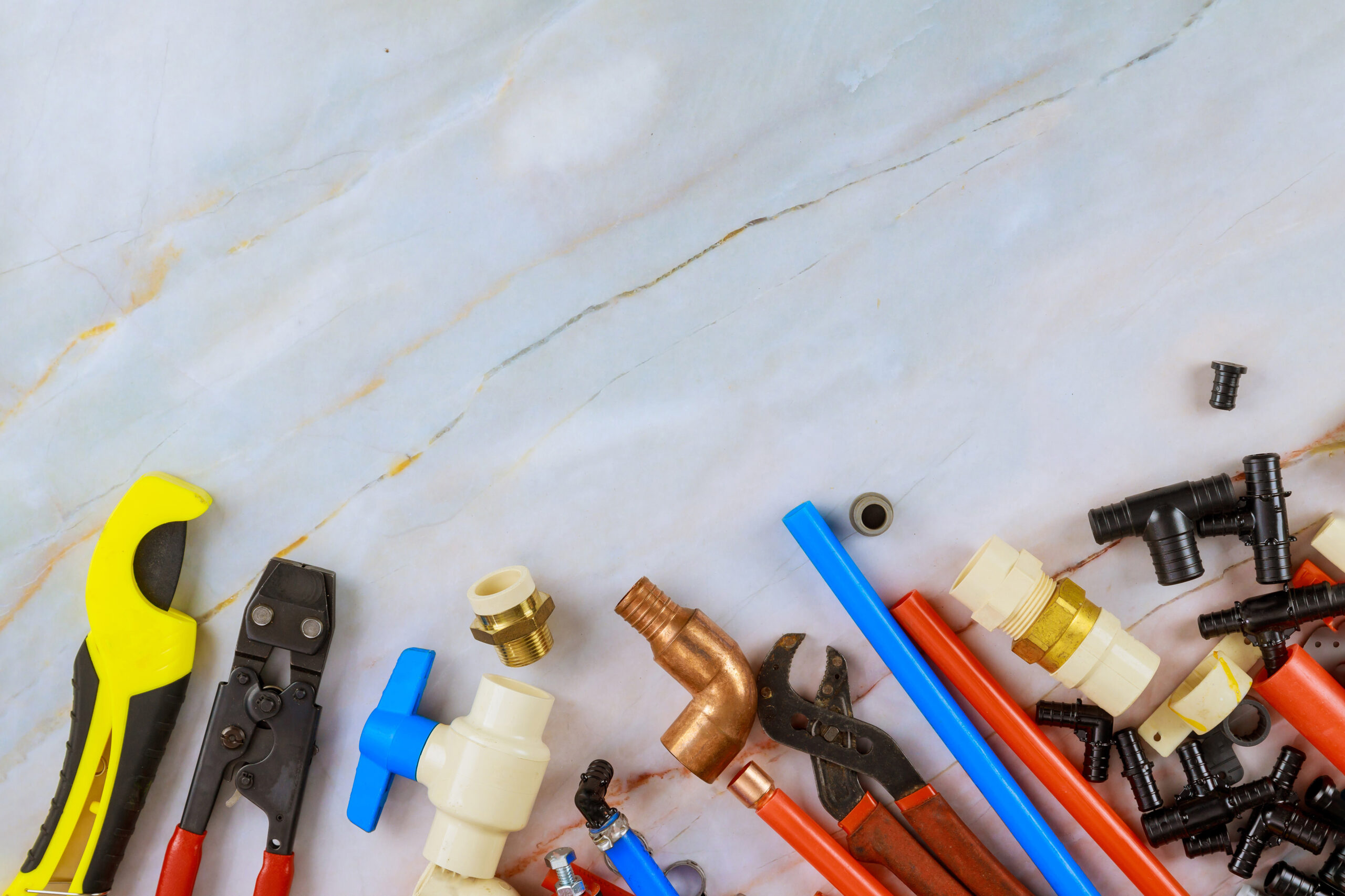
PEX is easy to install, resistant to corrosion, and cost-effective — which makes it a favorite for both new construction and retrofits. But it doesn’t exist in a vacuum. Whether you’re tying into an old copper system or branching out to fixtures, you’ll eventually have to connect PEX to something else. Here’s a breakdown of how to connect PEX to Copper, PVC, PB (Polybutylene), Faucets, and Toilets — with correct, code-compliant methods, step-by-step instructions, and the recommended tools for the job.
Connecting PEX to Copper
There are a few ways to connect PEX to copper — some permanent, some removable. The best choice depends on the application and local code.
Method 1: Push-Fit Fittings (like SharkBite)
- Pros: Fast, no tools needed, removable
• Use cases: Accessible areas, quick repairs
Steps:
- Cut the copper pipe clean and square.
- Deburr the end to prevent damage to the O-ring.
- Push the SharkBite fitting fully onto the copper side.
- Insert the PEX into the other side until it clicks.
Method 2: Sweat-to-PEX Adapter
- Pros: Permanent, compact
• Use cases: Behind walls, long-term installs
Steps:
- Cut and clean the copper.
- Apply flux and solder a sweat adapter in place.
- Once cooled, crimp or clamp the PEX onto the adapter.
Method 3: Press Fitting to PEX Adapter
- Use a press tool to secure one side to copper.
• Connect PEX with a crimp ring or clamp.
Connecting PEX to PVC
Important note: Do NOT use PVC cement on PEX. It won’t bond, and the connection will fail. Use a mechanical fitting instead.
Method: Threaded Transition
- Pros: Simple, secure
• Use cases: Permanent installations
Steps:
- Glue a male or female threaded adapter onto the PVC pipe using primer and cement (PVC side only).
- Wrap the threads with Teflon tape or apply thread sealant.
- Thread on a PEX adapter (brass or poly).
- Connect PEX using a clamp, crimp, or push-to-connect.
Method: Push-Fit Fitting (e.g., SharkBite)
- Must be rated for both PEX and PVC.
• Push one end onto PVC, other onto PEX.
Connecting PEX to Polybutylene (PB)
PB was common in the ‘80s and ‘90s, but it’s no longer manufactured due to long-term reliability issues. So if you’re making repairs or updates to a PB system, it’ll often involve converting to PEX.
Method: PB to PEX Transition Fitting
- Look for fittings labeled PB x PEX or universal push-to-connect (e.g., SharkBite)
Steps:
- Cut the PB pipe square.
- Insert a stiffener into the PB (if required).
- Push on the PB side of the fitting.
- Attach PEX to the other side using a crimp, clamp, or push connection.
Connecting PEX to Faucets and Toilets
Connecting to fixtures means making a clean transition from flexible PEX to a solid threaded fitting or valve.
Method: Drop-Ear Elbow with PEX Inlet
- Pros: Anchors to framing, clean finish
• Use cases: Sinks, toilets, hose bibbs
Steps:
- Secure a drop-ear elbow (usually ½” FIP) to a stud or bracket.
- Crimp or clamp PEX onto the rear inlet of the elbow.
- Thread on an angle stop or straight valve.
- Connect to the faucet or toilet using a braided supply line.
You can also use a stub-out bend support or a push-to-connect valve, depending on the install.
Final Takeaways
When connecting PEX to other materials:
- Never glue it — use mechanical fittings.
- Always match the fitting to both pipe materials.
- Use crimp, clamp, or push connections depending on the job.
- Anchor fittings when they’ll be exposed.
- Use insert stiffeners if required by code or fitting spec.
With the right adapter, you can connect PEX to just about anything. Just about.
Need fittings or tools? SupplyHouse stocks a full line of transition fittings from trusted brands like SharkBite, Sioux Chief, and Bluefin.