
Heat loss calculation sits at the center of every properly designed heating system. Boilers, furnaces, heat pumps, and radiant layouts all rely on one number: how many BTUs per hour a building loses at winter design conditions.
Skipping the math leads to oversized equipment, short cycling, uneven room temperatures, and higher fuel bills. Accurate heat loss calculations support steadier runtimes, longer equipment life, and lower energy costs across the heating season.
Supplyhouse keeps commonly used sizing tools collected in one place here:
https://www.supplyhouse.com/resources/calculators
A fast starting point for whole-home boiler sizing is available here:
https://www.supplyhouse.com/sh/control/BTUCalculator
An overview of recent calculator updates lives here:
https://blog.supplyhouse.com/smarter-sizing-starts-here-supplyhouses-most-used-calculators-got-a-refresh/
Heat loss, in one line
Heat loss (BTU/hr) equals heat escaping through the building envelope plus heat carried out by air leakage, evaluated at design temperature.
That single number defines how hard the heating system must work during the coldest expected conditions.
Key terms that show up in every heat loss conversation
Understanding shared terminology avoids sizing mistakes and miscommunication between designers, installers, and inspectors.
| Term | Meaning | Typical unit |
| BTU/hr | Heating required per hour at design conditions | BTU per hour |
| ΔT | Temperature difference, indoor minus outdoor | °F |
| R-value | Resistance to heat flow | R |
| U-factor | Heat transfer rate, inverse of R | BTU/hr·ft²·°F |
| ACH | Air changes per hour from leakage or infiltration | 1/hr |
| CFM | Cubic feet per minute of air movement | ft³/min |
These values appear repeatedly in load calculations, equipment specifications, and system documentation.
Step 1: Pick design temperatures
Indoor design temperature is commonly set at 70°F for residential applications. Outdoor design temperature depends on geographic location and reflects worst-case winter conditions rather than seasonal averages.
Design temperature selection directly affects calculated load. A small change in outdoor design temperature can add or remove thousands of BTUs per hour.
Manual J establishes the framework for residential load assumptions. A practical walkthrough focused on boiler BTU planning is available here:
https://blog.supplyhouse.com/how-to-calculate-boiler-btu-requirements/
Step 2: Measure the building envelope
Surface area drives conduction losses. Accurate measurements matter more than rounding or visual estimates.
Key surfaces to measure include:
- Exterior walls, subtracting window and door openings
- Ceiling or roof surfaces above conditioned space
- Floors above garages, crawlspaces, or unconditioned basements
- Windows and exterior doors by type
Each surface contributes differently to total heat loss depending on construction and insulation value.
Insulation products that reduce envelope losses are grouped here:
https://www.supplyhouse.com/Insulation-21812000
Step 3: Convert R-value to U-factor
Most conduction calculations use U-factor rather than R-value.
U-factor represents how quickly heat moves through a surface. Lower values indicate slower heat transfer.
U = 1 ÷ R
Example:
R-13 wall insulation
U = 1 ÷ 13 = 0.077
Step 4: Calculate conduction loss for each surface
Conduction losses account for heat moving through solid materials such as walls, ceilings, and floors.
Formula:
BTU/hr = Area (ft²) × U × ΔT
| Surface | Area (ft²) | R | U | ΔT (°F) | Loss (BTU/hr) |
| Exterior wall | 200 | 13 | 0.077 | 60 | 924 |
| Attic or ceiling | 800 | 38 | 0.026 | 60 | 1,248 |
| Window group | 120 | N/A | 0.35 | 60 | 2,520 |
Each exterior surface receives its own calculation. Missing one surface often explains unrealistically low totals.
Step 5: Add infiltration (air leakage)
Air leakage introduces cold outdoor air that must be heated to indoor temperature. Older buildings often lose more heat through infiltration than through walls.
A practical approach uses air changes per hour to estimate airflow.
CFM = (ACH × Building volume) ÷ 60
Infiltration loss (BTU/hr) = 1.08 × CFM × ΔT
Infiltration loads rise quickly as outdoor temperatures drop, which explains why draft control often improves comfort more than insulation alone.
Step 6: Total heat loss
Total heat loss equals the sum of all conduction losses plus infiltration loss.
That final BTU per hour value defines heating demand at design conditions.
A quick sanity check helps catch calculation errors.
| Climate trend | Rough range (BTU/hr per ft²) |
| Warm | 25 to 35 |
| Moderate | 35 to 45 |
| Cold | 45 to 60 |
| Very cold | 55 to 70 |
Values far outside these ranges usually indicate missing surfaces, incorrect ΔT, or unrealistic infiltration assumptions.
Turning heat loss into equipment selection
Heat loss defines required output. Equipment selection follows from that number, not from square footage rules or existing system size.
Boilers
Boilers should be selected based on output BTUs that closely match calculated heat loss.
Boiler category:
https://www.supplyhouse.com/Boilers-449000
Boiler BTU calculator:
https://www.supplyhouse.com/sh/control/BTUCalculator
Boiler BTU requirements guide:
https://blog.supplyhouse.com/how-to-calculate-boiler-btu-requirements/
Hydronic circulators
Circulator selection depends on required flow rate and system head loss, both of which trace back to room-level heat loss and emitter sizing.
Circulator pump category:
https://www.supplyhouse.com/Pumps-Flanges-288000
Hydronic heating supplies hub:
https://www.supplyhouse.com/Heating-Supplies-193000
Radiant heat
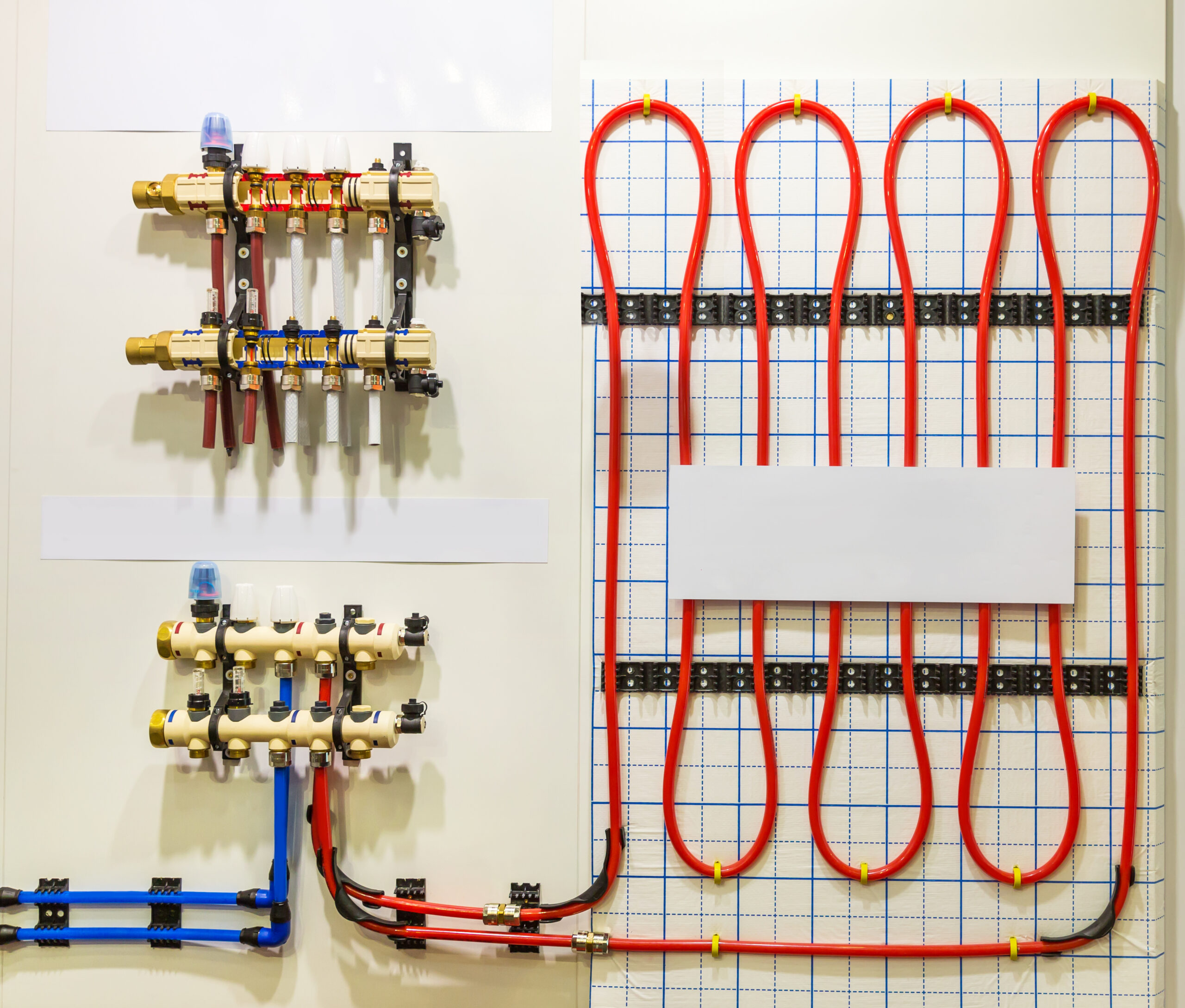
Radiant systems rely heavily on room-by-room heat loss to determine tubing spacing, loop length, and supply water temperature.
Radiant supplies category:
https://www.supplyhouse.com/Radiant-Heat-297000
Radiant heat calculator:
https://www.supplyhouse.com/sh/control/RadiantHeatCalculator
Radiant retrofit guidance:
https://blog.supplyhouse.com/how-to-convert-old-heating-to-radiant-floor-heat/
Furnaces and heat pumps
Forced-air systems still depend on accurate heat loss numbers, especially when evaluating low-temperature performance.
Furnace category:
https://www.supplyhouse.com/Furnaces-30161000
Heat pump category:
https://www.supplyhouse.com/Heat-Pumps-24982000
Mini split sizing tool:
https://www.supplyhouse.com/sh/control/MiniSplitCalculator
Mini split selection guide:
https://blog.supplyhouse.com/how-to-choose-the-right-mini-split-system/
Baseboard planning
Baseboard output must meet room-level heat loss without forcing high water temperatures.
Baseboard calculator:
https://www.supplyhouse.com/sh/control/BaseBoardCalculator
Tools that speed up the math
| Tool | Best for | Link |
| Boiler BTU Calculator | Whole-home boiler estimates | https://www.supplyhouse.com/sh/control/BTUCalculator |
| Radiant Heat Calculator | Radiant system planning | https://www.supplyhouse.com/sh/control/RadiantHeatCalculator |
| Mini Split Calculator | Room-based ductless sizing | https://www.supplyhouse.com/sh/control/MiniSplitCalculator |
| Baseboard Calculator | Linear footage planning | https://www.supplyhouse.com/sh/control/BaseBoardCalculator |
| All calculators | Project planning hub | https://www.supplyhouse.com/resources/calculators |
FAQ: Heat loss calculations
What is heat loss in HVAC terms?
Heat loss is the amount of heat a building loses per hour at winter design conditions, expressed in BTU/hr.
What is a typical heat loss per square foot?
Ranges vary by climate and construction. Planning values often fall between 25 and 70 BTU per square foot per hour.
Does Manual J calculate heat loss?
Manual J provides the standardized framework for residential load calculations. Heat loss represents the heating output of that process.
What matters more, insulation or air leakage?
Both matter. Air leakage frequently dominates older buildings, especially at attics, rim joists, and penetrations.
Final takeaway
Heat loss calculation is not paperwork and it is not optional. It is the step that determines whether a heating system feels steady or chaotic once winter hits. Accurate numbers guide every downstream decision, from equipment size to emitter output to circulator selection.
Systems sized from real heat loss data run longer, cycle less, and deliver even room temperatures. Fuel use drops because equipment no longer fires harder or more often than necessary. Component life improves because short cycling and excessive starts get eliminated.
Heat loss math also creates flexibility. When envelope upgrades reduce BTU demand, equipment can be downsized. When zoning or radiant distribution gets added, room-level loads keep output balanced instead of guessed. Troubleshooting becomes easier because the original design intent is documented in numbers, not assumptions.
Square-foot rules feel faster, but they cost more over time. Accurate heat loss calculations replace guesswork with repeatable results and give every system a clear performance target.
Do the math once, do it carefully, and the rest of the system design falls into place.