
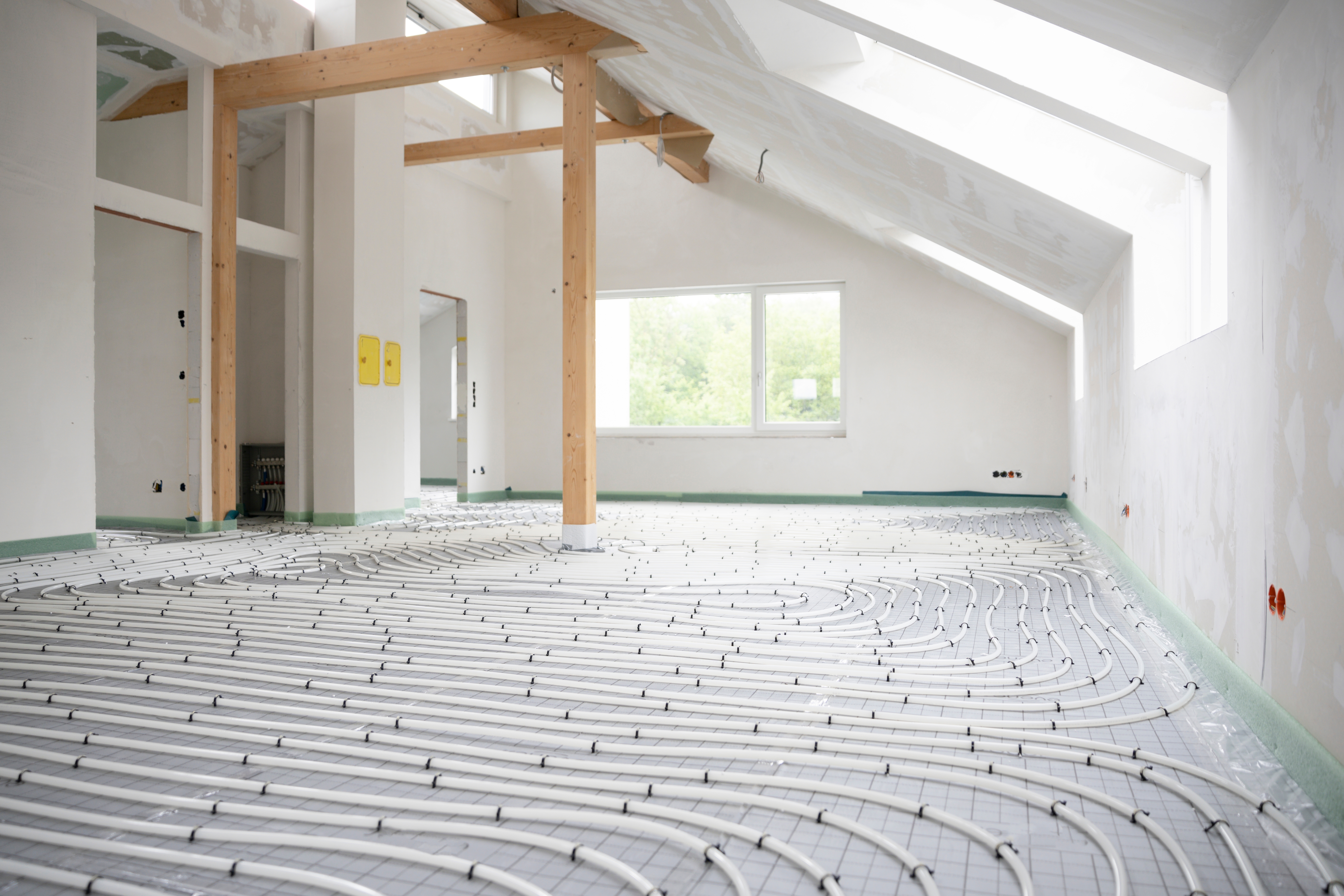
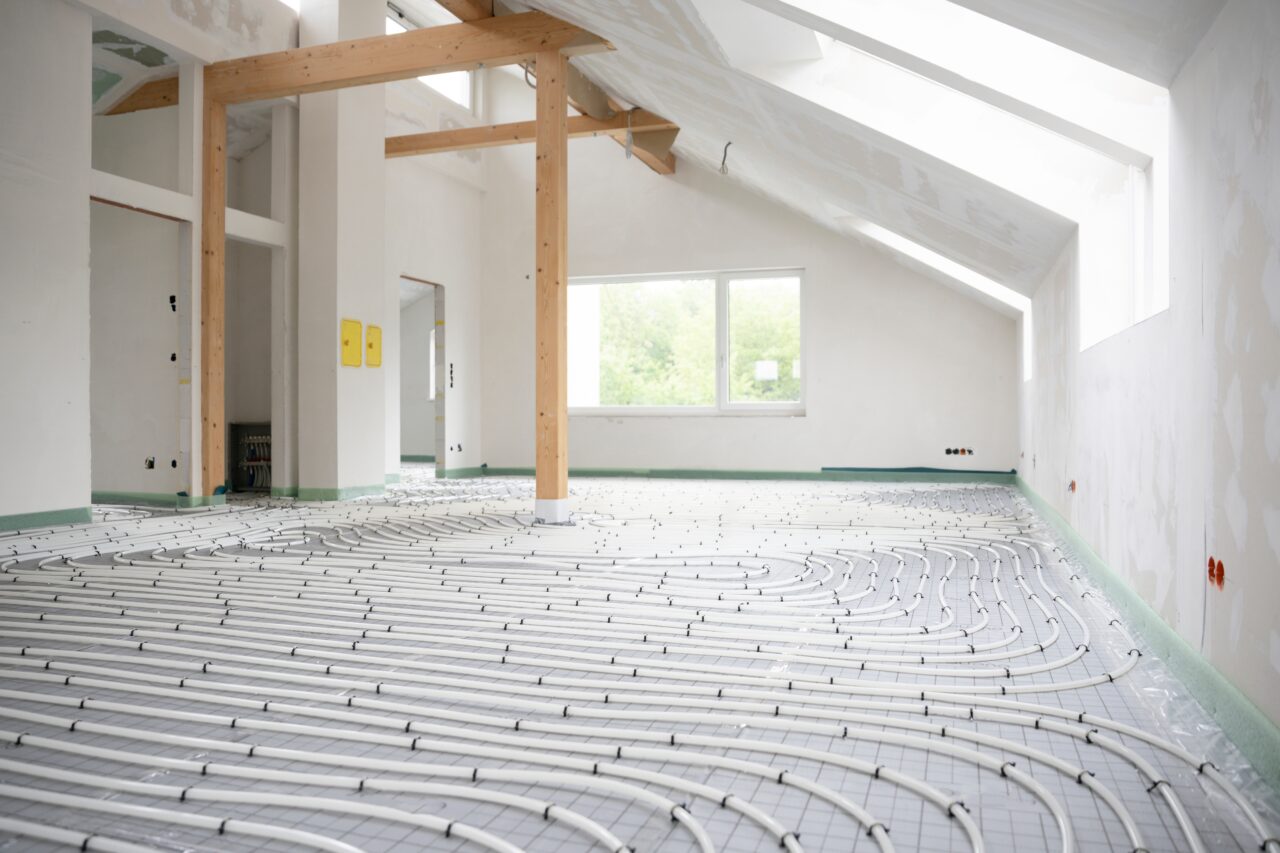
Most homes built before the 1990s heat the air, not the people. Baseboards, radiators, and forced-air systems get the job done, but they create drafts, cold floors, and uneven comfort. Radiant floor heating changes that. It warms the floor itself, spreading steady heat from the ground up. The result is quieter, cleaner, and more consistent warmth that often uses less energy.
Upgrading an older heating system to radiant floor heat isn’t as complicated as it sounds. With modern hydronic technology, oxygen-barrier PEX tubing, pre-assembled manifolds, and smart mixing controls, a radiant retrofit can fit almost any home. This guide explains when a conversion makes sense, what materials to use, and how to design a system that performs well for decades.
Why radiant heat is worth the conversion
Radiant heat works differently. Instead of pushing hot air through ducts or relying on metal fins, it turns the entire floor into a low-temperature radiator. The warmth rises naturally, surrounding the space evenly.
Benefits of converting to radiant heat:
- Comfort: No more cold spots or noisy fans cycling on and off.
- Health: Fewer allergens since air and dust aren’t constantly stirred up.
- Efficiency: Radiant systems often operate with supply water around 100–130°F instead of 180°F. That’s less fuel burned and a longer boiler life.
- Flexibility: Works in slabs, under existing floors, or above subfloors during remodels.
Many pros describe radiant as “invisible comfort.” Once it’s in, it just works quietly in the background.
When a radiant retrofit makes sense
A radiant conversion pays off most when:
- Floors or slabs are already exposed for renovation.
- An existing boiler is being replaced or modernized.
- Certain rooms never heat evenly (especially basements, over-garage spaces, and older additions).
- Energy costs are climbing and efficiency upgrades are planned.
Older hydronic systems can often be repurposed for radiant with proper mixing valves and manifolds. That means you can keep what works and modernize what doesn’t.
Common retrofit methods
1) In-slab or basement radiant
Tubing is installed within the concrete slab. The mass of the concrete holds warmth for hours, maintaining stable temperatures with minimal cycling. Ideal for basements, garages, and new additions.
Explore materials:
2) Underfloor staple-up for existing wood floors
For existing homes with accessible joist bays, PEX tubing can be stapled under the subfloor with aluminum heat transfer plates. This method delivers fast response and steady heat without tearing up the flooring above.
Useful links:
3) Suspended-tube or Ultra-Fin systems
When stapling plates isn’t an option, a suspended-tube setup works. Aluminum fins clip onto the tubing, creating convection that evenly warms the floor above. It’s less invasive and great for retrofits.
Learn more at Radiant Heat Without the Concrete: Ultra-Fin Plates.
4) Above-floor overpour or grooved panel systems
If flooring is being replaced, consider grooved radiant panels or a thin concrete overpour. The tubing sits within channels, topped by finished flooring. It’s efficient and blends easily into remodel projects.
5) Electric radiant mats for small spaces
Hydronic radiant isn’t always necessary for bathrooms or entryways. Electric mats heat quickly, install easily, and are perfect for small or hard-to-plumb areas.
More details: Danfoss Electric Radiant Heating.
How to design a radiant retrofit that works
Design determines success. Follow these fundamentals before running tubing.
Heat loss and water temperature
Each room has its own heat loss based on insulation, window area, and flooring type. Calculate the load and pick tubing spacing and water temperature accordingly. For most radiant floors, supply water between 100–130°F keeps surface temps under 85°F, perfect for comfort and efficiency.
Zoning and manifold layout
Group rooms with similar heat demands into zones. Manifolds with flow meters and balancing valves simplify setup. Add actuators for automatic zone control.
Helpful links:
Mixing and control
Older boilers run hot; radiant floors don’t need it. Blend water temperatures with a thermostatic mixing valve or radiant mixing block, and add smart control for outdoor reset.
Explore:
Circulation, air, and expansion
Circulators push the flow; air separators and expansion tanks keep it smooth. Always add a reliable air eliminator and expansion tank sized for system volume.
See:
Controls and thermostats
Floor-sensing thermostats manage comfort precisely. Zoning panels or smart radiant thermostats help balance rooms and prevent overheating.
Check out:
Common mistakes and how to avoid them
- Running radiant at boiler temperatures (too hot). Use a mixing valve to blend down.
- Skipping heat-transfer plates under wood floors. They cut water temps and improve comfort.
- Neglecting air elimination. Air causes noise and flow issues.
- Oversized loops. Keep 1/2-inch PEX runs under 300 feet.
- Forgetting floor sensors. Especially under wood, they prevent damage from overheating.
FAQs
Can a water heater run a small radiant zone?
Yes, if the setup isolates the heating water properly. The Taco X-Pump Block is a safe and efficient way to do this.
Is radiant heating efficient?
Yes. Lower water temps mean less fuel use. Condensing boilers are especially efficient with radiant because they recover more heat from exhaust gases at cooler return temps.
Which PEX should I use?
Always go with oxygen-barrier PEX for hydronic systems. Try Bluefin Oxygen Barrier PEX Tubing.
Can radiant be installed under wood floors?
Yes, but surface temperatures should stay below 85°F. Use plates or panels for better conduction and add a floor sensor for control.
Do radiant systems need special thermostats?
They do. Radiant thermostats manage floor temperature directly. See Radiant Heat Thermostats.
Pro tips from the field
- Label every loop and document lengths, flows, and balancing settings.
- Purge one loop at a time. Air hides in long runs and elbows.
- Stick with one PEX connection type, crimp, clamp, or expansion, to keep fittings consistent.
- Start with the lowest water temperature that meets the load and fine-tune upward.
More insight: PEX Fittings and Connection Systems.
The bottom line
Converting an old heating system to radiant floor heat delivers comfort you can feel with every step. The system runs quietly, keeps floors warm, and operates at lower temperatures that save energy. Once installed, radiant heat requires little maintenance and lasts for decades.
For homeowners, it’s a practical way to modernize comfort and reduce monthly bills. For tradespeople, it’s a reliable, high-value upgrade that satisfies clients and minimizes callbacks.
Everything mentioned here, from PEX coils to manifolds, valves, pumps, and thermostats, is available at Supplyhouse. Each product link above leads to verified, in-stock parts ready for any radiant retrofit project.
Radiant heat isn’t just a luxury upgrade anymore. It’s a smarter, quieter, more comfortable way to heat a home, one that rewards both installers and homeowners for doing it right the first time.