
Summer energy bills have always been a sore subject, but new data suggests the stress has reached a new level for American homeowners. SupplyHouse surveyed 1,000 U.S. homeowners in May 2026 about their cooling cost expectations, spending behaviors, and HVAC maintenance habits heading into the season. The results show homeowners caught between comfort and cost.
Key Takeaways
- More than 3 in 4 homeowners (77%) say summer energy bills cause financial stress.
- 15% of homeowners plan to sleep in uncomfortable heat this summer rather than run their AC overnight.
- If cooling costs rose, nearly half of homeowners (48%) say dining out would be the first thing to go.
- The average homeowner expects to pay $221 per month for cooling this summer.
- 19% are afraid to call an HVAC professional because of what it might cost, and 1 in 10 has attempted a DIY repair.
Summer Cooling Costs Are Hitting Homeowners Hard
For many homeowners, summer energy bills have become a source of stress.
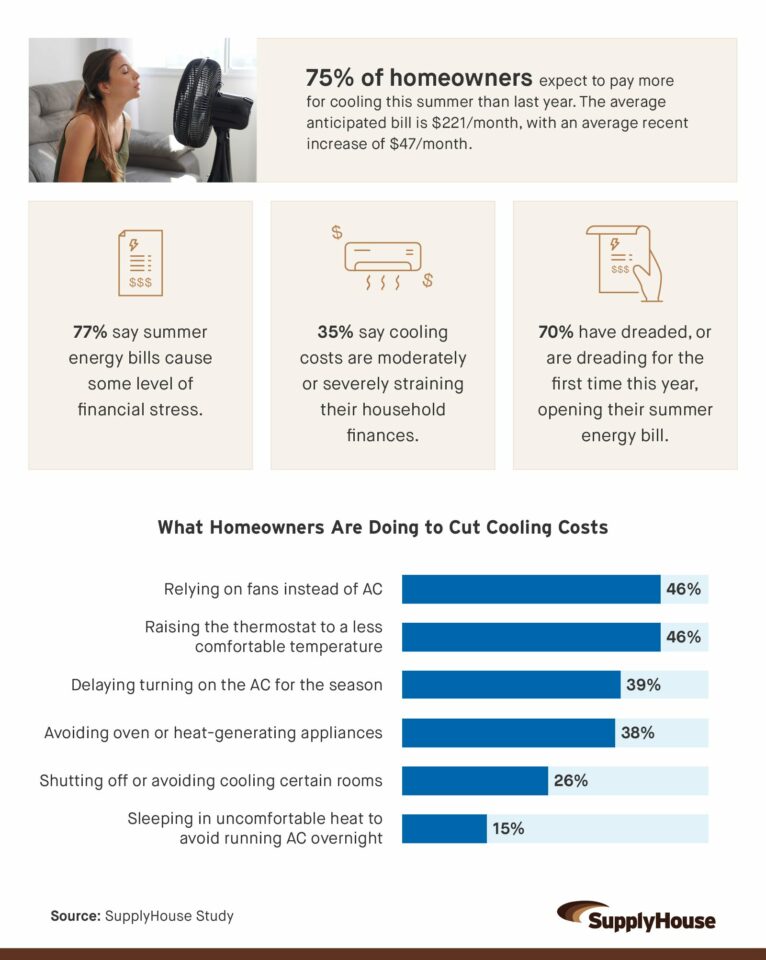
- 3 in 4 homeowners expect to pay more for cooling this summer than last year: 57% expect bills to be somewhat higher (up to 25% more), and 18% expect them to be significantly higher (25% or more).
- Average anticipated bill: $221/month
- Average recent increase: $47/month
- The most common comfort sacrifices are relying on fans instead of AC (46%) and raising the thermostat to a less comfortable temperature (46%), followed by delaying AC startup for the summer season (39%).
- 77% experience financial stress from summer energy bills, and 35% say cooling costs are straining household finances.
- 70% have dreaded, or are dreading for the first time, their summer energy bill.
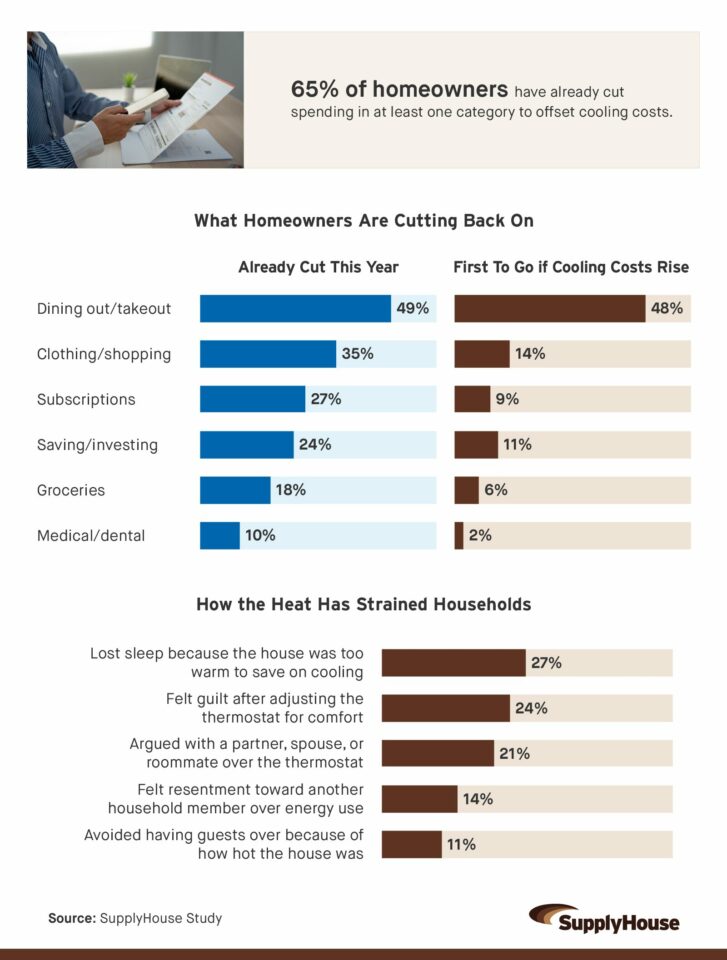
- If costs increased, homeowners are most likely to cut dining out (48%), followed by clothing/shopping (14%) and saving/investing (11%).
- 65% have already cut spending in at least one category to offset energy costs.
- When attempting to save on cooling costs, 27% lost sleep because the house was too warm, 24% felt guilty after lowering the thermostat for comfort, and 21% argued with a partner or roommate over the thermostat setting.
Deferred HVAC Repairs and the Cost of Avoidance
Worrying about cost also affects whether homeowners address HVAC problems and how far they’re willing to go to avoid a professional bill.
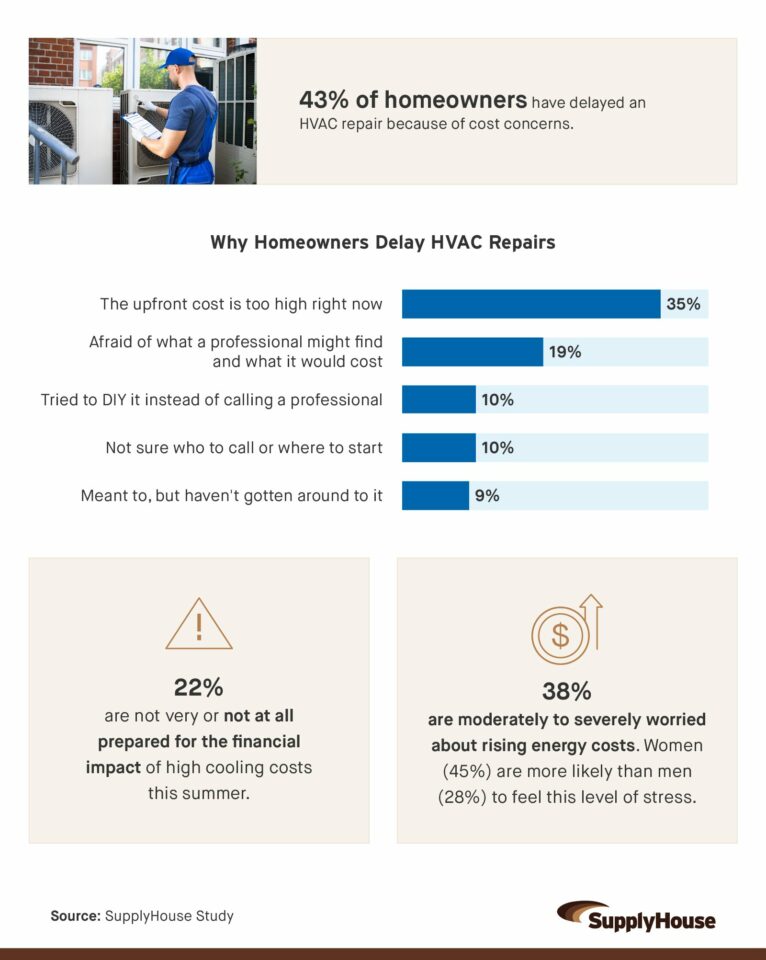
- 50% of homeowners either suspect an HVAC inefficiency or have a known problem unaddressed.
- 43% have delayed an HVAC repair because of cost concerns.
- More than 1 in 5 homeowners (22%) are not very or not at all prepared for high cooling costs.
- 83% of homeowners report at least some worry from rising energy costs.
What the Data Tells Us About Homeowner Stress This Summer
For most American homeowners, summer cooling costs have become a financial pressure point. From skipping restaurant meals to sleeping through uncomfortable nights, people are absorbing quality-of-life trade-offs to keep their utility bills in check. The harder reality is that deferred HVAC repairs and ignored inefficiencies tend to cost more in the long run. Preventive maintenance and timely repairs are especially important to address before peak heat sets in.
Methodology
SupplyHouse surveyed 1,000 U.S. homeowners in May 2026. Respondents were screened to confirm homeownership and were asked about their summer energy bill expectations, cooling cost behaviors, household spending adjustments, and HVAC maintenance attitudes. The sample was 58% women and 41% men. Generationally, respondents were 46% millennials, 35% Gen X, and 15% baby boomers; Gen Z respondents represented less than 5% of the sample. Percentages for multi-select questions reflect the share of total respondents who selected each option.
About SupplyHouse
SupplyHouse is a trusted, trades-first online supplier that combines expert-level product knowledge, fast nationwide fulfillment, and plainspoken communication to make finding and buying HVAC parts and HVAC tools simple and reliable.
Fair Use Statement
The information in this article may be used for noncommercial purposes only. If shared, a mention of SupplyHouse and a link back to this page must be included.