
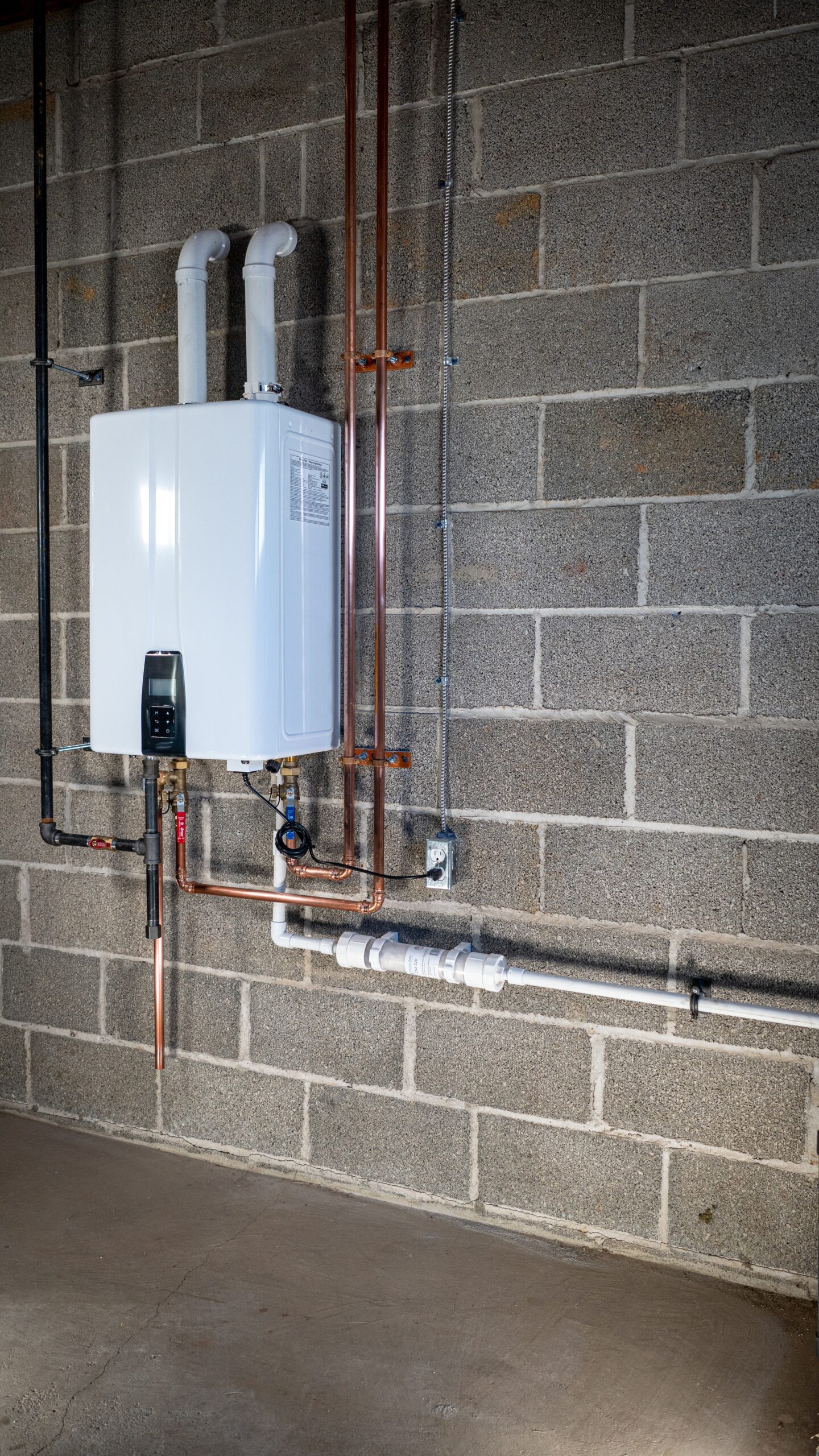

Every plumber has a version of the same callback. The tankless unit ran fine all summer, then January hit, two showers and a dishwasher ran at once, and the flow dropped to a trickle. Nothing’s broken. The heater’s undersized for winter groundwater. Earlier UPC editions required nonstorage heaters to meet demand, but they didn’t spell out a GPM and temperature rise method. The 2027 Uniform Plumbing Code puts that method in writing. According to a code change roundup in Contractor Magazine, the new UPC spells out how instantaneous water heaters get sized, sets rules for dual-purpose units that heat both the house and the domestic water, and expands Appendix N guidance on scalding and Legionella.
What the 2027 UPC Actually Changed
IAPMO’s UPC committee worked through roughly 600 submitted code changes across proposals and comments for the 2027 edition. Three water heater provisions matter most on residential jobs, plus one appendix update that touches every system with stored hot water.
| Section | What It Requires | Field Impact |
|---|---|---|
| 501.3 Instantaneous (Tankless) Sizing | Capacity based on fixture hot water demand in GPM and the temperature rise needed to reach the design output temperature | Sizing gets documented by demand and Delta T, not by BTU input or “same as the old one” |
| 501.2 Dual-Purpose Water Heaters | Units serving space heating and water heating must be designed by the manufacturer as dual-purpose; dual-purpose units can’t serve space heating only | No more field-rigging a standard water heater onto an air handler or radiant loop |
| 501.2.1 Dual-Purpose Sizing | Where manufacturer instructions are silent, minimum input equals the first-hour rating from Table 501.1(2) plus the peak sensible heat load | A heat load number is required before the unit gets picked |
| Appendix N | Revised minimums to reduce scalding and Legionella growth, emphasizing ASHRAE 188 and ASHRAE Guideline 12 | Temperature control and water management plans move into the scope of work |
A model code doesn’t bind anyone until a state or local jurisdiction adopts it, so the AHJ still decides when these sections become enforceable. The sizing method in 501.3 is sound practice right now, though, and it’s the same method good installers already use.
Why GPM and Temperature Rise Drive the Choice
A tankless heater’s size is a flow rate, not a volume. As Plumbing & Mechanical explains, the GPM a unit delivers moves up or down with the temperature rise, meaning the gap between incoming cold water and the outlet setpoint. Colder inlet water means a bigger rise and less flow. An undersized unit still hits setpoint, but it throttles flow to get there, and the weak shower follows. Slight oversizing, on the other hand, doesn’t raise gas use, since consumption follows hot water demand rather than model size.
Same Heater, Different Climate
Manufacturer ratings make the point. The Rinnai RX199iN condensing unit is rated at 9.7 GPM at a 40°F rise, 6.5 GPM at 60°F and 5.5 GPM at 70°F, and the Rinnai brochure linked on the product page lists 4.8 GPM at 80°F. Here’s how those numbers play out at a 120°F setpoint:
| Winter Inlet Temp | Setpoint | Temperature Rise | RX199iN Rated Flow |
|---|---|---|---|
| 60°F | 120°F | 60°F | 6.5 GPM |
| 50°F | 120°F | 70°F | 5.5 GPM |
| 40°F | 120°F | 80°F | 4.8 GPM (per Rinnai brochure) |
A home that needs 6 GPM at peak is covered in a warm-groundwater market and comes up short in a cold one, with the exact same box on the wall. A second unit, or a larger one, closes the gap.
Sizing a Tankless Unit the 501.3 Way
- Set the design outlet temperature. The Consumer Product Safety Commission recommends 120°F as a safe, comfortable setting, and it’s the usual starting point for residential work.
- Find the worst-case winter inlet temperature. Regional groundwater maps get close; a thermometer on a cold-water tap in January gets closer.
- Subtract the inlet temperature from the outlet temperature to get the maximum temperature rise.
- List every fixture that realistically runs at the same time during the morning rush, then add up their flow rates in GPM. Pull the numbers from fixture markings or packaging, not generic online averages.
- Open the manufacturer’s flow chart, find the row for the maximum rise, and pick a model (or a pair) whose rated GPM meets or beats peak demand. The SupplyHouse tankless water heaters category filters by flow rate at 40, 50, 60 and 70°F rise, which speeds up the shortlist.
- Document it. Keep a one-page worksheet with the fixture list, total GPM, temperature rise and the selected unit’s rated flow. Under 501.3, the worksheet is the sizing record an inspector or a future service tech can actually check.
Dual-Purpose and Combi Systems: Listing First, Pipe Second
Section 501.2 shuts down a long-running shortcut: plumbing a standard water heater to feed a fan coil or radiant loop. A water heater serving both space heating and domestic hot water has to be designed by its manufacturer as a dual-purpose unit, and a dual-purpose unit can’t be used for space heating only.
Sizing follows the manufacturer’s instructions. Where those instructions are silent, Section 501.2.1 sets the minimum input rating at the first-hour rating for domestic hot water from Table 501.1(2) plus the peak sensible heat load. In plain terms, a heat loss calculation is no longer optional on a combi job. Purpose-built equipment makes compliance simple:
- The Bosch Greenstar 100P combi boiler delivers up to 4 GPM of domestic hot water at 95% AFUE.
- The Rinnai i-Series Plus combi provides 90,000 BTU/h for heating and 199,000 BTU/h for hot water, rated at 4.1 GPM at a 70°F rise with 96% efficiency.
- Both ratings cover a shower and a lavatory at once, not a four-bath morning rush. Run the same GPM math before promising anyone endless hot water.
Appendix N: Store It Hot, Deliver It Safe
The revised Appendix N addresses minimum requirements for reducing scald injuries and Legionella growth, leans on ASHRAE 188 and ASHRAE Guideline 12, and adds guidance on water management plans and documentation. On the ICC side, the 2027 International Plumbing Code will reference both ASHRAE 188 and ASHRAE 514 for waterborne pathogens.
Appendix N pairs two risks, scalding and Legionella, and temperature control sits at the center of both. A thermostatic mixing valve at the heater outlet lets a system run the temperature the manufacturer and water management plan call for while delivering a safe temperature at the fixtures. The Caleffi MIXCAL 521519A is certified to ASSE 1017 with an 85 to 150°F setting range and ±3°F tolerance, and the full mixing valve lineup covers point-of-source and point-of-use options. On combi units, storage tanks and recirculation systems, a mixing valve deserves a line on the material list.
Install Details That Protect the Sizing
A correctly sized heater still loses capacity if nobody can service it. A few details keep the numbers honest for the life of the unit:
- Isolation valves: a Webstone 44443WPR service kit adds full-port valves, hose drains and a 150 psi relief valve in one package. More configurations live in the isolation valve category.
- Descaling: follow the manufacturer’s flushing schedule, especially on hard water. The Stiebel Eltron Flow-Aide kit includes a 350 gph pump, two 5-ft hoses, a bucket and a quart of solution.
- Electric tankless: the same GPM and temperature rise math applies to electric tankless units, with one more check. Run a load calculation on the service before committing to a unit.
- Gas supply: confirm the gas line is sized for the new unit’s full rated input per the manufacturer’s instructions and the fuel gas code before swapping out a tank.
Frequently Asked Questions
Does the 2027 UPC apply to jobs today?
Only where a jurisdiction has adopted it, so check with the local AHJ. The 501.3 sizing method is good practice regardless of which edition is enforced.
What temperature rise should a tankless sizing calc use?
The worst case: the coldest inlet water of the year subtracted from the design outlet temperature. Sizing on an average day is how winter callbacks start.
Is oversizing a tankless water heater a problem?
Slight oversizing doesn’t hurt performance or raise gas consumption, since burn rate follows demand. Undersizing is the real risk, because the unit holds setpoint by cutting flow.
Can a standard tank water heater still serve an air handler?
Not under Section 501.2 of the 2027 UPC once it’s adopted. The heater must be designed by the manufacturer as a dual-purpose unit for combined space and water heating.
How does 501.2.1 size a dual-purpose unit without manufacturer guidance?
Minimum input equals the first-hour rating for domestic hot water from Table 501.1(2) plus the peak sensible heat load. A heat loss calculation supplies the second number.
Can a dual-purpose water heater serve space heating only?
No. Section 501.2 prohibits dual-purpose water heaters from being used for space heating only.
Why install a thermostatic mixing valve on a tankless or combi system?
Where a system’s operating temperature runs above a safe delivery temperature, a mixing valve tempers the water headed to fixtures. Appendix N’s focus on both scalding and Legionella makes temperature control part of the design conversation.
How often should a tankless heater be descaled?
Follow the manufacturer’s maintenance schedule, and check local water conditions when setting the interval.
Do electric tankless units follow the same sizing logic?
Yes. Capacity still depends on GPM demand and temperature rise. Electric units also call for a load calculation on the service before installation.
Rising to the Occasion
The 2027 UPC doesn’t invent a new way to size tankless water heaters. It writes down the method careful plumbers already use and makes it the standard. Peak demand in GPM, worst-case temperature rise and a rated flow that meets both become the documented basis for every instantaneous install once the code is adopted. Dual-purpose units now need a manufacturer’s design and a real heat load number, and Appendix N keeps scald and Legionella control inside the scope of work. Shops that build a sizing worksheet into every tankless job now won’t have to change a thing when the new edition lands. Their customers won’t be standing in a lukewarm shower in January, either.