
Sponsored Post
Oil heating systems rarely fail at a single component. Most problems start upstream and show up later as ignition issues, lockouts, soot, or inconsistent combustion. Air in the fuel line, weak ignition, poor shutdown behavior, or mismatched controls all create symptoms that look like burner problems, even when the burner itself is doing its job.
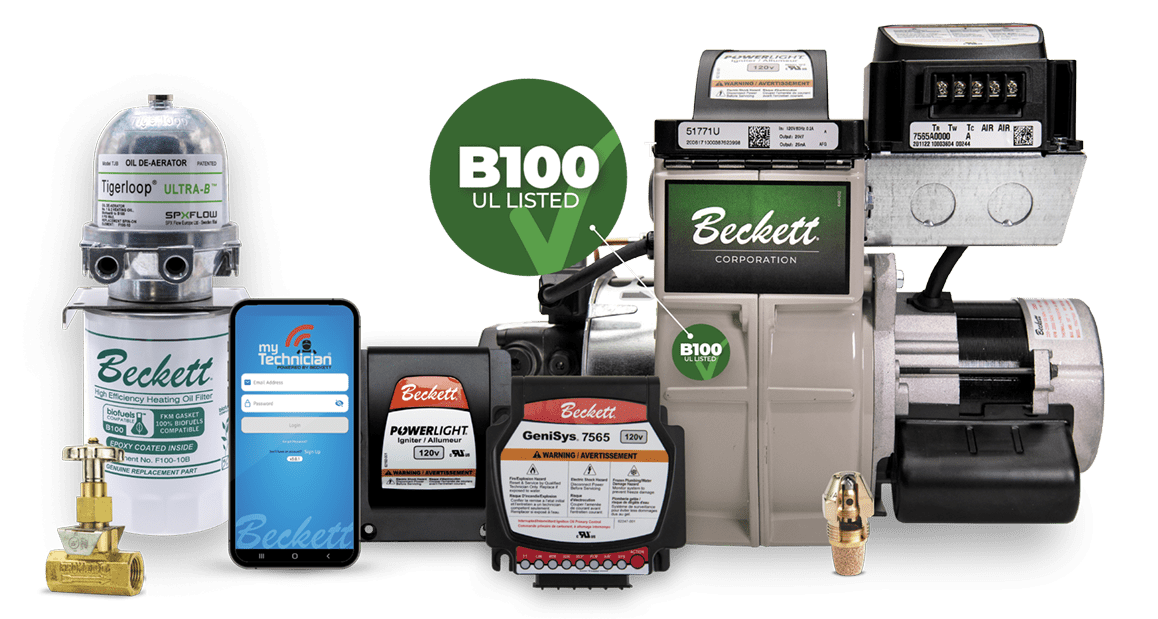
R.W. Beckett’s Tank-to-Flame™ approach treats the entire fuel path as one coordinated system, from the oil tank outlet to the burner nozzle. The idea is simple. Components should complement one another and work together as a system, not as a random stack of parts. For the official overview straight from the source, see A System of Solutions from Tank-to-Flame™ and the broader R.W. Beckett Corporation site.
Supplyhouse organizes the full R.W. Beckett lineup in one place.
Why Treating Oil Heat as Separate Parts Causes Problems
In the field, oil heat issues tend to follow the same patterns:
- Delayed ignition and rough starts
- Nuisance lockouts with no clear cause
- Soot buildup tied to shutdown behavior
- Performance changes as fuel blends vary
- Longer service calls spent chasing symptoms
Replacing one part at a time often fails because the issue lives in the interaction between components. Tank-to-Flame™ focuses on those connections.
Filtration and Fuel Handling: Protecting the Flame Downstream
Many combustion problems originate in fuel delivery. Air and contamination in the fuel supply can cause delayed ignition, unstable flame, and repeated lockouts.
Tank-to-Flame™ puts filtration in the spotlight for a reason. Faster service and consistent filtration help reduce the upstream problems that show up at the flame. R.W. Beckett’s spin-on adapter is an ideal fit for tight installs and biodiesel-rated seals, covered on the R.W. Beckett F2025 spin-on filter adapter kit page.
Practical advantages of spin-on filtration include:
- Faster service with less mess
- More consistent maintenance compliance
- Easier access under low-clearance tanks
Combustion Starts With a Burner Designed for Fuel Flexibility
The burner sits at the center of the system. Flame stability, ignition reliability, and tolerance for fuel variation all depend on burner design.
R.W. Beckett’s Tank-to-Flame™ lineup highlights the RF burner platform because it is engineered to support traditional fuel oils alongside higher biodiesel blends. A concrete example is the R.W. Beckett RF101 universal burner.
For browsing burners and matching options, Supplyhouse keeps it simple under R.W. Beckett burners.
Pump Shutdown Behavior and Soot Formation
Soot issues are not always caused by burner adjustment. Shutdown behavior plays a major role, especially when after-drip or coast-down leaves unburned fuel in the chamber.
R.W. Beckett’s CleanCut pump design combines solenoid-style cutoff behavior with lift capability typical of traditional pumps. A common reference model is the R.W. Beckett PF20322U CleanCut pump.
For additional options and related parts, Supplyhouse groups them under R.W. Beckett oil pumps.
Controls and Diagnostics That Show What Actually Happened
Older oil primary controls provide limited insight. A lockout tells a technician that something failed, but not why.
R.W. Beckett’s GeniSys® controls improve troubleshooting by supporting programmable timing and cycle history. The latest and most advanced model is the R.W. Beckett GeniSys® 7565 120V Advanced Oil Burner Control.This control is compatible with the myTechnician® app,which can monitor the current status, control timing, burner cycle history, and program the control variables from a mobile device. For browsing similar models, Supplyhouse has a dedicated category for R.W. Beckett burner controls.
For technicians who want deeper visibility with legacy GeniSys® 7505 controls, BeckettLink® Pro adds smartphone-based monitoring and programming through the myTechnician® app. Supplyhouse carries it as the R.W. Beckett 7652AU BeckettLink Pro accessory.
Ignition: Clean Starts Depend on It
Ignition quality directly affects startup behavior. Weak or inconsistent ignition leads to delayed light-off, rough starts, and unburned fuel.
R.W. Beckett’s POWERLIGHT® igniters are positioned within the Tank-to-Flame™ ecosystem as longer-life, easy-install replacements. One common model is the R.W. Beckett 5270001U PowerLight igniter. For additional ignition parts and alternatives, Supplyhouse groups them under R.W. Beckett ignition transformers and igniters.
How the Tank-to-Flame™ System Fits Together
| System Area | R.W. Beckett Component | Helpful Links |
| Burner | RF burner platform AF & AFG burner |
RF101 universal burner AF/AFG oil and renewable B100 burner |
| Filtration | Spin-on filter adapter | F2025 adapter kit |
| Fuel delivery | CleanCut pump | PF20322U pump |
| Control | GeniSys® primary control | GeniSys® 7565 120V advanced oil burner control |
| Diagnostics | BeckettLink® Pro | 7652AU accessory |
| Ignition | POWERLIGHT® | 5270001U igniter |
Installation and Service Takeaways
Contractors working with Tank-to-Flame™ thinking usually follow a consistent process:
- Select the burner based on fuel and appliance requirements
- Match controls and ignition to burner behavior
- Address filtration and air issues before adjusting combustion
- Use diagnostic history before replacing parts
For homeowners who want visibility into tank status, Supplyhouse has a practical read on monitoring oil levels: The MOST Accurate Way to Check Your Oil Levels.
Frequently Asked Questions
What is a Tank-to-Flame™ oil heating system?
Tank-to-Flame™ is a system approach that treats fuel delivery, filtration, pumping, ignition, burner control, and combustion as one coordinated path from the oil tank to the burner nozzle. The goal is predictable performance through components designed to work together. For the official description, see Tank-to-Flame™ at R.W. Beckett.
What fuels are R.W. Beckett Tank-to-Flame™ systems designed to support?
Tank-to-Flame™ components are designed for traditional heating oils, with specific burners and fuel-handling components listed for higher biodiesel blends where noted. Fuel compatibility depends on the exact burner model and supporting components.
Which R.W. Beckett burner supports biodiesel and renewable diesel?
R.W. Beckett’s RF series is positioned for fuel flexibility. Common examples include the AF/AFG oil and renewable fuels burner and RF101 universal burner.
What problem does a CleanCut pump solve?
CleanCut pumps are designed to stop oil flow immediately at shutdown, helping reduce after-drip and supporting cleaner shutdown behavior over time. A reference model is the PF20322U CleanCut pump.
How do GeniSys® controls and BeckettLink® Pro help with troubleshooting?
GeniSys® controls support programmable timing and cycle history, which speeds troubleshooting. The latest and most advanced model is the R.W. Beckett GeniSys® 7565 120V Advanced Oil Burner Control.This control is compatible with the myTechnician® app,which can monitor the current status, control timing, burner cycle history, and program the control variables from a mobile device.
The 7652AU BeckettLink® Pro enables smartphone-based access to status and history for legacy GeniSys® 7505 controls.
Closing
Oil heat performs best when it is treated as a system, not a collection of unrelated parts. R.W. Beckett’s Tank-to-Flame™ approach focuses on the connections that matter most: clean fuel delivery, reliable ignition, predictable control logic, and burner designs built to handle modern fuel realities.
For more on the full Tank-to-Flame™ system approach, visit R.W. Beckett’s Tank-to-Flame™ page, then source the matching components through R.W. Beckett at Supplyhouse.