


A solid DIY win feels great. A crooked install, a hidden leak, or a ladder mishap? Not so much. To better understand how home improvement confidence can turn costly, we surveyed 1,007 U.S. homeowners about their biggest project mistakes, why they took them on, what they cost to fix, and whether anyone got hurt along the way. We also analyzed federal NEISS emergency-room injury estimates to see which tools, materials, and hardware most often sent people to the ER.
Key Takeaways
- 38% of homeowners took on their costliest project specifically to save money, yet 58% end up spending more than a pro or a proper first attempt would have cost.
- The average homeowner’s DIY home mistake runs $1,852 just to fix or replace.
- 18% of homeowners have hidden, covered up, or quietly hired someone to fix a botched project before anyone in the household noticed.
- Over 1 in 7 homeowners (15%) have been injured attempting a home improvement project.
- The most dangerous thing in your home-improvement job is the ladder, with more than 81,000 ER visits estimated per year.
When Saving Money Costs More
Some home projects start with a simple goal: keep a few more dollars in your pocket. But when the work has to be redone, repaired, or rescued, the math can change fast.
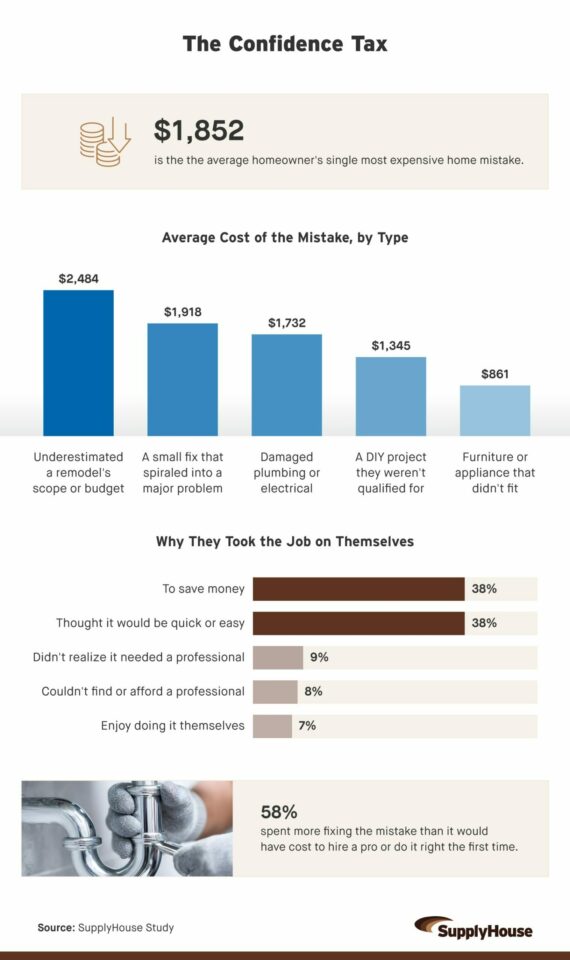
Cost was a major reason homeowners took on projects themselves. In fact, 38% of homeowners took on their costliest project specifically to save money. But that plan did not always hold up once the final bill came due.
Among homeowners who made costly mistakes, 58% ended up spending more than a professional job or a proper first attempt would have cost. That kind of “savings” can sting, especially when the mistake involves plumbing, HVAC, electrical, or other work where a small issue can create a much bigger mess behind the wall.
The average homeowner’s DIY home mistake ran $1,852 just to fix or replace. Gen X reported the highest average costly mistake at $1,983, followed by millennials at $1,867. Gen Z homeowners averaged $1,616, while baby boomers came in slightly lower at $1,593.
Confidence, Tutorials, and Quiet Cover-Ups
A little confidence can help homeowners tackle maintenance without panic. Too much confidence, especially when paired with a five-minute tutorial and a toolbox full of optimism, can get expensive.
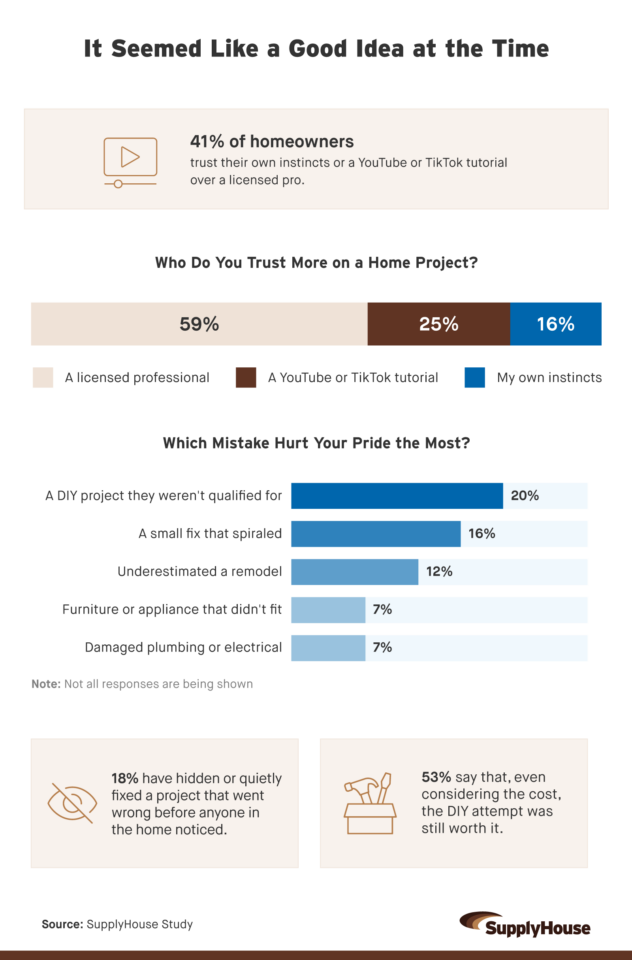
Many homeowners leaned on themselves or social platforms before calling a pro. Overall, 41% of homeowners trusted their own instincts or a YouTube or TikTok tutorial over a licensed professional. That rate rose to 45% among Gen Z homeowners.
That choice was tied to a higher injury rate. Homeowners who trusted a YouTube or TikTok tutorial or their own instincts over a licensed pro were injured at a 22% rate, double the 11% rate among those who deferred to a professional. A good video can explain a lot, but it cannot inspect wiring, catch a bad shutoff valve, or steady a ladder from the driveway.
Some mistakes never made it to a family meeting. Nearly one-fifth of homeowners (18%) hid, covered up, or quietly hired someone to fix a botched project before anyone in the household noticed. Pride may be cheaper than labor, but repairs have a way of finding the invoice.
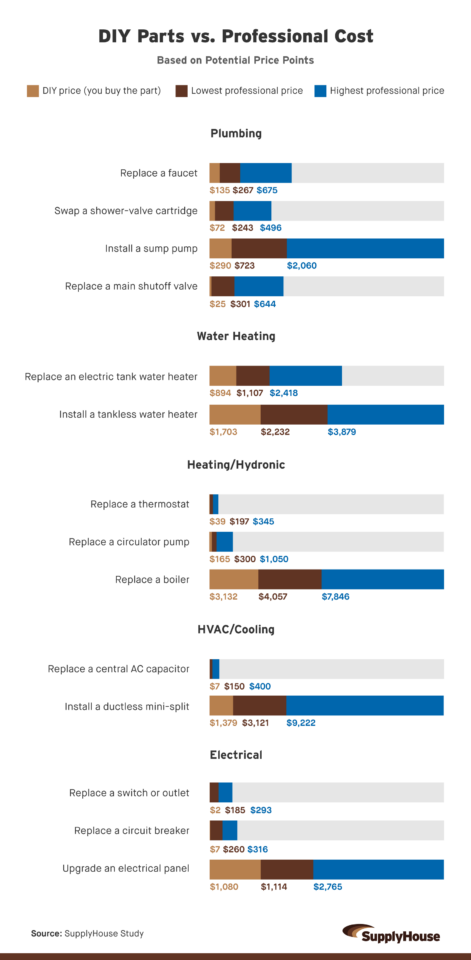
Most people take on DIY projects as a way to save money, and for plenty of common jobs, it works. Swapping a kitchen faucet costs about $135 in parts versus roughly $267 for the lowest-priced professional, a shower-valve cartridge runs about $72 against about $243, and installing your own sump pump can save roughly $430 over the cheapest pro.
The gap grows on big-ticket systems: doing your own tankless water heater, boiler, or ductless mini-split can save anywhere from about $530 to more than $1,700 compared with the lowest professional quote.
It’s important to consider the type of project, though. Those big-ticket savings come on exactly the jobs where a professional is often worth the extra expense: mini-splits involve refrigerant, boilers and tankless heaters involve gas and venting, and an electrical panel means permits and shock risk. It’s also where the savings can nearly disappear: upgrading an electrical panel runs about $1,080 in parts versus about $1,114 for the lowest professional price, a difference of only about $34.
Of course, these DIY figures cover parts only, while the professional prices include labor, and all of them vary by location, the scope of the work, and the quality of the materials used.
The Tools and Materials Sending Homeowners to the ER
Home improvement work comes with real physical risk, even for projects that look simple at first glance. Cuts, falls, punctures, and fractures can turn a Saturday project into a hospital visit.
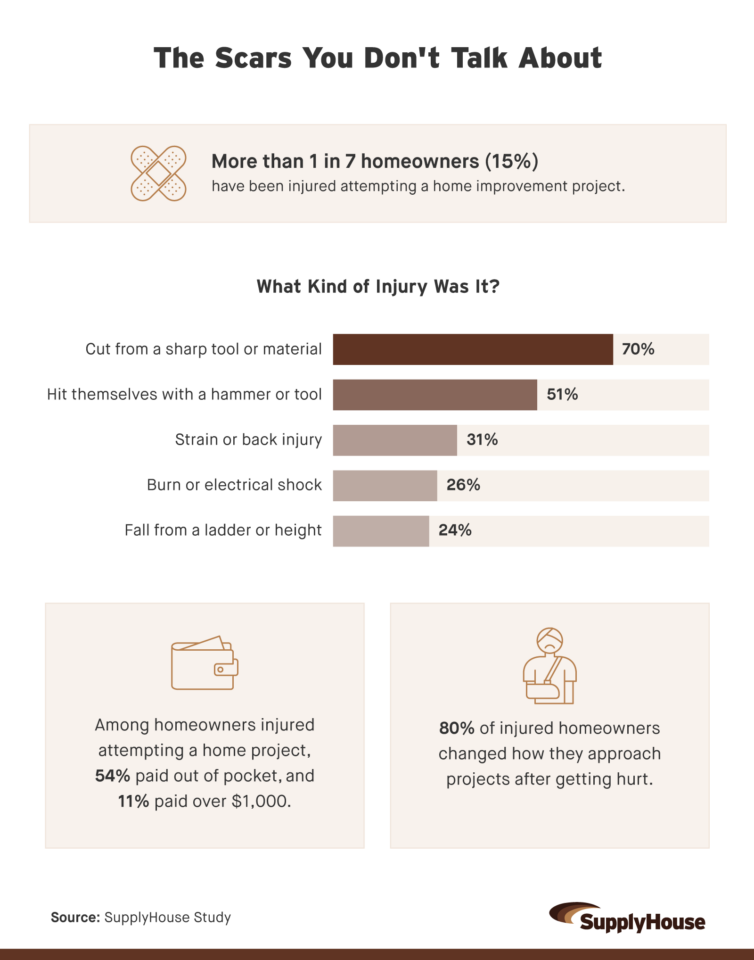
More than 1 in 7 homeowners (15%) have been injured attempting a home improvement project. Federal ER data gave a closer look at which home-improvement tools, materials, and hardware were most often involved in emergency-room-treated injuries at home.
The products most often linked to ER visits were:
- Ladders: 81,169 estimated visits per year
- Nails, screws, or tacks: 40,255
- House repair/construction materials: 18,433
- Cabinet or door hardware: 17,624
- Workshop grinders, buffers, or polishers: 15,169
- Bench or table saws: 12,279
- Power saws: 9,699
- Scissors: 9,551
- Hammers: 9,073
- Buckets or pails: 8,666
- Paints, varnishes, or shellacs: 8,185
- Drills: 5,396
- Gutters, drainpipes, or downspouts: 4,600
- Nail guns or stud drivers: 3,490
- Hatchets or axes: 3,301
Across roughly 247,000 ER visits a year from these products, the most common injuries were:
- Lacerations: 26%
- Fractures: 18%
- Contusions/abrasions: 10%
- Punctures: 10%
The most-injured body parts were:
- Finger: 18%
- Head: 11%
- Foot: 10%
Knowing When To Call for Backup
DIY work can be practical, satisfying, and genuinely cost-effective when the project matches the person’s skill level, tools, and time. But the findings made one thing clear: overconfidence can bring hidden costs, from repair bills to injuries to projects that need a second set of hands. The smartest homeowners are not the ones who do everything themselves; they are the ones who know when a project is within reach and when a licensed professional is worth every dollar. After all, the best repair is the one you only have to pay for once.
Methodology
This study is based on a survey of 1,007 U.S. homeowners. Respondents were asked about the home improvement mistakes they have made, what those mistakes cost, why they took the projects on, whether they hid the results, who they trust for guidance, and any injuries they sustained.
Age was grouped into generations: Gen Z (8%), millennials (46%), Gen X (33%), and baby boomers (13%). Data was collected in July 2026.
DIY vs. professional cost
DIY prices are the current SupplyHouse.com retail price for the parts (materials only), using one representative mid-tier product per project. Professional prices are the installed cost (parts + labor); the low and high figures are each averaged across three cost databases: Fixr, Homewyse, and HomeAdvisor. Covers 14 common projects across five trades. The national averages were priced July 2026. The gap between the DIY and professional figures represents labor.
Home-improvement ER visits
Figures are national estimates from the CPSC National Electronic Injury Surveillance System (NEISS), 2025, calculated by applying NEISS sample weights. Analysis is limited to injuries coded as occurring in the home and involving a defined basket of home-improvement products (related product codes combined per category). Counts reflect emergency-room-treated injuries only and are estimates, not exact counts.
About SupplyHouse
SupplyHouse is a trusted, trades-first online supplier that combines expert-level product knowledge, fast nationwide fulfillment, and plainspoken communication to make finding and buying plumbing, heating, cooling, and electrical essentials simple and reliable for professionals and homeowners alike.
Fair Use Statement
The information in this article may be used for noncommercial purposes only. If shared, proper attribution with a link back to SupplyHouse must be included.