

Pipe insulation wears many hats. Yes, it keeps the water in your plumbing system from turning to ice and expanding, but pipe insulation also performs several far less dramatic roles in the home. These not only help to save money on utility bills, but also make everyday life a little easier.
Minimizing Heat Gain and Loss
Pipe insulations ability to minimize heat gain and loss may be it’s most desired outcome. As water travels along plumbing lines without pipe insulation, hot water loses heat and cold water tends to gain heat. Introduce pipe insulation, and you greatly diminish these inevitable inefficiencies. The benefits of this are very real: You get lower monthly energy bills, and you don’t need to wait as long for the hot water to reach the fixtures in your kitchen or bathrooms.
Controlling Condensation
When the surfaces of plumbing pipes are cooler than the surrounding air, it creates condensation. Condensation is particularly common when cold-water lines come into contact with warm, humid air. Pipe insulation helps control this and diminishes the slow corrosion of pipes and their fittings. Special vapor barrier-wrapped pipe insulation prevents warm air from reaching the pipes.
Selecting Your Insulation
There are several types of pipe insulation, each made of a different material and capable of insulating to a different degree. Some are more suitable for hot-water applications, while others incorporate the vapor barrier necessary for controlling condensation along a cold-water line. The main options include:
• Conventional foam insulation: This features a slit on its side that makes it easy to fit over existing pipes. Once it’s in place, it’s a good idea to tape the slits shut so as to enhance the product’s insulating capability.
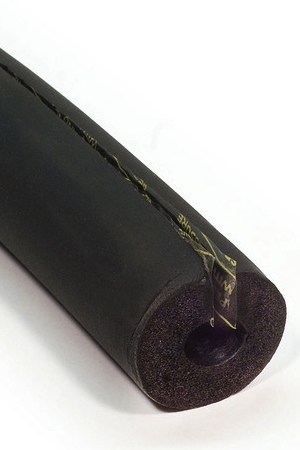
• Self-sealing foam insulation: Unlike conventional foam insulation for pipes, the self-sealing variety features an adhesive along its slit. Remove the tape, press the adhesive strips together, and you’re done.
• Spray foam insulation: Typically installed by professionals equipped with pressurized containers, spray foam pipe insulation excels where there’s little space between the water pipes and exterior walls.
• Fiberglass pipe covers: This type of hinged, paper-coated rigid fiberglass insulation is most often used where pipe temperatures are unusually high, because fiberglass tends to resist heat quite well
Dealing with Asbestos
Even today, some older homes still have pipe insulation that contains asbestos. Particularly if it’s disturbed and its fine fibers become airborne, asbestos-laden pipe insulation can present a serious health hazard. Asbestos insulation is not always easy to identify, says Dan O’Brian, a tech team member on our staff. “Asbestos pipe insulation has a distinct corrugated look,” he says. “And if you are suspicious you might have asbestos in your pipes or anywhere else in your home, make sure you consult a professional for removal.”
Cost vs. Benefit
Is pipe insulation ever a bad idea? “The only case I can think of where pipe insulation would be a bad idea,” O’Brian says, “would be on radiant heating or cooling loops, where insulation would actively work against the design of the system.” So in all but a couple of circumstances, installing pipe insulation offers energy savings and peace of mind—but does the benefit outweigh the cost? That might depend on whether or not you hire a contractor. Doing the job yourself—it’s usually not hard to tackle—tips the balance sheet in your favor, while depending on where you live, it may or may not be worth it to hire help. We carry a variety of K-Flex pipe insulation that is easy to install and comes with endless benefits for your home.
This post was written in collaboration with BobVila.