
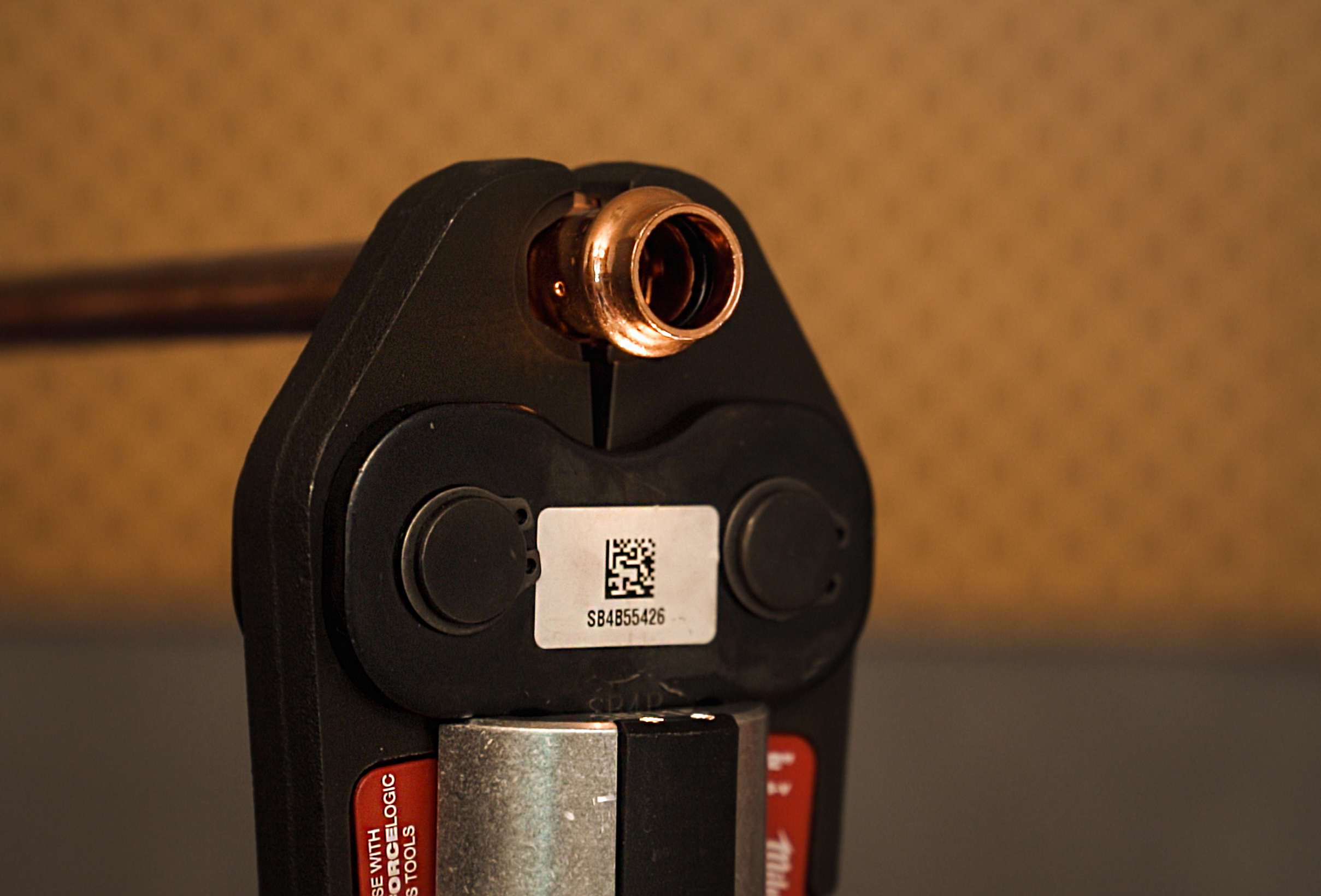
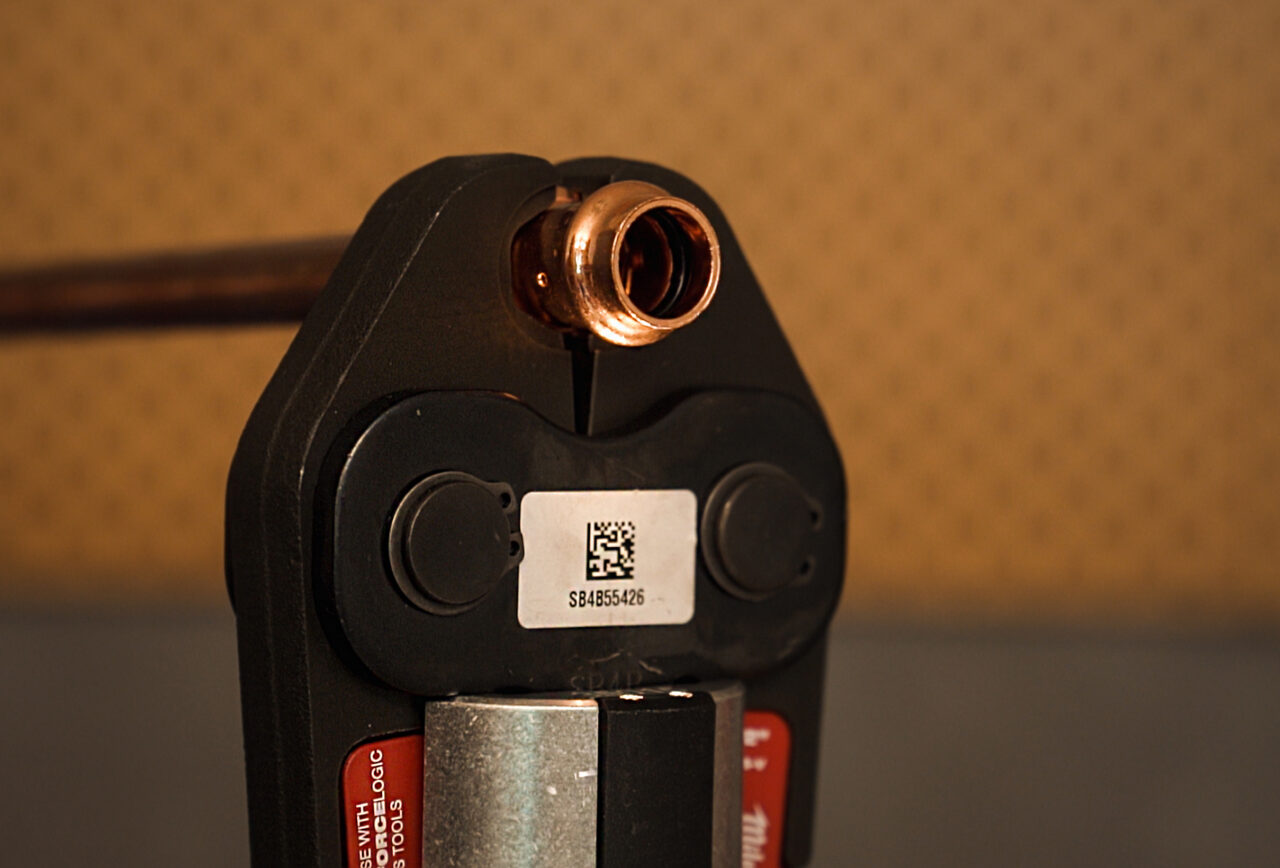
Press technology changed how plumbing and heating systems get built. No torch, no solder, no open flame permit, and no waiting for pipe to dry before pressing a wet system. A properly made press connection is permanent, reliable, and done in under 10 seconds. Getting there requires understanding jaw compatibility, pipe prep, and the one thing that separates a good press from a leak waiting to happen: the depth mark.
How Press Fittings Work
A press fitting has an internal O-ring that compresses against the outside of the copper pipe when the jaws of the press tool deform the fitting’s outer profile. The compression creates a mechanical seal that holds pressure rated to the fitting’s specification, typically 200 PSI on water systems. The fitting permanently deforms during pressing. It cannot be re-pressed or repositioned.
Viega’s Smart Connect technology is the most visible quality control feature in the category. Smart Connect is a design built into every Viega press fitting that creates a deliberate leak path past the sealing element of any unpressed connection. When the system is pressurized during testing, any missed fitting reveals itself by leaking, allowing the installer to locate and press it before the system goes into service. Once properly pressed, the leak path is permanently eliminated and the connection is leakproof. It is the only technology in the press fitting category that detects unpressed connections 100% of the time, removing reliance on visual inspection or installer memory.
Jaw Compatibility: The Critical Decision
Not all press jaws work with all press fittings. Getting this wrong means a fitting that appears pressed but isn’t sealed. The dominant standard for 1/2″ to 2″ copper press is CTS-V (Copper Tube Size, Viega profile), which covers:
- Viega ProPress fittings
- NIBCO Press fittings
- Most imported copper press fittings stocked by plumbing suppliers
CTS-V jaws from any major press tool brand (Milwaukee, RIDGID, DeWalt) are compatible with ProPress and most other CTS-profile copper fittings. Jaws are not cross-compatible between CTS and IPS profiles. IPS (Iron Pipe Size) jaws are for black iron and steel press fittings used in gas systems, not copper.
For 2-1/2″ to 4″ copper: the standard shifts from a squeeze-jaw to a grip-ring mechanism on most brands. Confirm the specific jaw set is rated for the fitting brand being used at larger diameters.
Browse copper press tools at SupplyHouse and Viega ProPress fittings. Browse copper press fittings for the full selection.
How to Prepare the Pipe
Press connections fail from poor pipe prep more often than from tool or fitting issues. Three things matter:
Cut: the pipe end must be square. An angled cut seats unevenly in the fitting and compromises O-ring contact. A ratchet tube cutter produces a clean, square cut faster than a hacksaw and doesn’t require deburring the outside diameter.
Deburr and ream: the cut creates a burr on the inside of the pipe and a slight raised edge on the outside. The inside burr restricts flow. The outside edge can nick or roll the O-ring during insertion. Ream the inside with a deburring tool and remove any sharp edge on the outside with a light pass of a file or the reamer’s conical end.
Mark the insertion depth: this is the single most important step in press work. Every press fitting has a minimum insertion depth that ensures the pipe end is past the O-ring and within the fitting body. Mark the pipe at the correct depth with a marker or depth pen before inserting. After insertion, confirm the mark is at the fitting edge, not hidden inside or visible beyond it.
Insertion depth is printed in the fitting installation instructions and varies by size and brand. For 3/4″ Viega ProPress fittings, the insertion depth is approximately 1 inch. Confirm with the fitting documentation for the brand being used.
How to Make a Press Connection
- Cut the pipe square and deburr inside and outside.
- Mark the insertion depth on the pipe end.
- Insert the fitting onto the pipe until the mark aligns with the face of the fitting.
- Confirm the fitting is straight and not tilted on the pipe.
- Select the correct jaw size for the pipe diameter being pressed.
- Open the press tool jaws and position them over the fitting’s press zone (the raised ridge at the fitting end). The jaw must seat fully in the press groove, not on the pipe itself or on the fitting’s flat body.
- Squeeze the tool trigger. The jaws close completely in one stroke, typically 4 to 7 seconds on a battery-powered tool. Do not release mid-stroke. The connection requires a complete press cycle.
- Open the jaws and remove the tool.
- Verify the Smart Connect indicator on Viega fittings has been pressed away. On fittings without this feature, visually confirm the jaw marks are uniform around the fitting circumference.
- Move to the next fitting.
Common Mistakes and How to Avoid Them
| Mistake | Result | Prevention |
| Pipe not fully inserted to depth mark | Pipe end misses O-ring. Fitting appears pressed but leaks immediately or under pressure | Always mark insertion depth. Confirm mark is flush with fitting face before pressing |
| Jaws seated on pipe body instead of press groove | Uneven deformation. O-ring not fully compressed | Verify jaws are centered on the fitting’s raised press ridge |
| Pipe end not deburred | O-ring nicked or rolled on insertion. Leak under pressure | Ream and deburr every cut end without exception |
| Wrong jaw profile for fitting brand | Incomplete deformation. Fitting appears pressed, fails under pressure | Confirm CTS-V jaw compatibility before starting the job |
| Pressing on wet, pressurized system without checking for live pressure | Pipe or fitting ejects under pressure during pressing | Confirm system is depressurized before pressing on live system segments |
Pressing on a Wet System
One of the advantages of press fittings over soldering is the ability to press on systems with residual moisture in the pipe. The O-ring seals against the pipe regardless of moisture. However, the system must be depressurized before pressing. A press fitting cannot be made against live system pressure. Shut down the system, bleed pressure from the affected segment, make the press connections, and restore pressure before confirming seal.
Frequently Asked Questions
Can I use Milwaukee jaws on RIDGID tools or vice versa?
Not as a blanket rule. Cross-brand compatibility depends on the specific tool, jaw, and manufacturer approval matrix. Milwaukee’s current compatibility matrix explicitly lists certain RIDGID compact and standard ProPress jaws as compatible with some Milwaukee tools, while RIDGID’s own jaw pages say RIDGID Standard Series jaws are compatible only with RIDGID Standard Series pressing tools.
What happens if I press a fitting with the wrong size jaw?
An oversized jaw deforms the fitting incompletely. An undersized jaw can crack the fitting body. Both produce leaks. Always match jaw size to pipe OD exactly.
Can I press stainless steel with copper press jaws?
No. Stainless press fittings (used in some heating and chemical applications) require their own jaw profile. Viega MegaPress for steel uses IPS-profile jaws, not CTS jaws. Confirm fitting material and jaw compatibility before any press work.
How do I verify a connection without the Smart Connect indicator?
Visual inspection: uniform jaw marks should appear around the entire circumference of the fitting. A complete press leaves a consistent groove pattern with no gaps. Pressure testing the system after pressing is the definitive confirmation.
Can I press copper when the fitting is near a valve or other obstruction?
Most press tools have a low-profile jaw design for tight spaces. Verify the tool can fully seat on the fitting with the obstruction present before committing to the fitting position. Some installers position fittings to ensure tool access before cutting pipe.
What is the service life of press tool jaws?
Press jaws are rated for thousands of cycles under normal use. Jaws should be inspected periodically for scoring, cracking, or deformation. Damaged jaws produce inconsistent connections and should be replaced. Manufacturer inspection guidelines vary by brand.
Making Every Press Count
Press technology earns its place in the van the moment a soldered joint on a tight riser or a copper connection near a zone valve gets complicated. The tool makes the seal in seconds. The pipe prep, the depth mark, and the jaw selection make or break it. Get those three right and a press connection is as reliable as anything in the system. Miss the depth mark and the O-ring never gets seated, regardless of how good the press looks from the outside.
Browse copper press tools, Viega ProPress fittings, and all plumbing tools at SupplyHouse.