
The plunger is gone. Maybe it walked off. Maybe the guest bathroom never had one to begin with. Whatever the reason, a toilet is backed up right now, the water level is climbing, and a plunger isn’t coming to the rescue. Happens to everyone, including the pros who know better than to leave a job site without one.
The good news: most toilet clogs sit in the trapway, that curved passage inside the porcelain just past the drain hole. Soft organic clogs (too much toilet paper, waste buildup) respond well to heat and lubrication. The methods below move from simplest to most aggressive. Start at Step 1. Work through them in order. Stop when the toilet drains.
One important note before the hands go in: do not flush again if the bowl is near the rim. A second flush into a full bowl is a guaranteed overflow. First, stop the fill. Reach into the tank and lift the float to halt the incoming water. Then find the angle stop behind the toilet at floor level and close it clockwise. That buys time to work without the situation getting worse.
What Usually Causes the Clog
Understanding the blockage helps pick the right fix. Most toilet clogs fall into a small number of categories:
- Excess toilet paper. The most common culprit. Two-ply and ultra-thick varieties dissolve slower, and too much at once overwhelms the trapway.
- Non-flushable items. Wipes (including products labeled ‘flushable’), cotton balls, cotton swabs, feminine hygiene products, and paper towels don’t break down like toilet paper. They catch and accumulate.
- Low-flush models from the early 1990s. Early low-flow toilets lacked the pressure to reliably clear the drain. If the toilet clogs frequently on minimal use, the fixture itself may be the issue.
- Blocked trapway. The S-shaped passage inside the porcelain can partially obstruct with buildup or a lodged object, making every subsequent flush a gamble.
- Venting problems. A blocked roof vent reduces air pressure in the drain stack. The symptom is gurgling sounds from other fixtures alongside slow toilet draining.
- Main sewer line issues. When multiple fixtures back up simultaneously, the problem is downstream of the toilet, not in it.
For a single toilet that clogs while others drain normally, the problem is almost always in the toilet itself. The methods below address that scenario.
Method 1: Hot Water Flush
The simplest move. Heat triggers partial breakdown of organic material and adds hydraulic pressure. Fill a bucket with the hottest water the tap produces. Do not use boiling water. Boiling water can crack porcelain, especially in older toilets. Tap-hot is the ceiling.
- Turn off the water supply at the angle stop and lift the float to stop any fill.
- Remove enough water from the bowl to make room for the bucket. Use a cup to bail if needed.
- Hold the bucket at roughly waist height and pour steadily. The height generates added force as the water hits the trapway.
- Wait 10 to 15 minutes.
- Check the water level. If it dropped, try a flush. If it held steady or rose, move to Method 2.
Pouring from waist height mimics the hydraulic push of a plunger. The falling stream adds momentum that slow-pouring doesn’t deliver.
Method 2: Dish Soap and Hot Water
Dish soap is a surfactant. Surfactants reduce surface tension and coat surfaces with a slippery film. A generous amount of dish soap in the bowl can lubricate the clog and the trapway walls enough for the blockage to pass through on the next flush. A grease-cutting formula works best.
- Pour approximately half a cup of dish soap directly into the bowl.
- Let it sit for 15 to 20 minutes. The soap needs time to work down to the clog.
- Add a gallon of hot (not boiling) water from waist height.
- Wait another 10 minutes.
- Attempt a flush. Repeat once more if the result is partial.
If soap isn’t available, a bar of hand soap cut into small chunks works as a substitute. The principle is the same. This method handles soft organic clogs well but won’t move a lodged object or break up mineral scale.
Method 3: Baking Soda and Vinegar
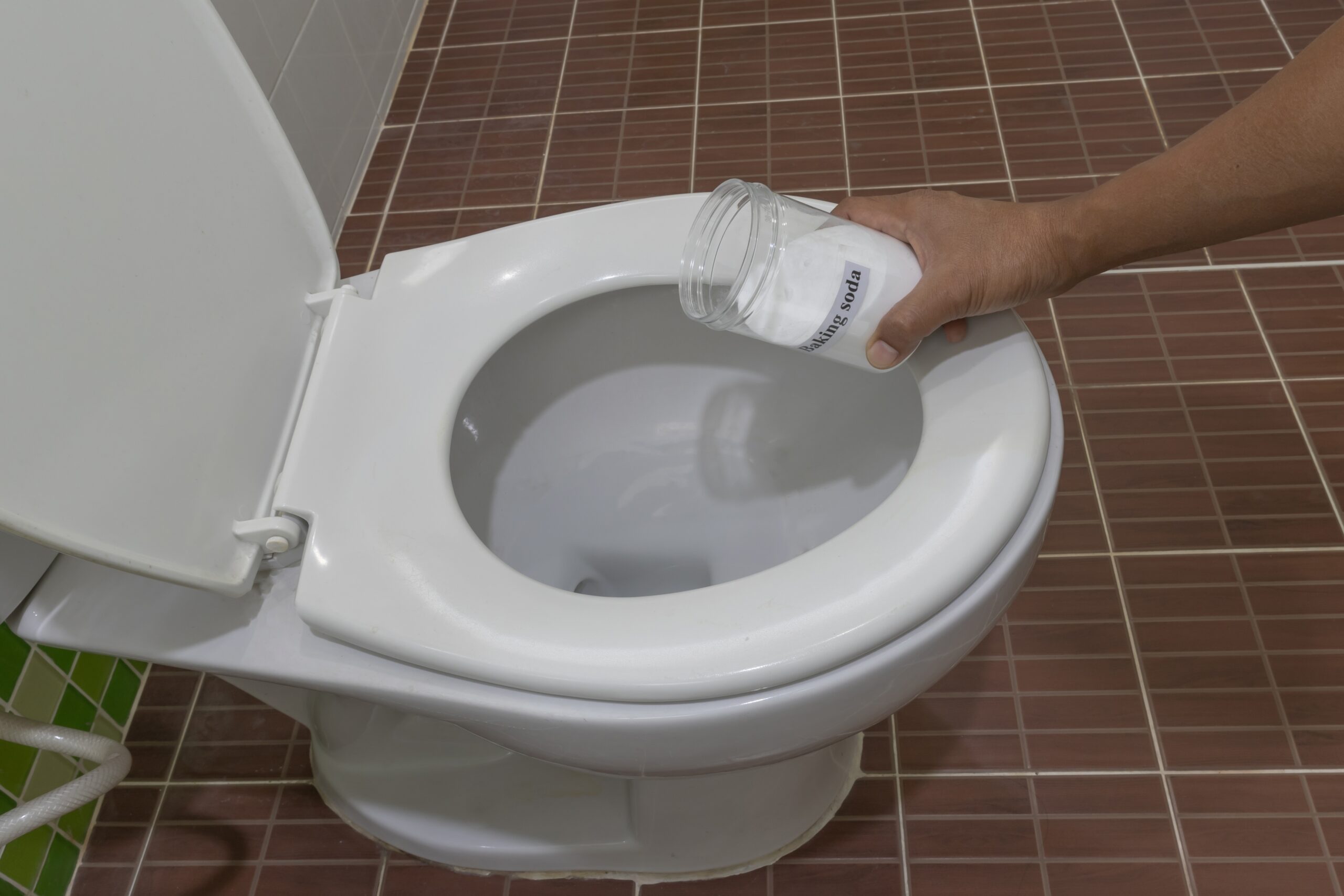
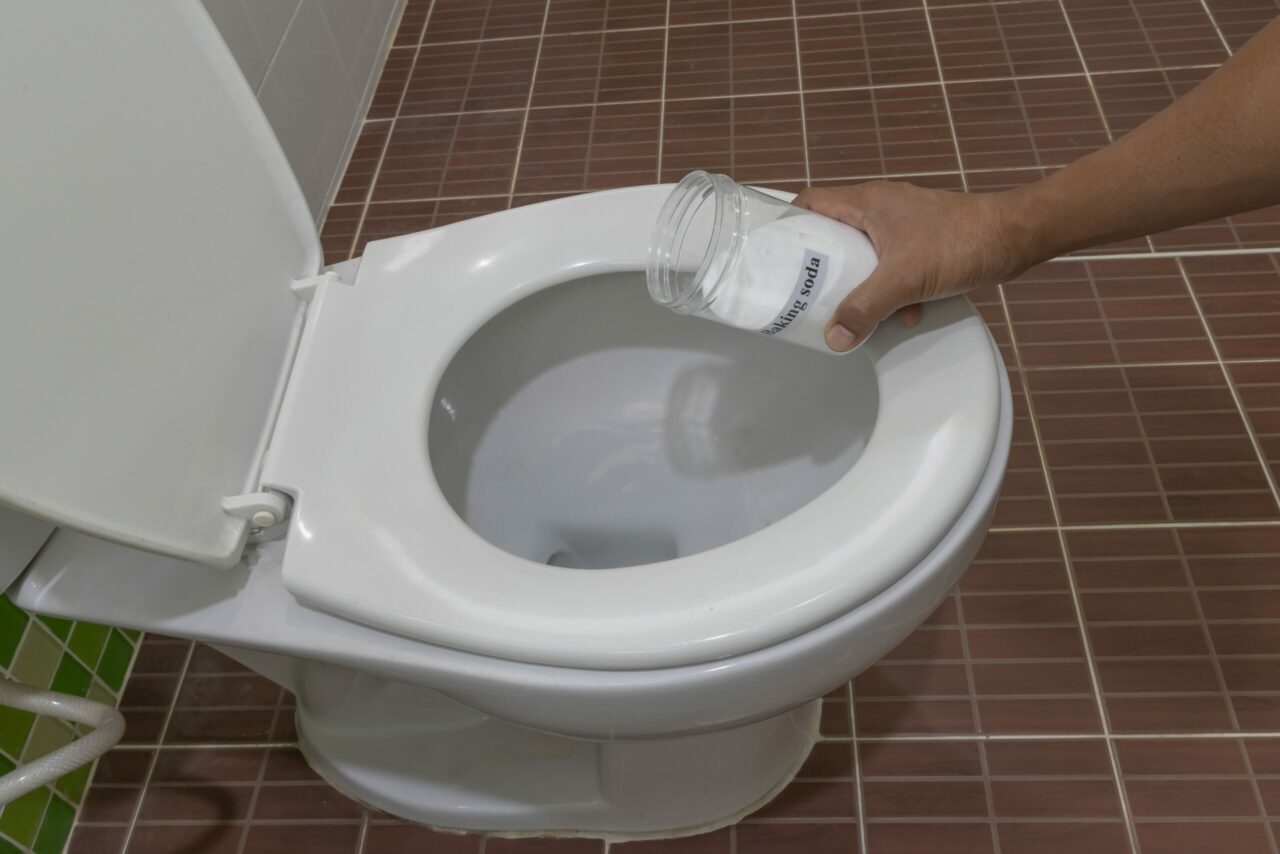
Mixing baking soda (sodium bicarbonate) with vinegar (acetic acid) creates a carbon dioxide fizz. The reaction generates gentle agitation inside the trapway that can break up soft clogs. This method requires some patience and needs the water level to be low enough to add dry baking soda without it floating away immediately.
- Lower the water level in the bowl to about halfway by bailing with a cup.
- Pour 1 cup of baking soda directly into the bowl and let it settle to the drain opening.
- Slowly pour 2 cups of white vinegar. Pour gradually to avoid an overflow from the fizzing reaction.
- Let the fizz work for 30 minutes.
- Add a gallon of hot tap water.
- Wait 10 minutes, then flush.
The fizz reaction is mild. It works on soft material that’s already partially loosened. It won’t clear a hard scale buildup or a foreign object. If the bowl still doesn’t drain, the clog needs mechanical help.
Method 4: The Wire Hanger (Makeshift Drain Snake)
When chemical methods don’t move things, physical intervention is next. A wire coat hanger can work as a short manual probe for clogs sitting just inside the trapway entrance. This isn’t a substitute for a proper closet auger, but it can dislodge a surface-level blockage in a pinch.
- Unwind the hanger completely and straighten it into a single long wire.
- Wrap the working end with a rag and secure it with tape or by tucking it tightly. This protects the porcelain glaze from scratching.
- Insert the padded end into the drain opening and push gently while rotating.
- Work in short, pushing-and-twisting motions. Don’t force it.
- When resistance breaks or the water level drops, remove the hanger and flush.
This approach has limits. The hanger reaches only a few inches into the trapway. Anything deeper needs a closet auger. Forcing the hanger can scratch the bowl or jam the wire in the trapway, making the situation worse. Use it carefully and move to the auger step if there’s no movement within a few minutes.
Method 5: The Closet Auger (When Everything Else Fails)
A closet auger, also called a toilet auger, is the right tool for clogs that household methods can’t clear. It’s designed specifically for the geometry of a toilet trapway: the outer tube protects the porcelain, the cable navigates the S-curve, and the head grabs or breaks up the obstruction.
Unlike a standard drain snake, a closet auger has a vinyl or rubber boot that sits against the bowl to prevent scratching while the cable is fed through. The cable length ranges from 3 feet to 6 feet, which reaches well past the trapway into the drain line.
Options available at SupplyHouse:
- General Pipe Cleaners 3′ Flexicore Closet Auger (3FL): 3′ Flexicore Closet Auger. Double-layer Flexicore construction resists kinking. Vinyl bowl guard protects the porcelain. Professional-grade for jobsite use.
- General Pipe Cleaners 3′ Flexicore with Down Head (3FLDH): 3′ Flexicore Auger w/ Down Head. Down head springs through sharp angles in water-conserving toilets.
- Milwaukee TRAPSNAKE 6′ Toilet Auger (49-16-3576): TRAPSNAKE 6′ Toilet Auger. Fixed rubber boot for maximum porcelain protection. Integrated cable lock for easy telescoping extension. Interchangeable with the M12 TRAPSNAKE Driver.
- RIDGID K-6P 6′ Toilet Auger (56658): RIDGID K-6P 6′ Toilet Auger. Tri-Wrap cable handles tough blockages. Optional drill attachment for 500 RPM power.
Browse the full Augers category or the Toilet and Urinal Tools category for the complete selection.
Using a closet auger:
- Insert the auger into the bowl with the tube against the porcelain and the cable end facing into the drain.
- Feed the cable slowly until resistance is felt. Don’t force the cable.
- Rotate the handle clockwise to drive the cable through the clog or hook the obstruction.
- Pull back to retrieve a lodged object, or push through to break up soft material.
- Withdraw the cable slowly and carefully.
- Flush to confirm the drain is clear.
One caution worth repeating: feed the cable, don’t force it. Porcelain cracks under rough mechanical treatment.
Method Comparison
| Method | Best For | Works On | Time | Risk to Porcelain |
| Hot water flush | First attempt | Soft organic clogs | 20 min | Low (tap temp only) |
| Dish soap + hot water | Soft clogs with lubrication | Organic material, paper | 30 min | None |
| Baking soda + vinegar | Partial blockages, light scale | Soft organic material | 45 min | None |
| Wire hanger | Near-surface clogs | Shallow obstructions only | 15 min | Moderate if forced |
| Closet auger | Stubborn or deep clogs | Most clogs, lodged objects | 15 min | Low with proper boot |
When to Skip the DIY and Call a Plumber
Not every clog is a DIY project. These situations call for professional service:
- Multiple fixtures draining slowly or backing up at the same time. When two or more drains show symptoms simultaneously, the problem is likely in the main sewer line, not the individual toilet. A plumber will run a camera inspection and may use hydro-jetting equipment.
- A foreign object was flushed. A child’s toy, phone, or other hard object lodged in the trapway won’t respond to any chemical method and needs to be physically retrieved. Forcing an auger against a hard object causes damage.
- Water carries a sewage odor throughout the house. Sewer gas backing into the home indicates a venting or sewer line problem beyond the toilet.
- The clog returns within days of clearing. Recurring clogs on the same fixture usually mean a partial obstruction downstream that’s catching debris with every flush.
- The toilet is more than 25 years old and clogs regularly. Early low-flow models lack the flushing pressure to reliably clear the drain. Replacement is often the more cost-effective fix.
Preventing the Next Emergency
The fastest clog to deal with is the one that never happens. A few habits cut the callback rate significantly:
- Flush only human waste and toilet paper. Nothing else, regardless of what the packaging says.
- Keep a trash receptacle in every bathroom. The closer it is to the toilet, the less likely non-flushables end up in the bowl.
- Keep a proper plunger and a closet auger in the building. The General Pipe Cleaners VersaPlunge Toilet Drain Plunger (VSP) stores compact and handles virtually any drain opening. The Wal-Rich Ultra Force Plunger (1825030) is a 40-year plumbing industry favorite.
- Address slow drains before they turn into full blockages. A partial obstruction catching debris with every flush is a countdown clock.
- Schedule annual drain cleaning for high-use commercial or multifamily properties. Preventive augering removes buildup before it becomes an emergency.
FAQs
Can dish soap actually unclog a toilet?
It can clear soft organic clogs, yes. Dish soap is a surfactant that reduces surface tension and lubricates the trapway walls, helping material pass through. It works best on minor blockages that haven’t had time to compact. A stubborn clog or a lodged object won’t respond to soap alone.
Why is boiling water a problem for porcelain toilets?
Porcelain is ceramic. Sudden extreme heat from boiling water (212°F) causes thermal expansion that can crack the bowl or damage the wax ring seal at the base. Hot tap water carries enough thermal energy to loosen soft clogs without the risk.
How much dish soap should go in?
About half a cup. More than that doesn’t significantly improve results and creates more cleanup. Let it sit for 15 to 20 minutes before adding hot water. The dwell time matters as much as the volume
What’s the difference between a toilet auger and a regular drain snake?
A standard drain snake (drum machine cable) is designed for sink and floor drains. A closet auger has a rigid outer tube that keeps the cable positioned correctly inside the toilet bowl and a protective boot that prevents porcelain damage. Never use a bare drain snake cable in a toilet bowl without a protective sleeve.
Will baking soda and vinegar damage the toilet or pipes?
No. The reaction between baking soda and white vinegar produces water, carbon dioxide, and sodium acetate, all of which are pipe-safe. The fizzing action is mild. It won’t damage porcelain, PVC, or cast iron drain lines.
The water level dropped a little but the toilet still won’t flush. What’s happening?
A partial drainage means the clog has loosened but not fully cleared. Try another round of dish soap and hot water, or move to the closet auger. A clog that moves slowly is easier to clear mechanically than one that’s completely firm.
Can vigorous plunging cause damage?
Yes. Aggressive plunging on a stubborn clog can dislodge the wax ring seal at the base of the toilet, force the obstruction deeper into the drain line, or crack an older porcelain bowl. If a couple of firm plunges don’t move the clog, a closet auger is the safer next step.
What are ‘flushable’ wipes and why do they cause clogs?
Products marketed as ‘flushable’ wipes pass a basic disintegration test in lab conditions but don’t break down at the same rate as toilet paper in real plumbing systems. They remain largely intact as they move through the trapway and drain line, catching other material and building into a blockage over time. They belong in the trash, not the bowl.
Is it safe to use chemical drain openers in a toilet?
Use caution. Most chemical drain openers are formulated for sink traps, not toilet trapways, and caustic products can damage porcelain or the internal rubber seals. If the chemical treatment fails to clear the clog, the remaining chemical in the bowl creates a burn hazard for anyone working on the drain next, including a plumber. Richard Trethewey, the plumbing and heating expert at This Old House, recommends bacteria-based enzyme cleaners over standard chemical openers for repeated use. When household methods fail, a closet auger is a safer escalation path than repeated chemical treatments.
When is a recurring toilet clog a sign of a bigger plumbing problem?
If the same toilet clogs repeatedly despite correct use, or if multiple fixtures are slow at the same time, the issue is likely in the drain line or sewer line rather than the toilet itself. Tree root intrusion, partial pipe collapse, mineral scale narrowing the line, or a sagging drain section all produce chronic repeat clogs that no amount of plunging or augering resolves permanently. A camera inspection is the diagnostic tool for that situation.
Smooth Flush Ahead
A clogged toilet without a plunger is an inconvenience, not a crisis. If you can wait, contact a professional before trying any fix on your own. If you can’t, hot water and gravity handle most soft clogs. Dish soap handles the rest. When household methods reach their limit, a closet auger moves the work from improvised to professional-grade, with the right geometry to navigate a toilet trapway without scratching the bowl. The same emergency that sends a homeowner scrambling is a five-minute service call for a plumber carrying a TRAPSNAKE or a Flexicore auger. Stock both. Leave the wire hangers for the coat closet.
Browse toilet augers and toilet and urinal tools at SupplyHouse for the tools that turn a callback into a clean first-time fix.