
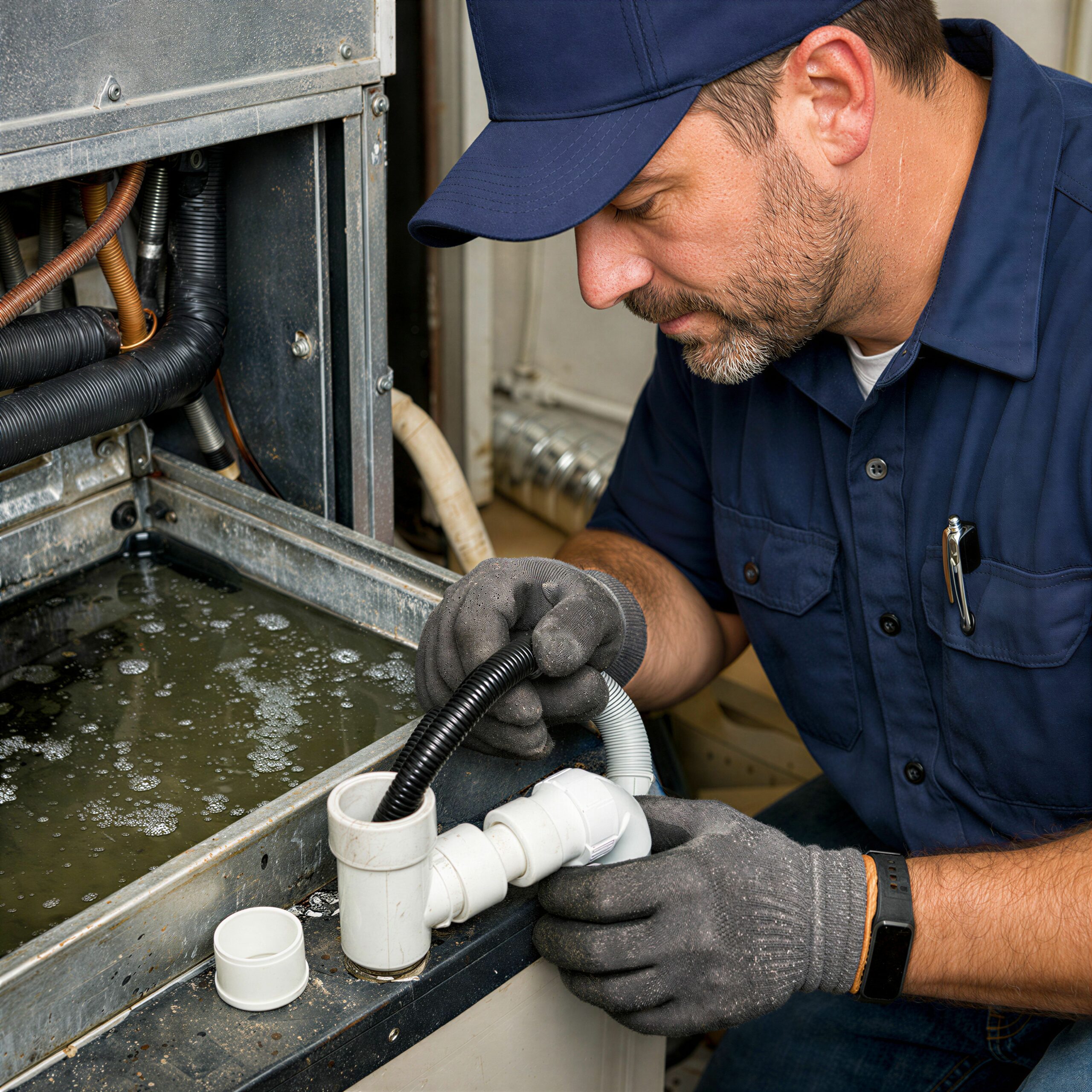
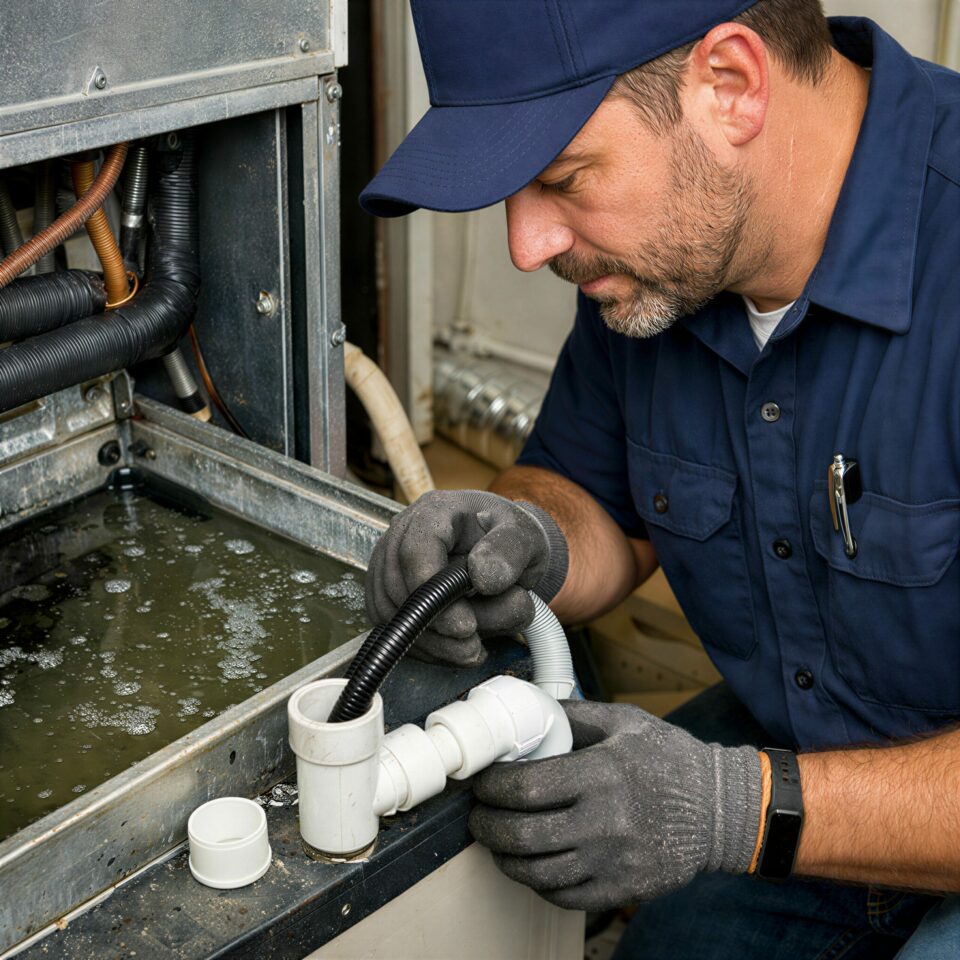
Summer shutdowns love a clogged condensate drain line. Not because the repair is complicated. Usually because the problem gets ignored until the drain pan looks like a science project. A residential split system in humid summer weather can pull 2 to 5 gallons of moisture from the air per hour. All of that water has one job: leave through the condensate drain system. When algae, biofilm, or debris narrow the line, drainage slows down. Then the pan fills. Then the float switch trips. Then the system shuts off. Then the callback happens.
Most of that drama comes down to a short maintenance routine. About 10 minutes. Once or twice a year. Less exciting than a no-cool call, but a whole lot cheaper.
What the Condensate Drain System Does
The evaporator coil removes heat and humidity from return air. As warm, humid air moves across the coil, moisture condenses on the fins and drips into the primary drain pan below.
From there, water usually flows through:
- The primary drain outlet
- A P-trap
- The primary condensate drain line
- An approved discharge point
Some systems also include:
- A secondary overflow pan
- A secondary drain line
- A float switch
- A condensate pump, when gravity drainage won’t work
A healthy system drains quietly in the background. A clogged one gets loud in all the annoying ways.
Why Condensate Drain Lines Clog
Condensate drains live in perfect slime-growing conditions. Dark. Wet. Warm. Nutrient-rich. Biofilm builds along the inside wall of the pipe. Algae joins the party. Dust and debris from the air handler add body to the mess. As buildup thickens, the drain line’s effective inside diameter shrinks. At some point, the pan fills faster than the line can carry water away. Then the float switch shuts the system down, assuming the switch works. In humid climates and long cooling seasons, drain clogs aren’t rare. They’re scheduled.
How to Inspect and Maintain the Condensate Drain Line
A routine service check catches most problems before they turn into a soaked ceiling or a dead system.
1. Shut the system down
- Turn the system off at the thermostat and breaker before opening the air handler.
2. Inspect the primary drain pan
Remove the access panel and look into the primary pan.
What belongs there:
- No visible water
- Or a small amount of clean water during operation
What doesn’t:
- Standing water
- Slime
- Algae
- Rust-colored debris
- Any sign that drainage has slowed down
A pan full of water means the line is restricted or blocked.
3. Check the P-trap
The P-trap keeps air from bypassing through the drain opening. A dry trap can pull air through the drain line instead of letting condensate drain properly. That can reduce system performance and interfere with drainage. The trap should hold water during operation. If the trap is dry after a period of low use, refill it and inspect trap depth against the equipment manufacturer’s requirements. Most specs land in the 3- to 4-inch range, depending on the unit’s negative static pressure.
4. Flush the Drain Line
Use the equipment manufacturer’s approved procedure or a cleaner made for condensate drains. Many techs also use distilled vinegar as a routine treatment between full maintenance visits. It cuts biofilm, doesn’t come with bleach fumes, and tends to be the safer default on PVC systems.
5. Test the Float Switch
- Lift the float manually while the system is running.
- The system should shut off.
- Release the float. The system should restart, or reset through the control circuit depending on the setup. A float switch that doesn’t stop operation isn’t backup protection. It’s decoration.
6. Test the Condensate Pump
Pour water into the pump reservoir until the float rises.
Verify three things:
- The pump turns on
- Water discharges properly
- The pump shuts off after the reservoir empties
A pump that runs continuously, never turns on, or moves no water needs attention right away.
Related: How to Replace a Condensate Pump for pump selection and installation guidance. Browse condensate pumps at SupplyHouse.
How to Clear a Clogged Condensate Drain Line
A clogged drain usually isn’t hard to clear. A rushed one can turn into a mess. Follow the order.
1. Shut Power off
- Turn the system off at the thermostat and breaker.
2. Remove Standing Water from the Pan
- Use a wet/dry shop vac to remove water from the primary drain pan before clearing the line.
- Less water in the cabinet. Less water on the floor. Better day.
3. Apply a Drain Treatment
- Pour about 1 cup of vinegar into the drain pan and let it sit for 15 minutes to start loosening biofilm.
- Diluted bleach can work for heavy algae buildup, but vinegar is generally the safer default. Some manufacturers advise against bleach, especially with copper components or septic discharge.
4. Pull the Clog from the Drain Outlet
- Go to the exterior discharge end of the primary drain line and connect a wet/dry shop vac.
- A short piece of rubber hose and tape helps create a seal between the vac hose and the drain pipe. Run suction long enough to pull debris, slime, and water toward the discharge.
5. Break up stubborn buildup from the air handler side
- If suction alone doesn’t clear the line, use a small bottle brush from the air handler side to loosen the blockage.
- Go gently. The goal is to break up buildup, not ram it deeper into the pipe.
6. Flush and Test the Line
Pour clean water into the drain pan and confirm steady flow through the drain line.
Watch for:
- Fast drainage
- No backup into the pan
- Proper float switch reset
7. Treat the Line After Clearing
- Once flow returns, add an algaecide treatment or condensate pan tablet to slow future buildup. Preventive chemistry beats repeat callbacks.
How to Check the Float Switch Before a Callback Checks in
Every air handler without a float switch is one clogged line away from a water problem. A float switch wired in series with the 24V control circuit shuts the system down before the pan overflows. Cheap part. Big payoff.
A few common options include:
Different mounting style, same basic mission: stop water before it starts ruining drywall. Browse all float switches and drain switches in the HVAC condensate removal category.
Common Condensate Drain Problems and Fixes
| Problem | Likely cause | Fix |
| System shuts down and pan is full | Clogged primary drain line | Clear the clog and test the float switch |
| Pan is full but the drain line flows freely | Float switch stuck or set too low | Adjust or replace the float switch |
| Water drips from a ceiling or wall | Secondary drain is carrying overflow because the primary is clogged | Clear the primary drain immediately |
| Condensate pump runs but no water discharges | Clogged discharge line or failed check valve | Clear the discharge line and inspect or replace the check valve |
| Pump runs continuously | Float stuck up or inlet flow exceeds pump capacity | Check float travel and verify pump sizing |
| Musty odor at supply registers | Algae or mold in the drain pan or on the evaporator coil | Clean the pan, treat the line, and inspect the coil |
| P-trap is dry | Water evaporated during low-use periods | Refill the trap and confirm proper trap depth |
How Often Condensate Drain Maintenance Should Happen
For most systems, inspect and flush the condensate drain at every maintenance visit, usually twice per year.
In high-humidity climates, or on equipment that runs long cooling seasons, monthly treatment with vinegar or a pan tablet can help keep algae and biofilm under control. More humidity means more condensate. More condensate means more chances for growth. The pipe doesn’t care how full the schedule is.
FAQs
What causes an AC system to shut down for no obvious reason in summer?
A float switch trip from a clogged condensate drain is one of the most common causes. A quick pan check can save a long diagnostic.
Is vinegar or bleach better for drain line treatment?
Both can work. Vinegar is usually the safer default because it handles biofilm and algae without the harsher side effects bleach can bring. Bleach may help with heavy algae buildup, but manufacturer guidance matters.
Can a clogged drain line freeze the evaporator coil?
Not directly. A frozen coil and a clogged drain often show up together because both can stem from low airflow. Let the coil thaw completely, then inspect airflow, filtration, and drainage.
What’s the difference between the primary and secondary drain?
The primary drain carries condensate during normal operation. The secondary drain only carries water when the primary path fails or slows enough for the pan to rise to the overflow outlet. Water from the secondary line is an alarm, not normal operation.
Where should a condensate drain line discharge?
Common approved discharge points include a floor drain, standpipe, laundry sink tailpiece, or suitable outdoor location, depending on local code. Outdoor discharge can freeze in cold climates and can promote algae growth near the outlet.
What happens if the condensate pump fails?
The reservoir fills, the overflow safety trips, and the system shuts down. During peak cooling season, fast replacement matters.
How do condensate neutralizers work?
High-efficiency condensing equipment can produce acidic condensate. Neutralizers use media such as calcium carbonate to raise pH before discharge where local code requires it.
Keep Things Flowing
A clogged condensate drain line causes a ridiculous number of summer callbacks for something that usually takes minutes to prevent. Inspect the pan. Flush the line. Test the float switch. Check the pump. Refill the trap if needed. That routine won’t be the most glamorous part of a maintenance visit. It also won’t be the reason the phone rings back in July.
Browse condensate pumps, float switches and drain switches, and condensate accessories at SupplyHouse, including the DiversiTech 6-JMP float switch, DiversiTech CS-3 drain line clip switch, and DiversiTech CC-1 Condensate Cop pan switch. For neutralizer-related references, SupplyHouse also has a live condensate neutralization tanks category.
Related: How to Replace a Condensate Pump for pump selection and installation guidance.