
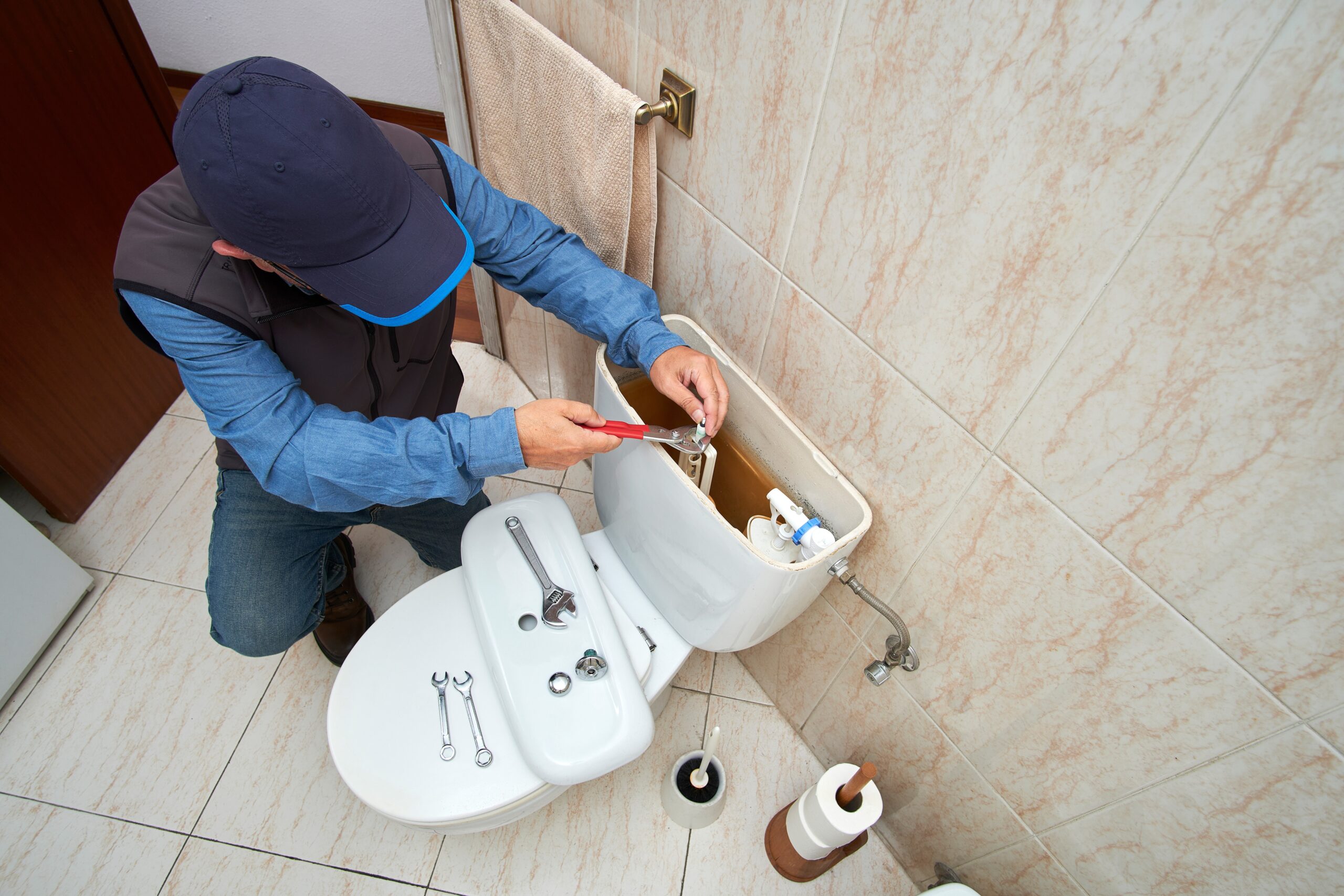
 A running toilet isn’t just an annoyance. According to EPA WaterSense, a running toilet can waste about 200 gallons of water every day, and the leading culprit is usually a worn flapper. For plumbers, it’s one of the most common service calls there is, and it’s almost always resolved in under an hour without replacing the toilet. The trick is diagnosing the right component before reaching for parts.
How a Toilet Tank Works
Three components are responsible for nearly every running-toilet call.
The flapper sits at the bottom of the tank and seals the flush valve opening. When the flush handle is pressed, the flapper lifts, water rushes into the bowl, and the flapper drops back down to reseal. Chlorine, hard water, bacteria, and city water treatment chemicals all degrade the rubber over time, causing the flapper to lose its seal.
The fill valve (also called a ballcock on older toilets) refills the tank after every flush. It shuts off when the float reaches the set water level. Debris inside the cap is a common cause of a fill valve that won’t turn off or cycles on and off on its own.
The overflow tube sits in the center of the tank. Per Fluidmaster’s installation instructions, the tank water level should sit roughly 1/2 inch below the top of the overflow tube. When the fill valve is set too high, water spills continuously into the overflow tube and drains into the bowl.
Diagnosing the Problem: Three Tests
Two minutes of diagnosis before ordering anything will identify which component is at fault.
Test 1: The Dye Test (confirms flapper leak)
- Remove the tank lid and set it somewhere safe.
- Drop dye tablets or food coloring into the tank. Do not flush.
- Wait 15 minutes, then check the bowl. If color appears without flushing, the flapper isn’t sealing.
Test 2: The Float Test (confirms fill valve or water level issue)
- Remove the tank lid while the toilet is running.
- Lift the float cup or arm by hand. If the water stops, the float is set too high or the fill valve is failing.
- Check whether water is spilling into the overflow tube. If it is, the water level is above the 1/2-inch clearance mark.
Test 3: Listen After a Flush
- Flush and watch the tank refill.
- Per Fluidmaster’s troubleshooting guide, if the fill valve turns on and off by itself (phantom flushes), the flapper is leaking and causing the tank to slowly drain. Start by cleaning or replacing the flapper before replacing the fill valve.
- If the fill valve won’t turn off at all, check the cap for debris first before replacing the unit.
Making the Repair
| Symptom | Likely Cause | Fix |
| Dye appears in bowl without flushing | Failed flapper | Replace flapper |
| Water spilling into overflow tube | Water level set too high | Adjust fill valve float |
| Lifting float by hand stops the water | Float set too high or fill valve failing | Adjust or replace fill valve |
| Fill valve cycles on and off (phantom flushes) | Flapper leak causing slow tank drain | Clean or replace flapper first |
| Fill valve won’t turn off at all | Debris in fill valve cap or failed valve | Flush debris from cap; replace valve if needed |
Fix 1: Replacing a Worn Flapper
A flapper replacement is the most common fix. According to Korky’s installation guide, flapper life is typically 5 to 10 years, but chlorine, hard water, bacteria, and in-tank cleaning tablets can shorten that considerably.
Steps:
- Shut off the supply valve behind or below the toilet.
- Flush to drain the tank.
- Unhook the flapper ears from the pegs on the overflow tube, then disconnect the chain from the flush arm.
- Inspect the flush valve seat. Run a finger around the rim. Mineral buildup or a scored seat will prevent a new flapper from sealing. Clean with a non-scratch pad, or if the seat is severely pitted, the flush valve assembly needs replacement.
- Snap the new flapper ears onto the overflow tube pegs. Per Korky’s installation instructions, connect the chain to the flush lever arm with one to two links of slack. Too tight and the flapper won’t seal. Too much slack and the flush will be weak.
- Turn the supply valve back on and perform the dye test again to confirm the seal.
Parts: Flappers category at SupplyHouse carries 2-inch and 3-inch options from Fluidmaster and Korky. Most toilets made before 2000 use 2-inch openings. Many higher-efficiency models from 2000 onward use 3-inch openings.
Fix 2: Adjusting or Replacing the Fill Valve
Fill valve issues come in two forms: the float is set too high, or the valve itself has failed.
Flushing debris from the cap (before replacing):
Per Fluidmaster’s troubleshooting instructions, if the fill valve won’t turn off, won’t turn on, or won’t refill the tank, check the cap for debris first before replacing the unit. Turn off the water, flush the toilet, hold the shaft under the float, twist the cap counterclockwise to remove it, then turn the water on and off a few times to flush debris through the valve body. Replace the cap. Many fill valve failures resolve here.
Adjusting the water level:
- Remove the tank lid. Locate the water level adjustment dial on the fill valve shaft.
- Per Fluidmaster’s installation instructions, the target water level is roughly 1/2 inch below the top of the overflow tube. Most tank walls have a marked waterline.
- On Fluidmaster 400A-style valves, turn the adjustment dial clockwise to raise the float, counterclockwise to lower it. Flush once and let the tank refill. Confirm water shuts off at the 1/2-inch mark below the overflow tube rim.
Replacing the fill valve:
- Shut off the supply valve and flush to drain the tank.
- Place a towel under the tank. Disconnect the supply line from the bottom of the tank.
- Unscrew the locknut under the tank counterclockwise. Pull the old fill valve straight up and discard.
- Adjust the height of the new fill valve before inserting it. Per Fluidmaster’s installation instructions, the top of the fill valve cap should measure roughly 3 inches above the top of the overflow pipe. This automatically positions the critical level (CL) mark 1 inch above the overflow pipe top, which is a Universal Plumbing Code requirement.
- Insert the fill valve, install the shank washer with wide side up, and hand-tighten the locknut. Per Fluidmaster’s instructions: do not overtighten. Overtightening may crack the fill valve or tank.
- Attach the refill tube to the refill port on the fill valve, clip it to the overflow tube (do not push it down into the tube), and reconnect the supply line.
- Turn the water on slowly, set the water level to roughly 1/2 inch below the overflow tube top, flush twice, and check all connections for leaks.
Recommended fill valves:
- Fluidmaster 400A Toilet Fill Valve — the most widely installed fill valve in the trade. Universal fit, adjustable from 9 to 14 inches, 5-year manufacturer warranty.
- Fluidmaster PRO45 Anti-Siphon Fill Valve (Brass Shank) — brass shank construction for commercial and high-use residential applications.
- Fluidmaster 400ARHR PerforMAX High Performance Fill Valve — designed for slow-filling complaints, compatible with Toto and American Standard.
Browse the full Fill Valves category at SupplyHouse.
When to Replace Everything at Once
If a toilet is more than 10 years old and one component has failed, the others are close behind. A complete internal rebuild runs faster than three separate service calls.
| Kit | What’s Included | Best For |
| Fluidmaster PRO45K | PRO45 fill valve, PRO57K flush valve kit with flapper, PRO61 tank lever, hardware and gaskets | Full rebuilds, commercial accounts, contractors stocking one kit SKU |
| Fluidmaster 400AKRP10 | 400A fill valve, adjustable flush valve, adjustable flapper, tank lever, hardware | Residential 1.6 GPF toilets; adjustable flapper suits varying flush performance needs |
| Korky 4010MP | QuietFILL fill valve, 2-inch flush valve, chlorine-resistant red-rubber flapper, hardware | Noise-sensitive installs; hard water areas; chlorine-resistant flapper backed by 5-year warranty |
Find the Fluidmaster PRO45K Complete Toilet Repair Kit and the full line of Toilet Parts at SupplyHouse.
Common Mistakes That Lead to Callbacks
- Skipping debris flush on the fill valve: Fluidmaster’s own troubleshooting guide lists debris in the cap as the first thing to check before replacing a fill valve. A two-minute cap flush can save an unnecessary part swap.
- Wrong chain slack: too tight and the flapper won’t seat. Too much slack and the chain can get caught under the flapper. Per Korky’s installation instructions, one to two links of slack is the target.
- Wrong flapper size: a 2-inch flapper won’t seal a 3-inch opening. Measure the tank outlet before ordering.
- Overtightening the fill valve locknut: Fluidmaster’s installation instructions are explicit, hand-tight only. Overtightening may crack the fill valve or tank.
- Refill tube pushed into the overflow pipe: Fluidmaster warns against shoving the refill tube down the overflow pipe. Clip it to the outside of the rim. A tube shoved inside can siphon water out of the tank.
- Skipping the supply valve check: a corroded stop that barely holds will cause a callback. If it hasn’t moved in years, replace it while the water is already off.
Frequently Asked Questions
How much water does a running toilet waste?
According to EPA WaterSense, a running toilet can waste about 200 gallons every day. That’s enough to push a residential water bill noticeably within a single billing cycle.
What is the most common cause of a running toilet?
EPA’s Residential Toilets page identifies worn or old toilet flappers as the most common cause of toilet leaks. A flapper is inexpensive and typically the first thing to check.
How do I know if the flapper or fill valve is the problem?
The dye test tells you. Drop food coloring in the tank without flushing. If color shows up in the bowl, the flapper is leaking. If the tank keeps filling past the 1/2-inch overflow clearance mark, the fill valve or water level setting is the issue.
What causes a flapper to fail?
Chlorine, bacteria, hard water, and city water treatment chemicals all degrade flapper rubber over time. In-tank drop-in cleaning tablets containing bleach or chlorine accelerate this damage significantly. Fluidmaster explicitly warns against using chlorine-based in-tank cleaners, noting they can damage tank components and void the valve warranty.
How long does a flapper last?
Per Korky’s FAQ, flapper lifespan is typically 5 to 10 years under normal conditions. Hard water, chlorine, and cleaning tablets shorten that cycle considerably.
What is the correct chain slack on a toilet flapper?
Per Korky’s installation instructions, leave one to two links of chain slack. Too little slack and the flapper won’t fully seat, causing a continuous slow leak. Too much slack and the chain can get pinched under the flapper or cause a weak flush.
Where should the water level sit in the tank?
Per Fluidmaster’s 400A installation instructions, water level after the tank finishes filling should sit roughly 1/2 inch below the top of the overflow pipe. The fill valve’s critical level (CL) mark must be positioned 1 inch above the top of the overflow pipe during installation, which is a Universal Plumbing Code requirement.
Can I just clean the fill valve instead of replacing it?
Yes, and Fluidmaster recommends it as the first step. If the fill valve won’t turn on, won’t turn off, or won’t refill the tank, remove the cap and flush debris through the valve body before assuming it needs replacement. The procedure is in the troubleshooting section of the Fluidmaster 400A installation guide.
What’s the difference between a 2-inch and 3-inch flapper?
The numbers refer to the flush valve opening diameter. Most toilets made before 2000 use 2-inch openings. Higher-efficiency models from roughly 2005 onward often use 3-inch openings for a faster, more powerful flush using less water. Measure the tank outlet or check the toilet model before ordering.
What if the toilet still runs after replacing the flapper and fill valve?
Check the flush valve seat for mineral scoring or cracks. Confirm the chain has correct slack per Korky’s installation guide. Verify the refill tube is clipped to the outside of the overflow tube, not pushed inside it. If all three check out and the toilet still runs, the flush valve body itself may need replacement. The guide to replacing a toilet flush valve covers that procedure in full.
No Drips, No Drama
A running toilet traces to one of three things: a worn flapper, a misadjusted or failed fill valve, or a water level above the 1/2-inch clearance mark on the overflow tube. Two minutes of diagnosis, the dye test and a float check, identifies which one before any parts get ordered. Per Fluidmaster’s own troubleshooting guide, check the fill valve cap for debris before replacing it. Per Korky’s installation instructions, keep chain slack to one or two links and the flapper will seat correctly every time. For toilets over 10 years old showing multiple symptoms, a complete repair kit covers all three components in one visit and eliminates the repeat call.
Browse Toilet Parts, Fill Valves, Flush Valves, and Flappers at SupplyHouse with fast shipping on every order.