
A rebate program that quietly changes its qualifying equipment list can turn a bid built three months ago into a losing job. That is effectively what happened on August 3, 2026, when the DesignLights Consortium’s updated NLC V5.2 technical requirements took effect for networked lighting controls. Electrical contractors who bid commercial lighting retrofits against utility rebate programs need to know what changed before the next proposal goes out, because the Qualified Products List that rebate programs lean on now reflects the new rules.
What Actually Changed in NLC V5.2
The update is not a ground-up rewrite. It builds on the prior version by tightening interoperability, cybersecurity, and data access standards for networked lighting control systems, and it standardizes system configuration reporting against the ANSI and NEMA C137.9 standard, which gives rebate programs a more consistent way to verify claimed energy savings across different manufacturers’ equipment. The revision also opens the Qualified Products List to horticultural lighting control systems, expanding the program beyond office and warehouse applications.
Quick Comparison: What the Revision Adds
| Area | Prior Requirement | NLC V5.2 Addition |
| HVAC integration | Not formally recognized | Thermostat-enabled lighting-to-HVAC integration |
| Configuration reporting | Varied by manufacturer | Standardized against ANSI/NEMA C137.9 |
| Eligible market segments | Office, warehouse, retail | Adds horticultural lighting control |
The Big Addition: Lighting Talking to HVAC
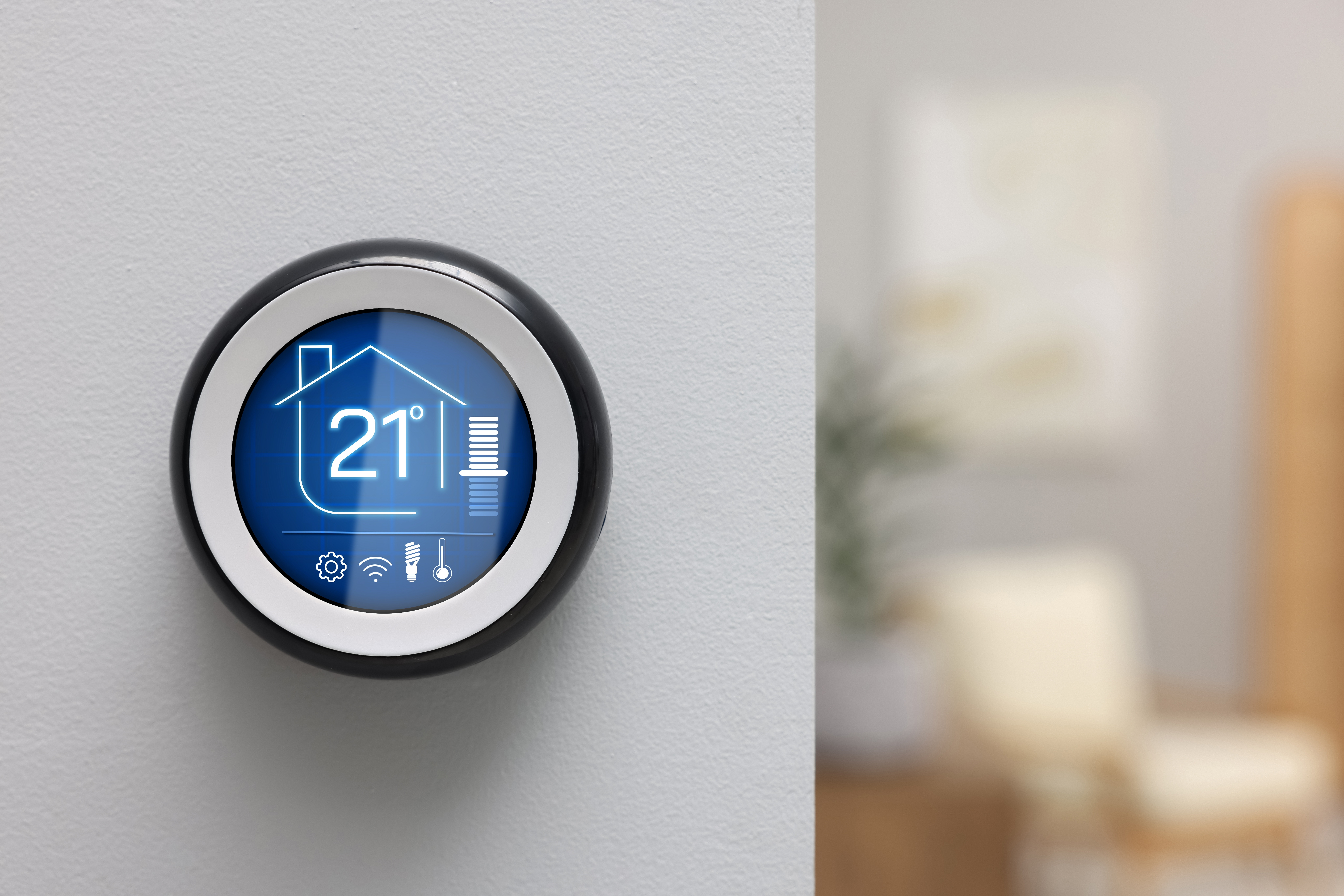
The headline change for most contractors is the formal recognition of lighting-to-HVAC integration through thermostats. Occupancy data collected by a networked lighting control system can now feed a connected thermostat, letting the HVAC system respond when a space sits empty instead of running on a fixed schedule. Industry estimates cited by the DesignLights Consortium put the added HVAC savings from that integration in the range of 8 to 21 percent, which is a meaningful number for building owners chasing utility incentives beyond the lighting retrofit itself.
That kind of integration puts occupancy sensing hardware at the center of the job in a way it was not before. A ceiling-mounted multi-technology ceiling sensor combining passive infrared and ultrasonic detection reduces the false triggers that undermine both lighting control and any HVAC logic riding on the same occupancy signal, which matters more now that the data feeds two systems instead of one.
Rebate Programs Are Already Moving
Utility rebate programs did not wait for the ink to dry. Programs dedicated to networked lighting control technology grew to nearly 200 nationwide even before V5.2 took effect, a 7 percent increase in prescriptive rebate participation over the prior year, and average rebate dollars for some control options climbed by double digits. A contractor bidding against those programs needs equipment currently listed under the new technical requirements, not equipment that was qualified under the outdated version, since older listings will phase out over time even though existing installations are not immediately delisted.
Specifying and Commissioning Under the New Rules
- Confirm every networked lighting control component specified on a rebate-eligible job appears on the current Qualified Products List under NLC V5.2, not a legacy listing.
- Discuss thermostat-enabled HVAC integration with the client early if the job targets the higher rebate tiers tied to whole-building energy performance.
- Select occupancy and vacancy sensors rated for the coverage area and technology type the space actually needs, since a mismatched sensor undermines both the lighting savings and any HVAC integration riding on the same data.
- Pair line-voltage occupancy sensors with a compatible power pack sized to the connected load rather than assuming any power pack on hand will work.
- Where a client wants dimming tied to occupancy and daylight, spec a 0-10V dimming smart sensor rather than a standard on-off sensor, since dimming compliance often factors into the higher rebate tier.
- Document system configuration at commissioning in the format the rebate program requests, since standardized reporting under ANSI/NEMA C137.9 is now part of how programs verify claimed savings.
- Keep manufacturer documentation on hand showing cybersecurity compliance for any networked system, since interoperability and data access standards are now explicit qualification criteria.
Building Blocks Worth Having on the Truck
A retrofit built around occupancy sensing rather than simple switching needs a broader parts inventory than a straightforward switch-and-fixture swap. Keeping a stocked motion sensor selection on hand, along with a range of commercial occupancy sensor options covering ceiling, wall-switch, and high-bay applications, keeps a crew from losing a day to a supply run mid-install when a coverage area calls for a different sensor than originally planned.
Frequently Asked Questions
What is the DesignLights Consortium and why does it matter to electrical contractors?
The DesignLights Consortium is a nonprofit organization that maintains Qualified Products Lists used by utility and energy-efficiency rebate programs across the country. Equipment on the list qualifies for incentives that often make or break a lighting retrofit’s economics.
Does NLC V5.2 apply to residential lighting jobs?
The requirements target networked lighting control systems used mainly in commercial, institutional, and industrial applications, so most residential lighting work falls outside its scope.
What happens to equipment qualified under the previous NLC version?
Previously qualified products are not immediately delisted, but new applications and ongoing qualification will be evaluated against the current V5.2 requirements going forward.
How does lighting-to-HVAC integration actually work?
A networked lighting control system shares occupancy data with a compatible thermostat, allowing the HVAC system to adjust setpoints or reduce conditioning in spaces the lighting system detects as unoccupied.
Is thermostat integration required to qualify for NLC V5.2 listing?
No. It is a recognized capability that can support higher-tier rebates where offered, but a basic networked lighting control system can still qualify without it.
What is ANSI/NEMA C137.9 and why was it added to the requirements?
It is a standard for reporting networked lighting control system configuration data. Standardizing against it gives rebate programs a consistent way to verify claimed energy savings across different manufacturers.
Do occupancy sensors need a power pack for every installation?
Line-voltage occupancy sensors that control loads directly may not need a power pack, but many low-voltage sensor and relay combinations require one sized to the connected lighting or receptacle load.
What is the difference between an occupancy sensor and a vacancy sensor?
An occupancy sensor turns lighting on and off automatically based on detected motion. A vacancy sensor requires manual activation but turns lighting off automatically, which some energy codes require in specific space types.
Can a contractor mix sensor brands within the same networked system?
Interoperability varies by platform. A contractor should confirm compatibility with the specific networked control manufacturer before mixing sensor brands on a rebate-eligible install.
Why did horticultural lighting control get added to the Qualified Products List?
Growing demand for energy-efficient controlled-environment agriculture lighting led the DesignLights Consortium to expand program eligibility to horticultural applications that meet the same performance and reporting standards.
Watts the Takeaway
Rebate programs move faster than most spec sheets get updated, and NLC V5.2 is a reminder that a lighting controls quote is only as good as the Qualified Products List behind it. Checking equipment against the current listing before the bid goes out beats explaining a rebate denial after the job is done.