
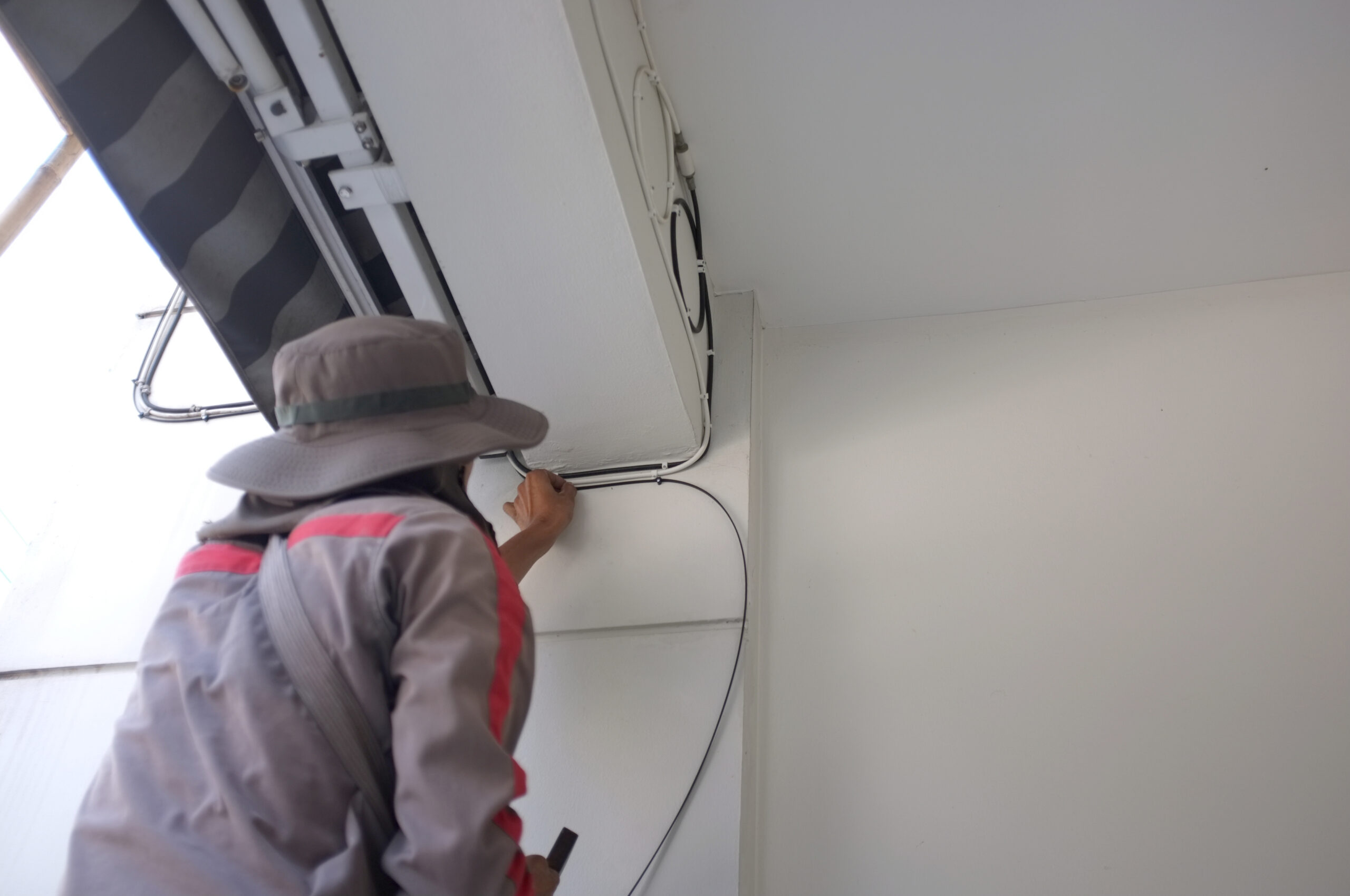
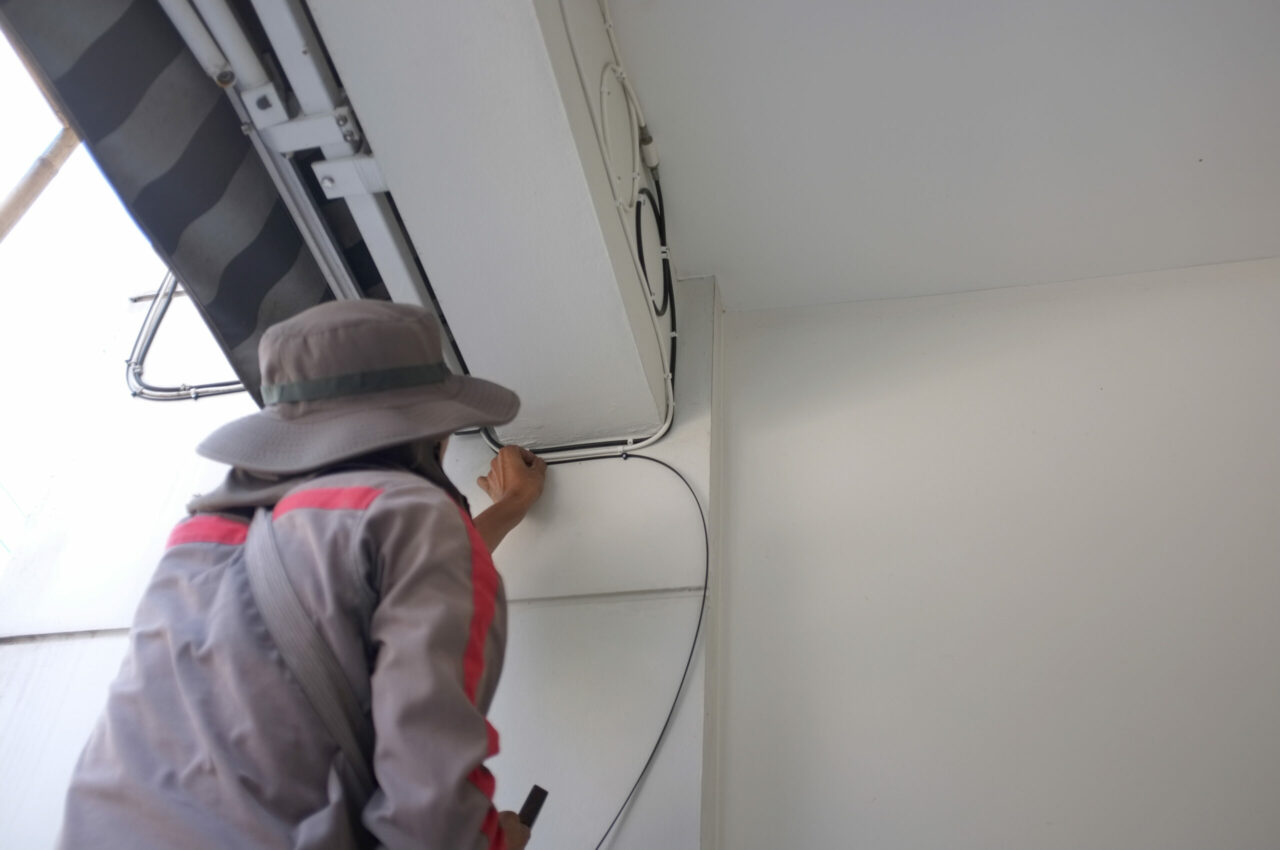
A run of liquidtight comes up short of its connector, and the wiring inside appears to be NM cable, all under a roof overhang. EC&M ran the scene as a recent What’s Wrong Here photo, and it packs two violations into one shot. Neither one is exotic. Both show up every week on condenser hookups, exterior lighting, garage add-ons and remodels. The fixes are cheap, the failed inspections aren’t, and the 2026 NEC adds a few small-parts rules that make the details matter even more.
Two Violations, One Photo
Russ LeBlanc’s breakdown of the photo points to two sections:
- Section 300.14 of the 2026 NEC requires raceways to be continuous between cabinets, boxes, conduit bodies, fittings, wireways and other enclosures or outlets. A gap at the connector fails, whether the cause was a bad measurement or a raceway that shifted after install.
- LeBlanc cites Section 334.12(A)(4), which prohibits NM cable in wet or damp locations. Earlier editions carried the same prohibition at 334.12(B)(4), so check the numbering in the edition the AHJ enforces. Sliding NM inside a raceway doesn’t change the location.
The location call is where crews slip. Article 100 defines a damp location as one protected from weather and not subject to saturation, but subject to moderate degrees of moisture. LeBlanc considers the area under the overhang in the photo a damp location. Areas exposed to weather are wet locations. Either way, NM is out.
Choosing a Wiring Method for Outdoor Work
| Wiring Method | Wet or Damp Location | Field Notes |
|---|---|---|
| NM cable | Not permitted | Keep it in dry locations |
| UF cable | Permitted in wet, dry or corrosive locations (340.10) | Also permitted underground per 300.5 |
| Conductors in an outdoor raceway | Must carry a “W” insulation type, such as THWN | Plain THHN isn’t permitted in a wet location |
An EC&M Code Q&A lists the 340.10 permitted uses for UF cable, including wiring in wet, dry or corrosive locations and underground installs per 300.5. For raceways, Charles Miller notes in Electrical Contractor that Type THHN isn’t permitted in a wet location, while a conductor with a “W” in its insulation type can be. Many conductors carry dual markings such as THHN/THWN, so read the print on the insulation.
For cable runs, Southwire 12/2 UF-B is rated 600V for direct burial with a sunlight-resistant jacket. For raceway work, pair Carlon Carflex liquidtight with Carlon straight connectors, which Carlon specifies for Carflex conduit, and pull wet-rated conductors instead of NM. The liquidtight fittings category covers elbows, metallic connectors and other sizes.
Liquidtight Done Right
- Measure with the conduit fully seated in the connector, follow the actual route, and add allowance for the curve before cutting. Cut square.
- Use connectors the manufacturer specifies for the conduit being installed.
- Pull conductors with a wet-location (“W”) insulation type, not NM and not THHN-only wire.
- Count bends. The limit is 360 degrees between pull points, and new Section 300.24 in the 2026 NEC clarifies the limit still applies when a run transitions from one raceway type to another.
- Support and secure the run with listed hardware, then tug-test each connection. LeBlanc’s photo raises the possibility that the raceway shifted after install, so a seated connector at rough-in isn’t the end of the check.
- Look at every connector again on the startup visit, after the equipment has run.
On condenser jobs, a factory whip removes the measuring guesswork. The Southwire Ultra-Whip comes in 3/4 in. by 6 ft. with two #8 THHN/THWN conductors, a #10 ground and LFNC-B fittings already attached. Pair it with a disconnect such as the MARS 80308, a 60A non-fused NEMA 3R unit with a pre-wired 15A GFCI receptacle, or browse the full A/C disconnects category for fused and pull-out options.
Listed Staples and Cable Ties: Small Parts, Real Inspections
The 2026 NEC tightens rules on the hardware that holds everything up. As NECA’s Kyle Krueger explains, new Section 300.13(E) requires cable ties and cable tie fixing devices used for securing and supporting wiring to be listed. Types 2S and 21S are evaluated for securing and supporting cables, flexible conduit and flexible tubing, while other types suit cable management only.
Parallel revisions across Articles 320, 330, 332, 334, 336 and 340 now cite UL 2239 for staples, straps, hangers and ties used with AC, MC, MI, NM, TC and UF cable. Krueger expects AHJs to look for evidence that staples are listed for the wiring method. Another change, Section 300.11(B), now requires raceways in indoor wet locations to provide drainage.
For outdoor bundling, Bluefin UV black cable ties are UL Listed nylon 6/6 marked for indoor and outdoor use. The product page doesn’t state a support type designation, so treat them as cable management unless the packaging shows Type 2S or 21S. For outdoor receptacles, the weatherproof covers category includes listed extra-duty while-in-use covers.
Plan the Next Load: Raceway Chases
Outdoor add-ons are only half the retrofit story. Heat pumps, EV chargers, hydromassage tubs and attic conversions all need new circuits, and finished walls make every one of them harder. Writing in Electrical Contractor magazine, Mark Ode argues an empty raceway from basement or crawl space to the attic costs very little during construction and saves major drywall work later. He describes installing a 1½-inch EMT chase from a basement service to a walk-up attic in a 3,500-square-foot home for exactly that reason.
Running NM through a short sleeve above a panel has its own rule. Section 312.8(C) Exception No. 1 in the 2026 NEC (formerly 312.5(C)) permits NM cables to enter the top of a surface-mounted enclosure through one or more nonflexible raceways at least 18 in. and no more than 10 ft long, provided the installation meets these conditions:
- Each cable is fastened within 12 in. of the outer end of the raceway, measured along the sheath.
- The raceway extends directly above the enclosure and doesn’t penetrate a structural ceiling.
- A fitting on each end protects the cables from abrasion, and the fittings stay accessible after installation.
- The outer end of the raceway is sealed or plugged to prevent access to the enclosure.
- The cable sheath runs continuously through the raceway and extends at least 1/4 in. into the enclosure beyond the fitting.
- The raceway is secured at its outer end and elsewhere per its own article, and cable fill doesn’t exceed Chapter 9, Table 1 and its applicable notes.
Longer chases between floors fall outside the exception’s 10-ft limit, so confirm the approach with the AHJ before roughing in. For stocking the truck, the electrical supplies category covers the boxes, fittings and wire a chase or outdoor add-on calls for.
Frequently Asked Questions
Is a covered porch a damp location or a wet location?
A covered area protected from weather but subject to moderate moisture fits the Article 100 definition of a damp location. Areas exposed to weather are wet. NM cable isn’t permitted in either.
Can NM cable run inside liquidtight conduit outdoors?
No. NM is prohibited in wet or damp locations under Section 334.12, and a raceway doesn’t change the location.
What conductors belong in outdoor LFNC?
Conductors with a wet-location insulation type, identified by a “W” in the marking, such as THWN. THHN alone isn’t permitted in a wet location.
Why does a small gap at a connector fail inspection?
Section 300.14 of the 2026 NEC requires raceways to be continuous between cabinets, boxes, fittings and other enclosures. A gap breaks that continuity.
Do cable ties have to be listed under the 2026 NEC?
Yes, when they secure and support wiring. Section 300.13(E) requires listed cable ties, and types 2S and 21S are evaluated for support. Other types are for cable management only.
Are standard staples still acceptable for NM cable?
Revisions to Article 334 and related articles cite UL 2239 for support hardware, so AHJs enforcing the 2026 NEC will look for staples listed for the wiring method.
How many degrees of bends are allowed between pull points?
360 degrees total. Section 300.24 in the 2026 NEC confirms the limit applies across transitions between raceway types.
Can several NM cables enter a panel through one sleeve without individual connectors?
Yes, under Section 312.8(C) Exception No. 1, if the sleeve is 18 in. to 10 ft long, enters the top of a surface-mounted enclosure and meets the fastening, fitting, sealing, securing and fill conditions.
When do the 2026 NEC rules apply?
Only after the state or local jurisdiction adopts the 2026 edition. Adoption timing varies widely, so check with the AHJ.
Don’t Come Up Short
The violations in the EC&M photo didn’t take skill to commit, and they don’t take much to avoid. Measure liquidtight with the connector seated, keep NM indoors and dry, and pull wet-rated conductors through every outdoor raceway. The 2026 NEC adds listing requirements for cable ties and staples, and AHJs enforcing it will be looking for listed hardware. A raceway chase planned at rough-in turns tomorrow’s heat pump or EV charger circuit into a wire pull instead of a demolition project. Crews that treat outdoor work as wet until proven otherwise spend a lot less time on return trips.