
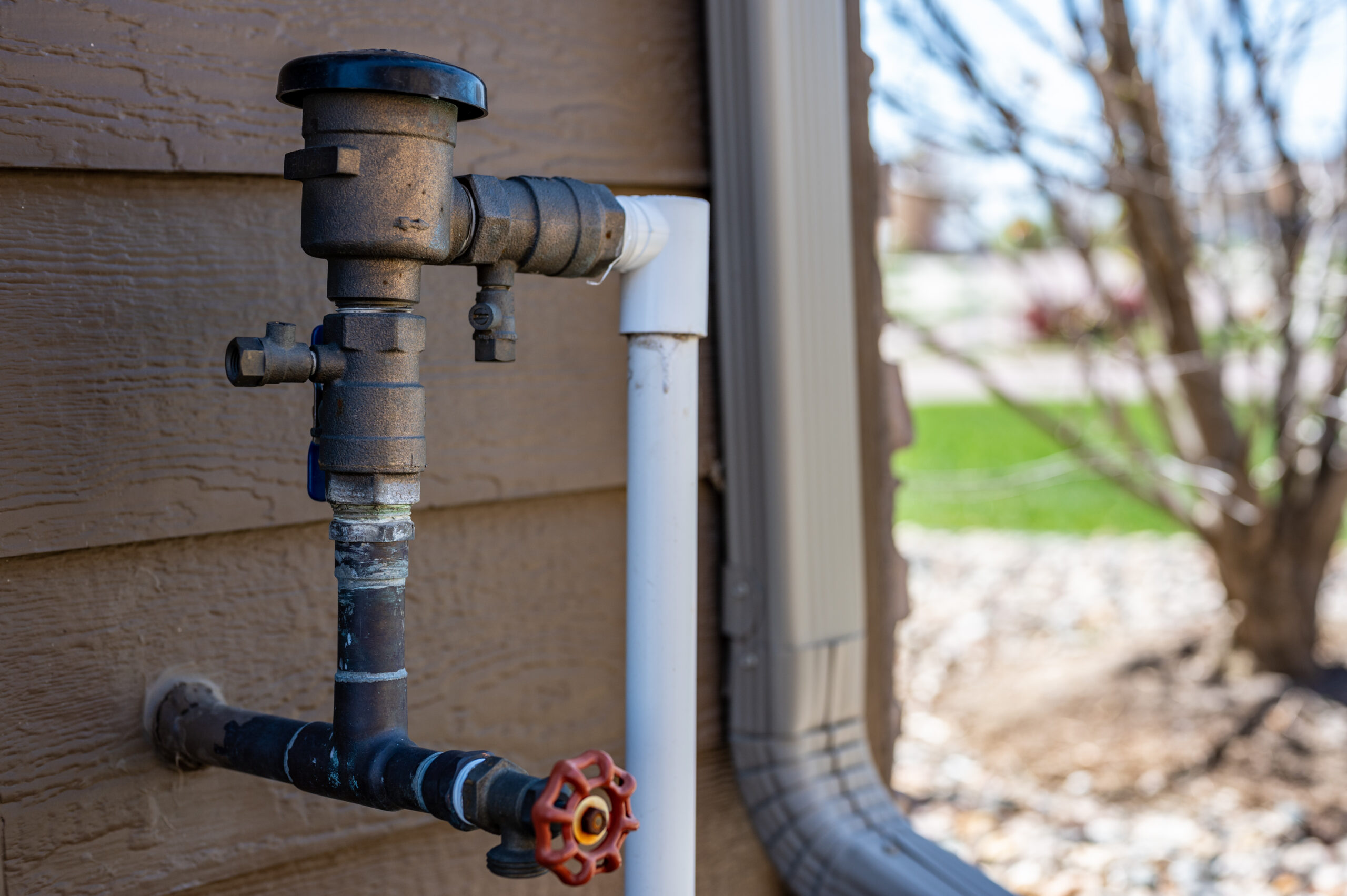
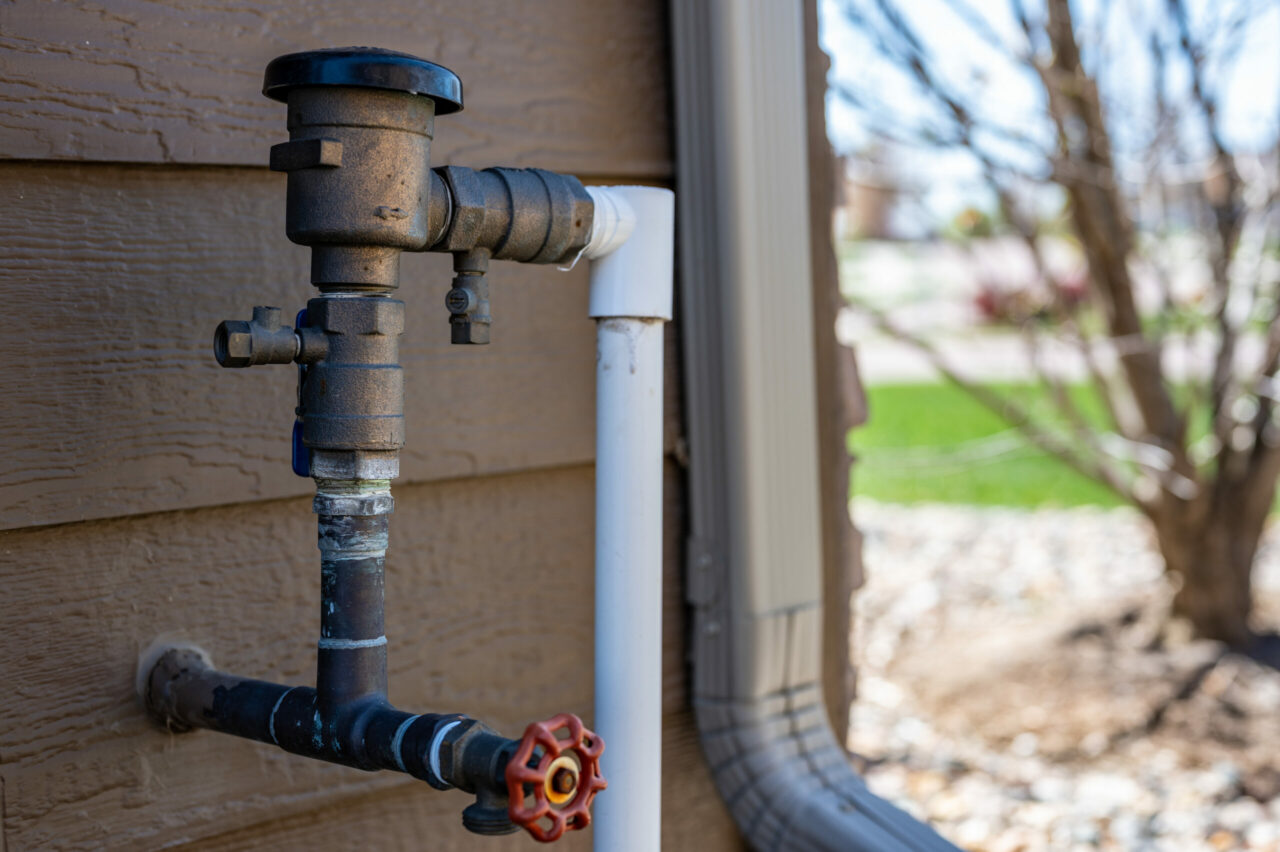
Every plumber has installed a backflow preventer without thinking twice about it. Fewer can say exactly which hazard classification drove that specific assembly choice, or what happens if the wrong one goes in. National Backflow Prevention Day landed on Aug. 16 this year, and it is a reasonable prompt to revisit Section 608 of the 2024 IPC.
Why Backflow Still Contaminates Water Systems
Backflow happens two ways: backpressure, where pressure in a nonpotable system exceeds the pressure in the potable system, and backsiphonage, where negative pressure in the potable line pulls contaminants backward into it. Neither requires a dramatic failure. A garden hose left submerged in a bucket of chemical solution, a boiler feed line with a shared connection, a commercial dishwasher running on the same main as a stagnant irrigation loop, any of these can reverse flow under the right pressure conditions.
The stakes are not theoretical. More than 10,000 backflow contamination cases get reported every year, and the consequences run from a boil-water advisory to a genuine public health emergency. The textbook case is the 1933 Chicago World’s Fair, where two hotels sharing a rooftop water tower developed a cross-connection that let contaminated water reach guests. Roughly 1,400 to 2,000 people fell ill and 98 died, and the incident is the reason National Backflow Prevention Day falls on Aug. 16 every year. That history is why cross-connection control shows up in code at all, not as a bureaucratic afterthought.
Getting the Hazard Classification Right
Section 608 sorts every cross-connection into High Hazard or Low Hazard, and that classification, not personal preference or what happens to be on the truck, determines which assembly is code-compliant.
| Classification | What It Covers | Typical Assembly Required |
| High Hazard | Connections where contamination would pose a significant health risk | Reduced pressure zone (RPZ) assembly |
| Low Hazard | Connections with comparatively low contamination risk | Atmospheric vacuum breaker or double check valve assembly |
Table 608.1 in the 2024 IPC lists which assembly applies to specific connection types, which matters even when a cross-connection is not obviously hazardous on its face. Guessing at the classification, or defaulting to whatever assembly is cheapest, is exactly the kind of shortcut that turns into a failed inspection or, worse, a genuine contamination event.
Air Gap or Mechanical Assembly?
An air gap is the simplest and most reliable form of backflow prevention, since it creates a physical separation between the supply and any nonpotable source rather than relying on a mechanical part that can wear out. The IPC requires a minimum air gap of at least two times the outlet pipe diameter, with a one-inch minimum for most outlets. When space or plumbing configuration rules out a physical air gap, a mechanical backflow preventer sized to the hazard classification is the fallback, and it needs to be chosen deliberately, not just pulled off the shelf.
For high hazard cross-connections where a physical air gap is not practical, the RPZ assembly category covers Watts, Wilkins, Zurn, Caleffi, and Apollo options across bronze, cast-iron, and stainless-steel construction, including the Watts 009 series that shows up on the large majority of commercial containment jobs.
Low hazard connections have more flexibility. The Backflow Preventers category covers dual checks and double check valve assemblies for water service connections, while the Vacuum Breakers category stocks atmospheric and pressure-type breakers for hose bibs, irrigation systems, and other point-of-use protections that do not need full RPZ-level containment.
The Testing Requirement Most Contractors Underprice
Installing a compliant assembly is only half the code requirement. Section 608 and most adopted plumbing codes mandate annual testing of mechanical backflow assemblies, and that ongoing service line is worth building into a business rather than treating as an afterthought:
- Testing at initial installation, before the system goes online, catches defects before they become a compliance or contamination problem
- Annual testing afterward is a code requirement in most jurisdictions, not an optional maintenance upsell
- Sediment buildup, worn seats, and general wear degrade an assembly’s performance over time even without an obvious failure
- A change in system pressure, new equipment added downstream, or a plumbing layout change can all affect whether an existing assembly still performs correctly
- Documented annual testing builds trust with the property owner and the local water authority, both of whom have a direct stake in the result
Choosing and Installing the Right Assembly
- Identify every cross-connection on the project and classify each one as High Hazard or Low Hazard per Section 608 before selecting any hardware.
- Cross-check the connection type against Table 608.1, since some connections require a specific assembly even when the hazard is not immediately obvious.
- Default to a physical air gap wherever space and configuration allow it, reserving mechanical assemblies for situations where an air gap genuinely is not feasible.
- Select the mechanical assembly to match the hazard classification exactly. An RPZ is not interchangeable with a double check valve assembly just because both fit the pipe size.
- Confirm the assembly carries third-party lab certification to the relevant ASSE standard for its type before it goes on the truck.
- Test the assembly on-site before the system goes live, then schedule the first annual retest at installation so it does not slip through a gap in the customer’s records.
- Document every test result formally, since that record is what protects the contractor as much as the property owner if a question ever comes up later.
Certification Matters as Much as the Hardware
Only a certified tester can perform a compliant backflow test, and that certification comes through the American Backflow Prevention Association or the American Society of Sanitary Engineers, with some states, including Texas, running their own independent Backflow Prevention Assembly Tester program. A crew that can sell installation but not certified testing is leaving a recurring revenue line on the table, and a proper test kit is a modest investment against what that annual service line is worth. The backflow test kit category includes the Watts TK-9A, which handles RPZ, double check, and pressure vacuum breaker testing in one unit.
Frequently Asked Questions
What is the difference between backpressure and backsiphonage?
Backpressure occurs when pressure in a nonpotable system exceeds pressure in the potable system, pushing contaminants backward. Backsiphonage occurs when negative pressure develops in the potable line itself, pulling contaminants in from a connected source. Both require backflow prevention, but the mechanism driving each is different.
Who decides whether a connection is High Hazard or Low Hazard?
The classification comes from Section 608 of the 2024 IPC and Table 608.1, which lists specific connection types and their required assembly. Local water authorities and code officials also weigh in, and their determination governs the specific job even where the code language leaves some judgment.
Is an air gap always better than a mechanical backflow assembly?
An air gap is generally more reliable since it has no moving parts to wear out, but it is not always feasible given space constraints or the specific plumbing configuration. Where an air gap is not practical, a properly classified mechanical assembly is the code-compliant fallback.
How often does a backflow assembly actually need to be tested?
Most plumbing codes, including the 2024 IPC, require annual testing of mechanical backflow assemblies. Some jurisdictions or high-hazard applications may require more frequent testing, so checking local water authority requirements on top of the base code is worth doing.
What certification does a technician need to legally test a backflow assembly?
Testers generally need certification through the American Backflow Prevention Association or the American Society of Sanitary Engineers. Some states run independent programs on top of that; Texas requires its own Backflow Prevention Assembly Tester certification through the TCEQ.
Can a double check valve assembly be substituted for an RPZ on a high hazard connection?
No. A double check valve assembly is rated for low hazard applications. Using one on a high hazard connection is a code violation and leaves the system without adequate protection against the specific contamination risk that hazard class represents.
What is the minimum air gap required by the 2024 IPC?
The general requirement is at least two times the outlet pipe diameter, with a standard minimum of one inch for most outlets. The exact figure depends on the specific outlet and connection type, so checking Section 608 directly for the application in question is worth the few minutes it takes.
Does a backflow assembly ever fail without any obvious sign of a problem?
Yes, which is exactly why annual testing is a code requirement rather than a courtesy. Sediment buildup, worn check seats, and gradual spring fatigue can degrade an assembly’s performance well before a visible leak or obvious malfunction shows up.
What is on-site containment versus point-of-use protection?
On-site containment installs a backflow assembly at a specific point in the plumbing infrastructure, typically where a high hazard connection exists, to protect the broader system beyond that point. Point-of-use protection installs a smaller device at a specific fixture, like a hose bib or irrigation valve, to manage risk right at that endpoint.
Is it worth investing in a backflow test kit for a small plumbing operation?
For a contractor already installing backflow assemblies, a test kit turns a one-time install into an annual service relationship with the same customer. Given how many jurisdictions mandate yearly testing, the recurring revenue from certified testing often justifies the kit’s cost well within the first year.
Reversal of Fortune
Backflow prevention rarely gets the attention that a flashy fixture or a new code cycle does, but it is one of the few plumbing systems where getting the classification wrong has real public health consequences, not just a callback. Match the assembly to the hazard, test it before it goes live, and build the annual retest into the relationship instead of hoping the customer remembers on their own.