
 The refrigerant transition feels finished: R-32 and R-454B are standard in new equipment, and last year’s cylinder shortages are settled history. But millions of R-410A systems installed over the past decade are still running, and every one will need service, not replacement, for years. Supply is healthy right now. The same industry data pointing to that health also flags a supply squeeze coming in 2029 that makes today’s recovery habits tomorrow’s business advantage.
The Transition Went Smoothly. Service Is Different.
As of June, A2L systems made up 99 percent of ducted equipment sales among HARDI distributors, with little regional variation. That is the equipment side, and it is done. The service side is not: homeowners who bought R-410A systems only a few years ago still expect affordable repairs when a leak or compressor fails.
Availability is not a concern today. Nearly 80 percent of distributors report inventories at or above target heading into cooling season, with AHRI describing the market as having a glut of virgin R-410A. Prices may still climb as the phasedown continues, but sourcing refrigerant for a service call should not be a problem this year.
Why 2029 Changes the Math
Under the AIM Act, allowable HFC production drops to 30 percent of baseline in 2029, a 70% cut from today. Much of that shrinking allowance goes toward new equipment, leaving service work increasingly dependent on the remaining glut and on refrigerant recovered from retiring systems and reclaimed for reuse. Refrigerant vented today cannot be reclaimed in 2029, right when demand for it will be highest.
What Changes on the Truck
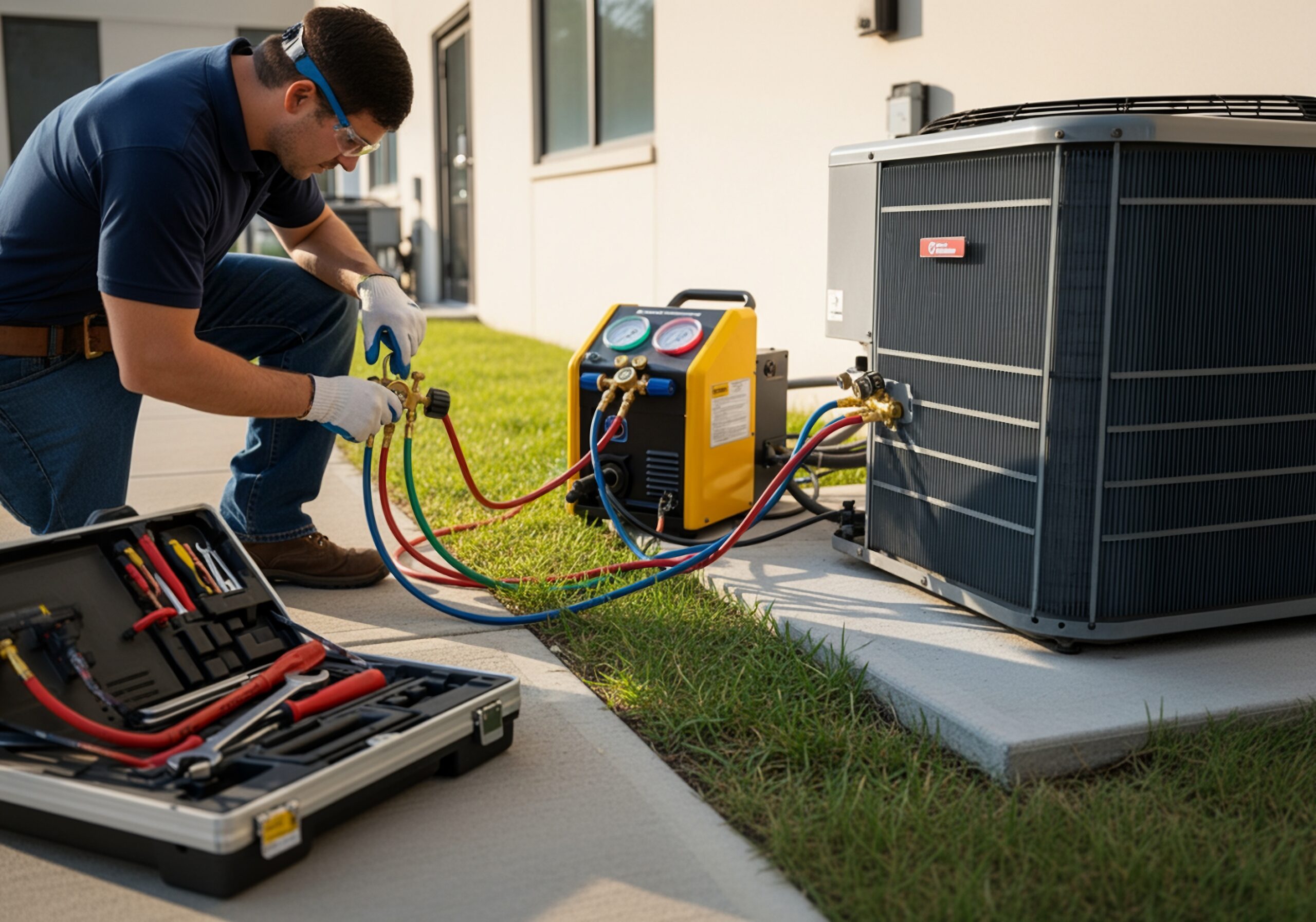
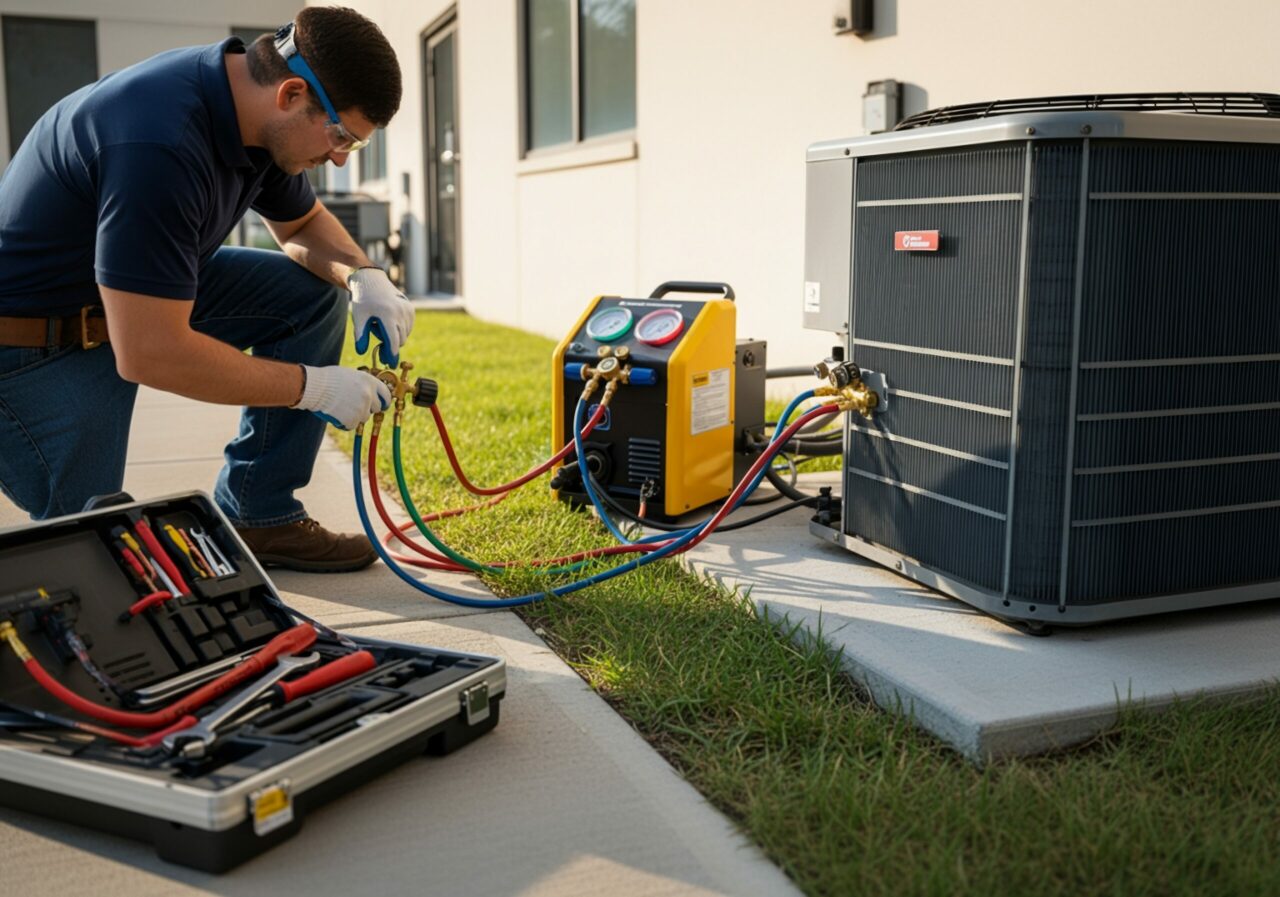
Recovery has always been required. Treating it as revenue, not just a step to finish fast, is the mindset worth adopting this season. A dual-cylinder machine like the Recovery Machine recovers R-410A and shuts off automatically at a set vacuum, cutting hands-on time on a full changeout. A dedicated Recovery Cylinder keeps recovered gas segregated by type, since mixed refrigerant is far less likely to be accepted by a reclaimer. A scale, whether the straightforward SRS1 Refrigerant Scale or the higher-capacity Smart Refrigerant Scale, documents exactly how much came off each job.
Old Habit vs. New Standard
| Practice | Old Habit | New Standard |
| Cylinder use | One cylinder for whatever’s on hand | Dedicated cylinders segregated by refrigerant type |
| Recovery speed | Rush to the next call | Full vacuum recovery with auto shutoff |
| Documentation | Weight logged loosely, if at all | Scale-verified weight recorded per job |
| End of tank | Sell or discard mixed refrigerant | Return clean refrigerant to a reclamation program |
A Recovery Routine Worth Standardizing
- Confirm refrigerant type on the nameplate before connecting recovery equipment.
- Use a dedicated, correctly rated cylinder for that specific refrigerant.
- Run to full vacuum instead of stopping early to save time.
- Weigh and log the recovered amount against the job ticket.
- Schedule regular pickups with a reclamation program rather than letting cylinders sit.
Where Contractors Leave Money on the Table
- Treating recovery as a cost instead of asking what a reclaimer pays for clean R-410A.
- Letting technicians vent small amounts to save a few minutes.
- Skipping the scale and estimating recovered weight instead of documenting it.
Frequently Asked Questions
Is R-410A hard to find right now?
No. Distributor inventories are healthy heading into this cooling season.
Why does 2029 matter if supply looks fine today?
The AIM Act’s next stepdown drops allowable production to 30% of baseline that year, shifting service work toward recovered and reclaimed refrigerant.
Can R-410A be mixed with A2L refrigerants in the same cylinder?
No. Mixing contaminates the batch and makes it far less likely a reclaimer will accept it.
Does recovering refrigerant actually generate revenue?
It can. Selling recovered refrigerant to a reclamation program turns a cost into a modest revenue stream.
What’s the difference between recovery and reclamation?
Recovery removes refrigerant from a system so it is not vented. Reclamation, done by a certified third party, cleans it to a purity standard for resale.
Don’t Let Good Refrigerant Go Up in Smoke
R-410A is not disappearing overnight, and neither is the demand to service the millions of systems already running on it, which means the conversation on every service truck is shifting from what refrigerant goes into a new install to how carefully the old refrigerant gets handled on the way out. That shift matters more than it sounds like it should, because 2029 is close enough that the recovery habits a shop builds this cooling season will directly determine how easily that shop sources R-410A three years from now. The fix is not complicated, but it does require treating recovery as a discipline rather than a formality: segregated cylinders instead of one tank for whatever refrigerant happens to be on hand, full vacuum recovery instead of a rushed partial job to save five minutes, and a scale on every job instead of an estimate scribbled on a work order. None of these changes cost much, and all of them turn refrigerant that would otherwise vent into the atmosphere into refrigerant a reclamation program will actually pay for. Shops that get this right now are not just staying compliant, they are building the kind of documented, reclaimable refrigerant stream that keeps trucks stocked and jobs moving when the allowance tightens for everyone who did not bother.