
The pressure gauge on a boiler tells the whole story of a hydronic system’s health in a single number, but most techs glance at it and move on without reading it properly. Correct operating pressure is the foundation of reliable hydronic heat. Too low and the system cavitates, loses flow, and trips high-temp safeties. Too high and the relief valve drips, the expansion tank waterloggs, and fittings weep. Neither condition fixes itself, and both are straightforward to address once the diagnosis is correct.
What the Pressure Gauge Actually Shows
The standard residential boiler pressure gauge shows system pressure in PSI, usually on a 0-60 PSI scale with a red pointer and a black pointer. The black pointer shows current pressure. The red pointer is manually adjustable and typically left at the normal operating range by the installer as a reference marker.
The gauge reads different values at different system temperatures:
| System State | Expected Pressure Range | Notes |
| Cold (system not running) | 12 to 15 PSI | This is the fill pressure set by the auto-fill valve |
| Warm (system running, partial load) | 15 to 22 PSI | Normal rise as water expands with heat |
| Hot (system at full operating temp, 180-200F) | 20 to 25 PSI | Near the upper limit of most residential systems |
| Relief valve set point | 30 PSI typical | Valve opens if pressure reaches this level |
A system reading 12 PSI cold and 22 PSI hot is healthy. A system reading 5 PSI cold has lost water. A system reading 28 PSI cold has an auto-fill valve that’s stuck open, a failed expansion tank, or a closed expansion tank isolation valve.
The Auto-Fill Valve: How It Works and How to Adjust It
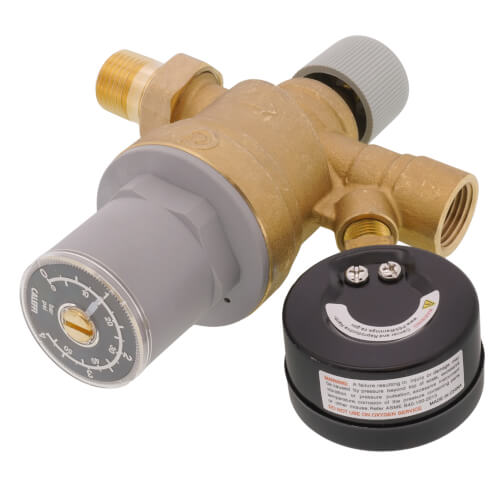
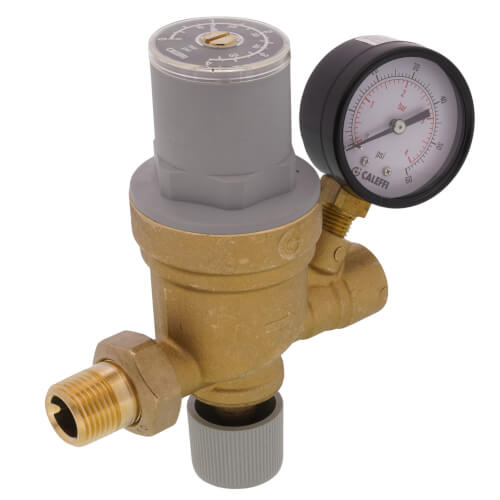
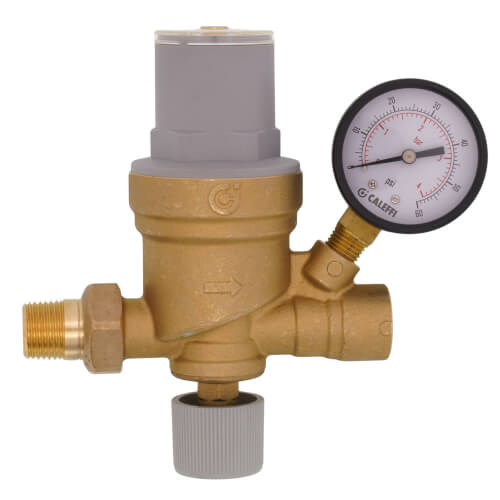
The auto-fill valve (also called a boiler feed valve or pressure reducing valve) is installed on the cold water makeup line feeding the boiler. It maintains a minimum fill pressure in the system automatically. When pressure drops below the setpoint, the valve opens and allows makeup water in until the setpoint is reached.
Most auto-fill valves are commonly factory-set in the low-teens, often around 12 to 15 PSI depending on model. Some have an adjustment screw or dial on top. The correct cold fill pressure is typically the height of the highest point in the system (in feet) divided by 2.31, plus 5 PSI of margin. For a two-story home with the system’s highest point 20 feet above the boiler, the fill pressure should be about 14 PSI (20/2.31 + 4 = roughly 13-14 PSI).
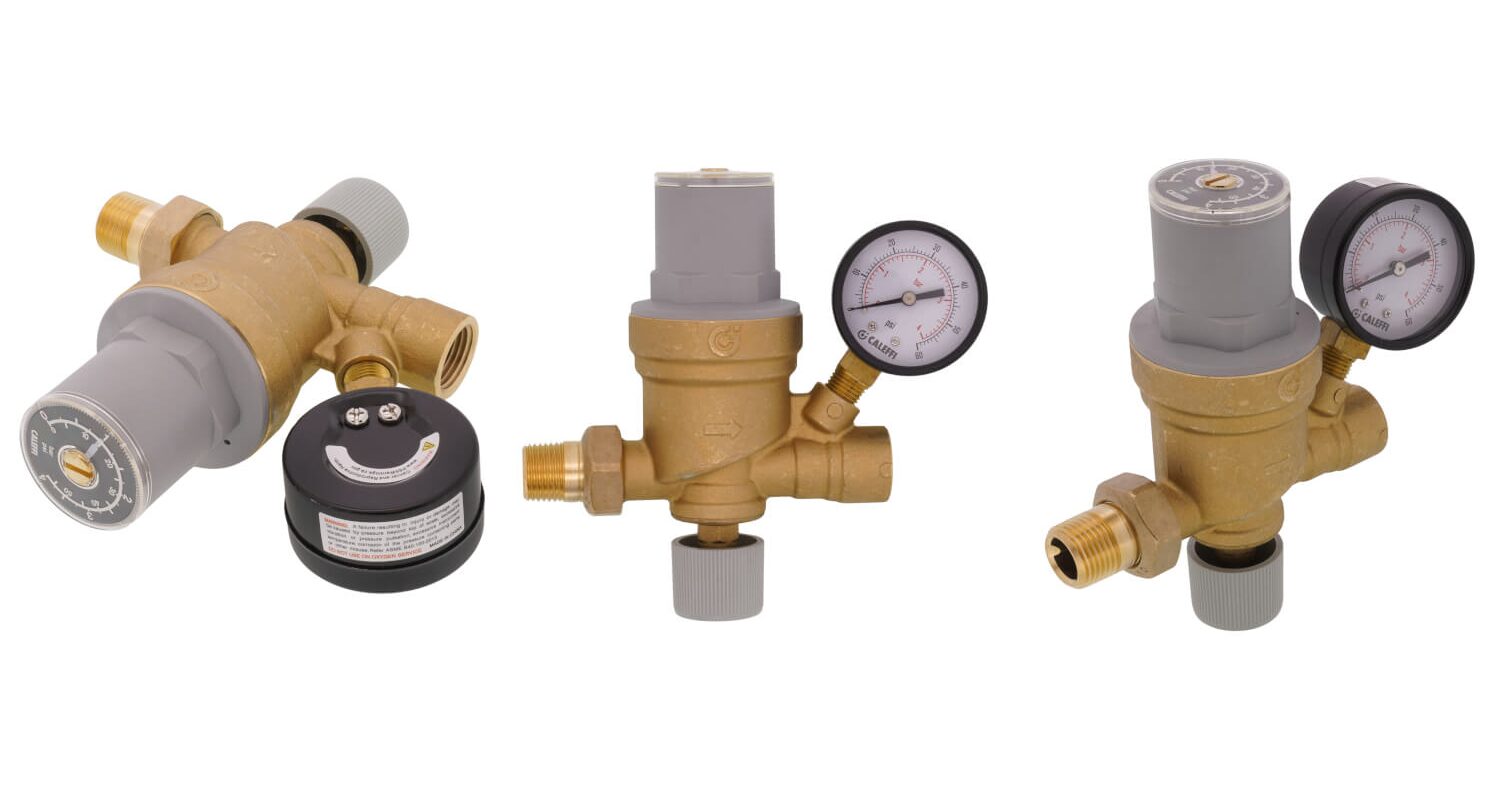
SupplyHouse carries the Caleffi 553642A AutoFill Boiler Feed Valve with Pressure Gauge and the Caleffi 573012A Backflow Preventer and AutoFill Combination with Gauge. Browse all boiler fill valves.
How to Adjust the Auto-Fill Valve Setpoint
- With the system cold and the boiler off, note the current system pressure on the gauge.
- Locate the adjustment dial or screw on top of the auto-fill valve. Most Caleffi and Watts models have a handwheel or slotted screw.
- To raise fill pressure, turn the adjustment clockwise. To lower it, turn counterclockwise. Make small adjustments, one quarter turn at a time.
- Watch the pressure gauge. The system fills to the new setpoint and stops. Allow 2 to 3 minutes for the gauge to stabilize after each adjustment.
- Verify the final cold pressure is correct, then run the boiler to full operating temperature and confirm the hot pressure stays below the relief valve setpoint, with a safe margin below the relief setting.
Diagnosing Low Boiler Pressure
Low pressure (below 10 PSI cold) means water has left the system. The causes:
- System leak: water is physically leaving through a failed fitting, valve packing nut, boiler section, or heat emitter. Inspect the entire system for wet spots.
- Relief valve weeping: if the relief valve has been dripping, it’s been discharging water. The pressure drop follows the discharge.
- Air infiltration: air entering through a micro-leak or failed auto vent eventually displaces water and drops pressure.
- Auto-fill valve stuck closed: if the makeup water supply to the auto-fill valve is shut or the valve itself has failed closed, the system loses water over time with no makeup.
For a system that loses pressure repeatedly without a visible leak, check the relief valve discharge pipe for signs of past weeping, and check whether the auto-fill valve is actually opening when it should.
Diagnosing High Boiler Pressure
High pressure (above 25 PSI cold, or relief valve dripping) is almost always one of three causes:
- Waterlogged expansion tank: the expansion tank’s bladder has failed and the tank is full of water with no air cushion. The system has nowhere to put the expanding water when it heats up, so pressure spikes. Test by pressing the Schrader valve (the tire-valve stem on the end of the tank), if water spurts out instead of air, the bladder has failed. You can also tap along the tank: a healthy tank sounds hollow in the air-charged section, while a waterlogged tank sounds solid throughout. A failed bladder cannot be repaired. Replace the tank and recharge the new one to match system pressure before filling.
- Auto-fill valve stuck open: a continuous supply of cold makeup water raises system pressure above normal operating range. With a stuck-open fill valve, the system may read high cold and trip the relief valve during operation. Test by closing the manual shutoff on the fill valve supply and watching whether pressure continues to rise.
- Closed expansion tank isolation valve: if someone closed the ball valve between the expansion tank and the system (during service and never reopened it), the expansion tank is effectively disconnected. The system has no pressure buffer. Replace the expansion tank with the isolation valve open.
Related: Expansion Tanks: What Are They and Why Are They Important? for expansion tank diagnosis and sizing.
What a Dripping Relief Valve Is Actually Telling You
A T&P or pressure relief valve that drips is not malfunctioning. It’s doing its job: telling the installer that system pressure is exceeding its setpoint. A dripping relief valve is a symptom, not a cause. The correct response is to find and fix the root cause of the overpressure, not to replace the relief valve as the first step.
Replace the relief valve only if: the root cause of overpressure has been corrected, and the valve continues to drip or weep due to a failed seat.
Browse boiler pressure relief valves and fill valve and backflow preventer combinations at SupplyHouse.
Frequently Asked Questions
What is the correct cold fill pressure for a residential hydronic system?
Typically 12 to 15 PSI, but the precise value depends on the height of the system’s highest point above the boiler. The fill pressure must be high enough to keep the system full of water at all points, including the top of the system. Most residential two-story homes with baseboard or radiators fall in the 12 to 15 PSI range.
My boiler pressure gauge reads zero when cold. Is that normal?
No. A hydronic system at rest should hold pressure between 10 and 15 PSI. A zero reading means the system has lost water, the auto-fill valve is not working, or there is a gauge fault. Pressurize the system through the fill valve and inspect for leaks.
The relief valve pops open every time the boiler fires. What does that mean?
The system is reaching relief valve setpoint (typically 30 PSI) during every heating cycle. The most likely cause is a waterlogged or failed expansion tank. Replace the expansion tank, then recheck pressure behavior through a full heating cycle.
Can I manually feed water into a boiler that has no auto-fill valve?
Yes, through the manual fill valve or a manual bypass on the fill assembly. Add water slowly, checking the gauge frequently. Overfilling a hot system is dangerous. Fill cold systems only, and never fill to more than 15 PSI cold on a residential system.
How do I know if my auto-fill valve is working correctly?
Monitor system pressure over several heat cycles. The pressure should fluctuate slightly but remain stable around the fill valve’s setpoint — typically 12–15 psi cold. If pressure continuously climbs beyond that, the fill valve is stuck open and needs replacement. If pressure keeps dropping and the system requires frequent manual refilling, the valve is not feeding properly or there is a leak elsewhere. A correctly working fill valve maintains steady pressure and stops feeding once the setpoint is reached.
What PSI should I set my boiler fill valve to?
12 PSI for most single-story homes. 15 PSI for two-story homes. Add approximately 1 PSI for every 2.3 feet of elevation above the boiler to the system’s highest point, plus 4 to 5 PSI of margin. When in doubt, calculate from system height rather than relying on a default.
A Balanced System Starts Here
Boiler pressure is the first number to look at and the last one most techs properly interpret. Cold pressure, hot pressure, and the behavior of the relief valve together describe the full health of the hydronic system. A waterlogged expansion tank, a stuck auto-fill valve, or a system leak each produce distinct pressure signatures. Reading them correctly turns a pressure complaint into a fast, precise fix instead of a parts-swapping exercise.
Browse boiler fill valves including the Caleffi AutoFill with Pressure Gauge and fill valve and backflow preventer combos. Related: Expansion Tanks: What Are They and Why Are They Important?.