
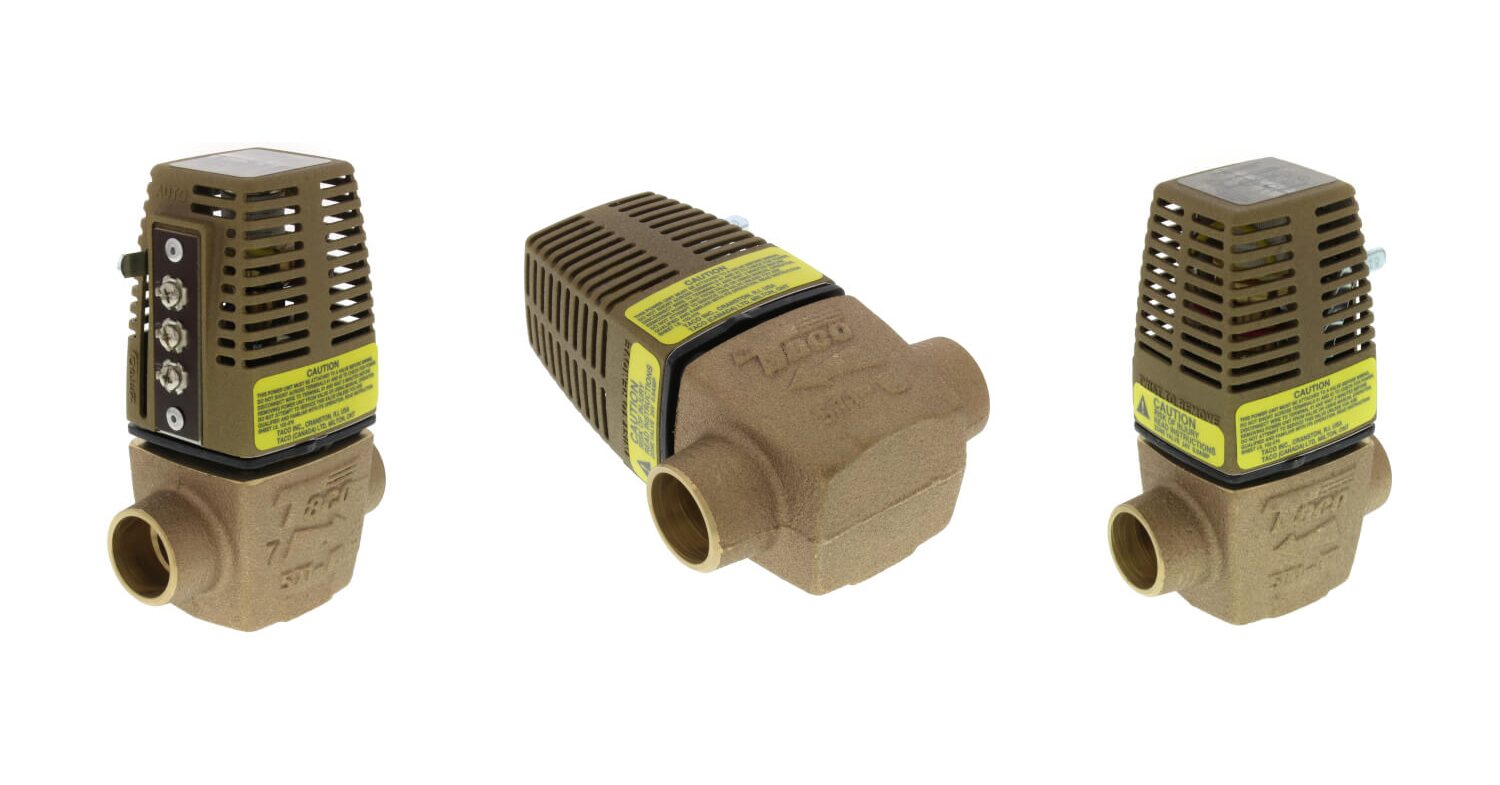
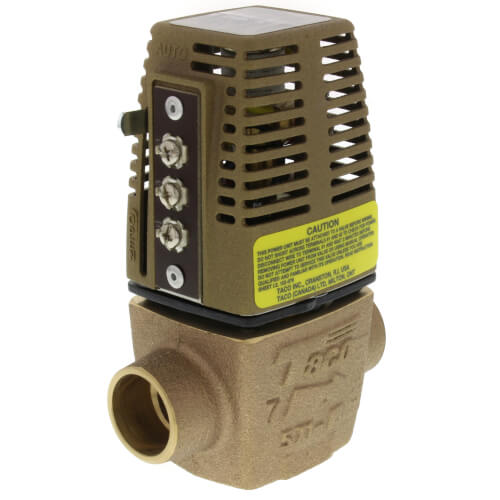
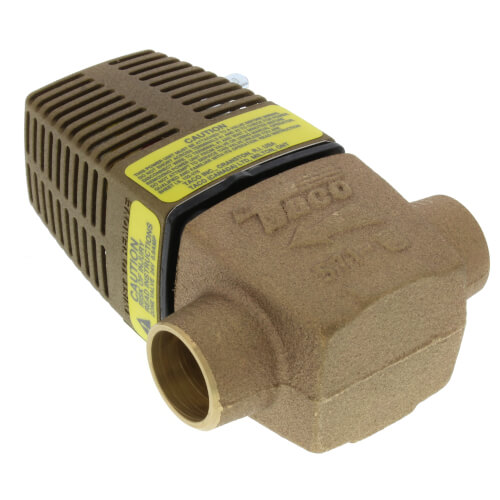
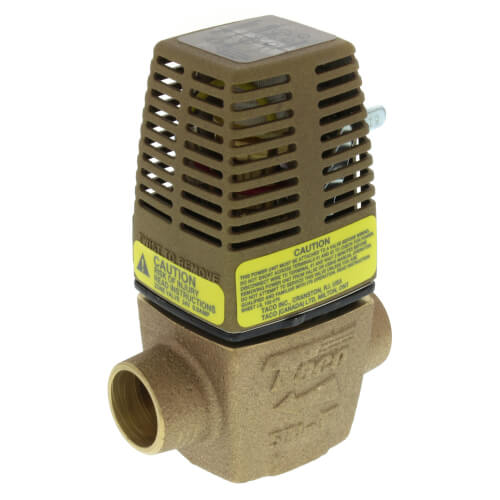
A zone valve has one job: open when the thermostat calls and close when it doesn’t. When it stops doing that job, a room goes cold, a customer calls, and the clock starts on the heating system. Zone valves fail in two directions: stuck open (that zone runs when it shouldn’t, overheating the space) or stuck closed (no heat, no flow, cold room). Both are diagnosable in minutes with nothing more than a multimeter and knowledge of how the circuit works.
How a Zone Valve Works
A hydronic zone valve sits on the supply or return pipe of a heating zone. When the zone thermostat calls for heat, 24V AC energizes the actuator motor, which drives the valve open. On most designs, an end switch closes when the valve reaches the full-open position. That end switch signal either activates the boiler and circulator directly or sends a signal back to a zone valve control module (ZVC) that handles the sequencing. When the thermostat is satisfied, power drops, and a spring closes the valve.
Two-wire zone valves: the thermostat completes the circuit directly. The valve opens, the end switch triggers the boiler and pump.
Three-wire and four-wire zone valves: additional terminals provide the end switch output as a separate signal, used with a ZVC panel for cleaner wiring in multi-zone systems.
Most residential systems use 3/4″ two-way normally-closed valves. The valve body stays in the pipe; the actuator head is the part that wears out and is field-replaceable on most brands.
Symptoms of a Failed Zone Valve
| Symptom | Most Likely Cause |
| Zone always cold, thermostat calling, other zones heating | Valve stuck closed or actuator motor failed |
| Zone always heating regardless of thermostat | Valve stuck open mechanically, or end switch welded closed |
| Boiler fires but no heat to this zone only | Valve not opening, end switch not sending signal to boiler |
| Loud buzz from valve location at startup | Actuator motor strained against a stuck valve body |
| Zone heats intermittently, unpredictably | Loose wiring connection at valve terminals or at ZVC panel |
| All zones cold after a repair or refill | Wiring error at ZVC, or transformer tripped its fuse |
How to Diagnose a Zone Valve in Five Minutes
Step 1: Confirm the zone is actually calling. Set the thermostat for that zone well above room temperature. Verify the thermostat display shows a call for heat.
Step 2: Check for 24V at the valve. With the zone calling, measure across the motor terminals on the valve. A good reading is 24V AC. No voltage means the problem is upstream: the thermostat, thermostat wire, or ZVC panel.
Step 3: Use the manual override lever. Every major zone valve brand (Taco 570/571/572 series, Honeywell V8043 series, White Rodgers 1311 series) has a manual bypass lever or button on the actuator head. Move it to the manual-open position. Feel the supply pipe downstream of the valve. If it warms up within a minute or two, water is flowing and the valve body itself is clear. The actuator head is the failed part.
Step 4: Listen at startup. With the thermostat calling and power restored, a working actuator motor makes a brief, quiet hum as it opens. Continuous buzzing or no sound at all with voltage present points to a failed motor.
Step 5: Test the end switch. With the valve manually held open, measure continuity across the end switch terminals. No continuity with the valve open means the end switch has failed and the boiler isn’t getting its start signal, even when the valve is open. On Honeywell V8043 series, the end switch is built into the powerhead and replaces with it.
Replacing the Actuator Head vs. the Full Valve
On most zone valves, the actuator head (motor, end switch, and linkage) is a separate replaceable part from the valve body (the brass casting that stays soldered in the pipe). Replacing only the head is faster, cleaner, and doesn’t require draining the system.
Replace the head only when: the valve body passes the manual override test (water flows freely), the pipe has no leaks at the valve body, and the valve seat is intact.
Replace the full valve when: the valve body leaks at the body-to-pipe joint, the seat is damaged and the valve leaks through when closed even with the motor off, or the body is visibly corroded.
Full valve replacement requires draining the system down to below the valve, or using isolation valves on both sides of the affected zone if they’re installed. This is why isolation valves on every zone are worth the upfront installation time.
How to Replace a Taco 570/571/572 Series Zone Valve Head
- With the boiler off and the zone thermostat set to off, locate the valve and photograph the wiring connections before touching anything.
- On the Taco 570 series, twist the actuator head counterclockwise to unlock it from the valve body. It lifts straight off. No tools needed.
- On the Taco 571/572 series, press the release tab and pull the head straight up off the valve body.
- Install the replacement head by aligning the drive pin with the valve body slot and pressing or twisting until it locks.
- Reconnect wiring per the photograph. Restore power and call for heat from the thermostat. Verify the valve opens (feel the downstream pipe warm up) and the boiler fires.
Shop Taco Zone Valves including the Taco 571 3/4″ Sweat Zone Valve and the full Zone Valves and Controls category.
How to Replace a Honeywell V8043 Series Zone Valve Head
- Set the zone thermostat to off and shut the boiler down.
- On the V8043 series, the powerhead separates from the valve body by pressing the “Quick Fit” button on the powerhead and pulling it straight off. On older V8043A/B/C/D models, the head may be secured with a retaining clip.
- Note the wiring before disconnecting. The V8043 uses 18″ leads or a terminal block depending on the model. Match the replacement head to the original wiring configuration.
- Snap or clip the new powerhead onto the valve body. Reconnect wiring. Restore power and test.
The Honeywell V8043F1036 3/4″ Zone Valve with Terminal Block is the preferred replacement for systems wiring into a ZVC panel. Browse all Zone Valves and Controls.
Zone Valve Control Modules
On multi-zone systems, a zone valve control module (ZVC) handles the sequencing: each zone thermostat connects to the panel, which sends 24V to the corresponding valve, receives the end switch signal back, and fires the boiler and circulator when any zone is calling. A ZVC panel is far cleaner and more serviceable than a rat’s nest of wiring at individual valves.
Indicator lights on a ZVC panel are the fastest diagnostic tool on the system. A lit indicator for a zone means the thermostat is calling and the ZVC is sending voltage to that valve. If the indicator is lit but the valve isn’t opening, the wiring or the valve head is at fault. If the indicator is off when the thermostat is calling, the problem is in the thermostat circuit or the panel itself.
Shop the Taco ZVC403-4 3-Zone Valve Control Module and the Taco ZVC404-4 4-Zone Control Module at SupplyHouse.
Frequently Asked Questions
Can I swap a Taco zone valve head with a Honeywell head?
No. Zone valve heads are brand and model specific. The drive mechanism, stem dimensions, and end switch configuration differ between manufacturers. Replace with the same brand and series, or swap the entire valve if switching brands.
My zone valve hums but doesn’t open. What’s the problem?
A continuous hum with voltage present usually means the actuator motor is running but the valve body is stuck. Try the manual override lever first. If the lever moves the valve freely but the motor won’t drive it, the motor has lost torque and the head needs replacement. If the manual override is stiff too, the valve seat may be fouled with mineral deposits.
The zone valve opens but the boiler doesn’t fire. What should I check?
The end switch. The boiler fires based on the end switch signal from the zone valve, not from the thermostat directly. Test continuity across the end switch terminals with the valve fully open. No continuity means the boiler never gets its start signal. Replace the powerhead.
How do I drain the system down to replace a full zone valve body?
Close the boiler fill valve. Connect a hose to the boiler drain valve and run it to a floor drain. Open the drain valve and allow the system to drain until the water level drops below the zone valve being replaced. For a zone valve in the basement near the boiler, the whole system may need to drain. For a valve on an upper floor, only that loop’s water needs to come down.
Can a zone valve cause water hammer?
Yes. Zone valves that close quickly against high-velocity flow can cause water hammer. The exact cause depends on system flow velocity, pressure differential, and valve design. Resideo specifically describes the V8043 series as having slow return to help resist water hammer.
My system has three zone valves and they all stopped working at once. What failed?
When all zones fail simultaneously, the problem is almost never all three valves. Check the 24V transformer on the ZVC panel first. A blown fuse or failed transformer takes down all zones at once. Check the panel’s fuse and the incoming 120V supply to the panel.
What is the difference between a 2-wire and 3-wire zone valve?
With a 2-wire valve, the control board does the sequencing. With a 3-wire valve, the valve does it itself. Always check the wiring diagram before connecting, as terminal labeling varies by manufacturer.
Should I replace all zone valves at once or one at a time?
If the system is open for any reason (a failed valve, a pump replacement, a refill), replacing all aging valves at once is the right call. Zone valves on the same system are the same age and have the same run hours. A batch replacement during a planned service is far less expensive than three separate emergency calls over the next two winters.
Flow with It
Zone valve diagnosis is one of the fastest skills to develop in hydronic service. Five minutes with a multimeter and a manual override lever identifies the exact failure point on almost every call. Actuator head swaps take ten minutes and don’t require draining the system. Keeping a few common heads in the van, one Honeywell V8043 powerhead and one Taco 570-series head, covers the vast majority of residential zone valve service calls in the field.
Browse zone valves and controls at SupplyHouse, including Taco ZVC control modules and Honeywell V8043F terminal block zone valves.