
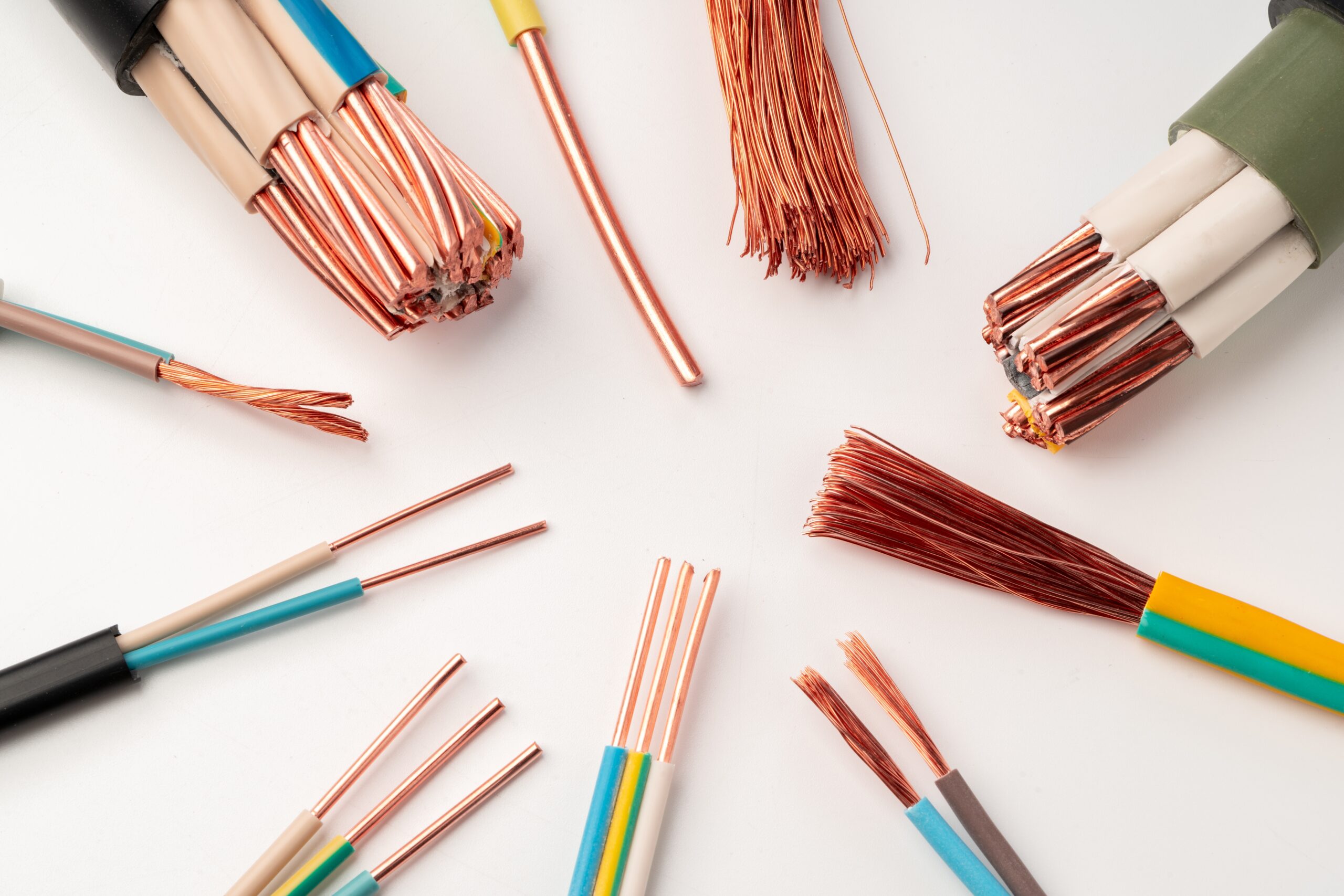
Wire gauge isn’t a suggestion. It’s a safety requirement, and getting it wrong doesn’t just trip a breaker. It starts fires inside walls nobody sees coming. Undersized wire overheats under load, damages insulation, and fails before the circuit breaker protecting it ever trips. The NEC is explicit: each circuit’s wire gauge must match its ampacity. Every circuit. No exceptions.
Here’s how to get it right, start to finish.
Step 1: Understand How AWG Works
The American Wire Gauge system runs counterintuitively. Lower numbers mean thicker wire with higher current capacity. So 10 AWG carries more current than 12 AWG, which carries more than 14 AWG. Here’s the breakdown:
| AWG | Diameter | Ampacity at 60°C | Common Use |
| 14 AWG | 0.064″ | 15 amps | Lighting circuits, standard outlets |
| 12 AWG | 0.081″ | 20 amps | Kitchen outlets, bathroom circuits |
| 10 AWG | 0.102″ | 30 amps | Electric dryers, water heaters, A/C units |
| 8 AWG | 0.128″ | 40 amps | Electric ranges, large A/C units |
| 6 AWG | 0.162″ | 55 amps | Subpanels, large electric ranges |
The non-negotiable rule: wire gauge must match or exceed the ampacity of the circuit breaker protecting it. Running 14-gauge wire on a 20-amp breaker is a code violation and a fire hazard. The wire fails before the breaker trips. A heavier gauge on a lighter breaker, on the other hand, is always acceptable.
Browse electrical wire at SupplyHouse in all standard AWG gauges, both NM-B and THHN.
Step 2: Identify Whether the Job Calls for NM-B or THHN
Before pulling wire, the application determines the cable type.
NM-B Cable (Romex) for Dry Interior Runs
NM-B (Non-Metallic Bonded) cable, called Romex in the field, is the standard for concealed interior residential wiring. The outer jacket color identifies the gauge at a glance:
| Jacket Color | Wire Gauge | Circuit Ampacity |
| White | 14 AWG | 15 amps |
| Yellow | 12 AWG | 20 amps |
| Orange | 10 AWG | 30 amps |
| Black | 8 AWG and 6 AWG | 40 to 55 amps |
| Gray | Underground Feeder (UF-B) | Varies, check label |
NM-B is for dry interior locations only. It can’t be used outdoors, underground, in wet-location conduit, or anywhere subject to physical damage. If the run goes anywhere near moisture or exposure, stop here and go with THHN in conduit.
THHN Wire for Conduit Installations
THHN (Thermoplastic High Heat-resistant Nylon-coated) wire runs as single conductors pulled through EMT, PVC, or rigid conduit. It’s rated for 90°C in dry locations and 75°C in wet locations. When multiple conductors share a conduit, NEC 310.15 requires ampacity derating. Factor that in before sizing.
Browse electrical fittings for EMT and PVC conduit at SupplyHouse alongside wire for conduit runs.
Step 3: Read the Wire Color Code
Inside any cable or conduit run, each conductor has a defined role. Knowing the color code prevents mistakes before they happen.
| Wire Color | Role | Notes |
| Black | Hot (ungrounded) | Standard hot conductor on 120V circuits |
| Red | Hot (ungrounded) | Second hot on 240V circuits; traveler in 3-way switch wiring |
| White | Neutral (grounded) | Carries return current to panel. Still dangerous when energized |
| Gray | Neutral (grounded) | Used in commercial and conduit runs |
| Green | Equipment ground | Carries fault current safely to panel |
| Bare copper | Equipment ground | Standard in NM-B cable |
| White re-marked black | Hot, re-identified | Required by NEC 200.7 when white wire carries hot current |
Step 4: Match the Wire to the Circuit
Here’s where it all comes together. Run through each circuit type below and use the gauge and breaker size listed.
Lighting Circuits: 14 AWG / 15-Amp Breaker
Most light fixtures draw well under 1,500 watts. 14-gauge on a 15-amp breaker handles it. Don’t mix 14-gauge and 12-gauge wire on the same circuit branch. The smallest gauge on the circuit determines its safe ampacity.
General Outlet Circuits: 12 AWG / 20-Amp Breaker
Modern construction typically runs 20-amp circuits for general living area outlets. 12-gauge handles modern electronics and appliances better than 14-gauge, and it leaves room if the circuit is later upgraded.
Kitchen Small Appliance Circuits: 12 AWG / 20-Amp, Dedicated
The NEC requires at least two 20-amp small appliance branch circuits for kitchen counter spaces. Toasters, coffee makers, microwaves, and air fryers all draw significant current. One 15-amp circuit serving all of them would trip before the morning coffee’s done.
Bathroom Circuits: 12 AWG / 20-Amp, Dedicated
Each bathroom needs at least one 20-amp circuit serving only that bathroom’s receptacles. Hair dryers alone draw 12 to 15 amps. Shared circuits don’t survive that load for long.
Electric Dryers: 10 AWG / 30-Amp Breaker
Standard electric dryers require a dedicated 30-amp, 240V circuit. Use 10/3 NM-B cable (two hots, one neutral, one ground) or 10-gauge THHN in conduit.
Electric Ranges: 8 AWG / 40 to 50-Amp Breaker
Most residential electric ranges require a 50-amp, 240V circuit. Use 6-gauge wire for 50-amp circuits. Always check the appliance manufacturer’s installation requirements. The nameplate is the final word.
Central A/C Units: Verify the Nameplate
A/C circuits vary by unit size. Check the MCA (Minimum Circuit Ampacity) and MOCP (Maximum Overcurrent Protection) values on the equipment nameplate. Those numbers specify exactly the wire gauge and breaker size required for that unit.
Electric Water Heaters: 10 AWG / 30-Amp Breaker
Standard 240V electric water heaters need a dedicated 30-amp circuit with 10-gauge wire.
Step 5: Account for Long Runs
Wire gauge also affects voltage drop. Resistance over long runs reduces available voltage at the load end, which means equipment runs harder and less efficiently.
Here’s a working guide:
- Under 50 feet: standard gauge per ampacity requirement
- 50 to 100 feet: consider upsizing one gauge
- Over 100 feet: upsize one gauge minimum; calculate voltage drop if loads are sensitive
Target less than 3% voltage drop on branch circuits per NEC recommendations. The formula: Voltage Drop = Current (amps) x Wire Resistance (ohms per foot x 2 x run length). When in doubt, go heavier.
Step 6: Follow Conduit-Specific Rules
Conduit installations add a few requirements worth getting right before the pull.
Conduit fill: NEC limits the number of conductors sharing a conduit. Overfilling generates heat and requires ampacity derating per NEC 310.15. Size the conduit for the conductor count.
Separate ground wire: PVC conduit requires a separate green or bare copper equipment grounding conductor. EMT conduit can serve as the equipment ground if all joints are electrically continuous.
Wire pulling lubricant: Use listed lubricant on longer conduit runs. Skipping it on a 100-foot pull risks insulation damage that won’t show up until the circuit is energized.
Browse electrical fittings for EMT and PVC conduit at SupplyHouse to complete any conduit installation.
Frequently Asked Questions
What wire gauge is needed for a 20-amp outlet? 12-gauge wire minimum. Using 14-gauge on a 20-amp circuit is a code violation. The wire overheats before the breaker trips.
Can 12-gauge wire be used on a 15-amp circuit? Yes. A heavier gauge than the minimum is always acceptable. Running 12-gauge on a 15-amp circuit is safe and provides headroom if the circuit is ever upgraded to 20 amps.
What’s the difference between 14/2 and 14/3 NM-B cable? 14/2 contains one hot, one neutral, and one ground. 14/3 adds a second hot, which serves as a traveler in 3-way switch wiring or as the second hot in a 240V circuit.
What does AWG stand for? American Wire Gauge. Lower number, thicker wire, higher capacity. So 10 AWG carries more than 12 AWG, which carries more than 14 AWG.
Is Romex the same as NM-B cable? Romex is Southwire’s brand name for NM-B cable. The two terms are interchangeable in the field. NM-B is the NEC designation for the cable type.
What wire gauge does an electric dryer need? A dedicated 30-amp, 240V circuit. Use 10/3 NM-B cable (two hots, one neutral, one ground) or 10-gauge THHN conductors in conduit.
What is THHN and when does it replace Romex? THHN is a single-conductor wire for conduit installations. It’s the right choice when code or the installation requires conduit, such as exposed runs in garages, outdoor conduit runs, or commercial applications. NM-B is for concealed dry interior locations only.
Can different gauge wires mix on the same circuit? No. The smallest gauge wire on any circuit branch determines its safe ampacity. All conductors on the same circuit must be the same gauge.
What color is 12-gauge Romex? Yellow jacket. White means 14-gauge, orange means 10-gauge, black means 8-gauge or larger.
Gauge the Situation: Choosing the Right Wire Size
Wire gauge has no gray area. The wire must match or exceed the circuit’s ampacity, full stop. White jacket for 14-gauge, yellow for 12-gauge, orange for 10-gauge. Match the gauge to the breaker, use THHN in conduit and NM-B for dry interior runs, and never mix gauges on the same branch. SupplyHouse carries electrical wire in all standard AWG gauges, both NM-B cable for interior residential work and THHN conductors for conduit runs, alongside electrical fittings and boxes to complete any circuit installation.