
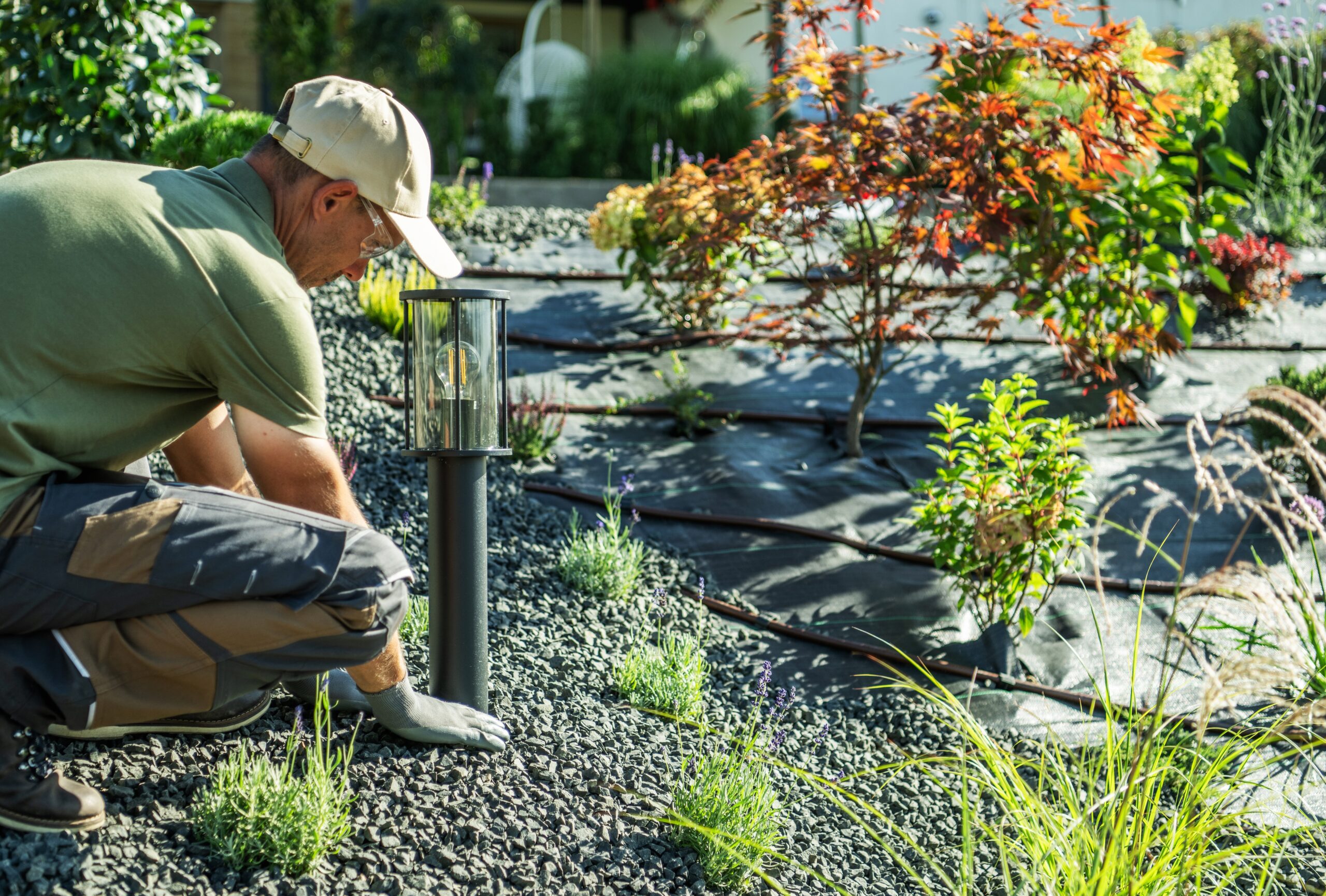
 Most outdoor lighting callbacks don’t start with a bad fixture. They start with the wrong fixture in the wrong spot. A path light standing in for a security flood. A wall sconce rated for damp locations mounted in a zone that sees direct rain. A step light positioned too high, washing the deck instead of defining the tread edge. The fixture type matters before the brand, the finish, or the wattage. Get the category right, and the rest of the decision falls into place quickly. Get it wrong, and the homeowner calls back six months later wondering why the light failed, why the coverage is off, or why the whole scheme looks nothing like the plan.
Here’s how each major outdoor fixture type works, where it belongs, and what specs actually matter at the point of selection.
Fixture Types at a Glance
Six fixture categories cover the vast majority of residential and light-commercial exterior applications. Each has a distinct mounting profile, a lumen range built for its zone, and a minimum IP or UL rating required for the exposure it’ll face. The table below lays them out side by side.
| Fixture Type | Best Zone | Mounting | Typical Lumens | UL/IP Rating Needed |
| Wall Sconce / Lantern | Entryway, patio door, garage | Surface (wall box) | 400–1,200 lm | UL Wet or Damp (location-dependent) |
| Post / Garden Light | Driveway, front walk | Ground post, direct bury | 300–800 lm | UL Wet, IP44 minimum |
| Path / Bollard Light | Walkways, landscape beds | Ground stake or in-ground | 40–200 lm each | UL Wet, IP65 preferred |
| Flood / Security Light | Perimeter, large zones | Wall or eave mount | 1,500–5,000+ lm | UL Wet, motion sensor optional |
| Step / Deck Light | Stairs, risers, deck perimeter | In-wall or surface, low-mount | 20–80 lm each | UL Wet, IP67 for exposed installs |
| Accent / Spotlight | Trees, architectural features | Ground stake, adjustable head | 100–700 lm | UL Wet, IP65 preferred |
Every fixture listed above is available through the SupplyHouse Lighting category. The sections that follow break down each type in the detail needed to spec them correctly.
Wall Sconces and Lanterns: Entryways, Patios, and Garage Facades
Wall sconces and lanterns do two things simultaneously: they signal arrival and light the immediate approach. A front-entry sconce flanking a door needs enough output to illuminate faces at the threshold without creating harsh glare into the eyes of anyone walking up. Aim for 400–800 lumens per fixture for a standard single-door entry. A wide double-door or covered portico benefits from 800–1,200 lumens per side, or a pair of fixtures mounted at eye level, roughly 66–72 inches from the finished floor to the fixture center.
UL rating is the critical selection gate. A sconce under a deep covered porch that doesn’t see direct weather typically qualifies for a UL Damp rating. The same fixture style mounted fully exposed above a garage door, where rain hits the face directly, must carry a UL Wet listing. Don’t let aesthetics drive the decision past code. The fixture can look identical in both ratings. Choose based on where it actually sits.
Mounting requires a weatherproof junction box at the wall. Lap siding installations benefit from an angled mounting adapter rather than shimming the fixture off a flat plate. Use a watertight seal at the wall penetration regardless of rating.
Post and Garden Lights: Driveways and Front Walks
Post lights and garden lights handle the longer runs: driveways, front walk approaches, and the transitions from street to entry. The Arlington Gard-N-Post system is the practical backbone of most residential post light installations. The Arlington GPP60B Pagoda-Style Landscape Fixture and the Arlington GP19B Garden Post are built from UV-rated non-metallic plastic, resist damage from lawn equipment, and accommodate standard light fixtures alongside GFCI devices in the same post. The GP19B runs 19 inches above grade; the GP26B Gard-N-Post adds height for applications where the fixture needs to clear surrounding plantings.
For post light spacing on a residential driveway, 20–30 feet between fixtures is a reasonable working range. Output needs to read from a moving vehicle, so target 600–800 lumens per fixture minimum. On a pedestrian front walk, 300–500 lumens per fixture is sufficient, spaced at 8–12 feet.
Underground wiring to post lights typically runs in PVC conduit from the structure to the post location. For conduit selection specifics, including when to use Schedule 40 versus Schedule 80 and how to handle buried runs, the PVC vs. Metal Conduit guide on Real Talk covers the decision matrix in full
Path and Bollard Lights: Walkways and Landscape Beds
Path lights define a path. The goal isn’t to flood a walkway with light, it’s to mark the edge clearly enough that anyone walking it at night can see where the pavement ends and the planting bed begins. An overpowered path light creates glare that actually reduces visual acuity at the edges. A well-placed 100-lumen path light at the right height and spacing outperforms a 400-lumen unit aimed badly.
Standard mounting height for residential path lights runs 18–24 inches above grade. Stake-mount units need firm soil or a concrete collar in unstable ground. For hardscaped walkways and patios, in-ground well lights or surface-mount step lights are more appropriate than stake-mount path lights, which lack the stability for a paver or concrete substrate.
IP65 is the realistic minimum for stake-mounted path lights and bollards. Anything lower risks moisture ingress into the driver housing after a season of irrigation spray and rainfall. In climates with freeze-thaw cycles, check that the fixture housing is rated for low-temperature operation, since some budget landscape fixtures aren’t listed below 32°F, which leads to cracking at the seal
Flood and Security Lights: Perimeter and Large Coverage Zones
Flood lights are the workhorses of perimeter security lighting. A 2,000–3,000 lumen LED flood mounted at eave height (10–14 feet) covers roughly a 30-foot radius at a level useful for identifying detail. Security lighting isn’t just about brightness; it’s about eliminating shadow zones. A single powerful fixture creates sharp shadows; two or three moderate fixtures aimed to overlap do a better job covering the whole perimeter without leaving dark gaps near foundation plantings or fence lines.
Motion sensor integration is worth specifying on every security and perimeter flood. A motion-activated flood that trips during a dusk-to-dawn photocontrol window is both more energy-efficient and more attention-getting than a light that runs constant all night. Check the Motion Sensors category and the Photocontrols category for compatible control hardware. The Intermatic NightFox EK4436SM Metal Stem Photocontrol carries a 15-year design life and handles LED loads up to 1,650W at 277VAC; a solid choice for multi-fixture exterior circuits.
Flood light mounting hardware matters. Eave and fascia mounts need proper lag screw penetration into structural framing, not just sheathing. For exposed side-wall applications, a weatherproof outlet box with a gasket cover is required before mounting the fixture.
Step and Deck Lights: Stairs, Risers, and Deck Perimeters
Step lights and deck lights are the most underspecified fixture category in residential outdoor lighting and the one that generates the most safety-related callbacks when they’re wrong. The goal is simple: define the tread edge. A 40–80 lumen fixture recessed into the riser face at the centerline of the tread achieves that. Anything brighter creates glare that washes out the shadow of the tread edge, making the step harder to read, not easier.
Mounting options split into recessed-in-riser and surface-mount-on-riser. Recessed units require a clean box cut in the riser face with a weatherproof housing behind. Construction timing matters here, because cutting a poured concrete or mortar-set stone riser after the fact is far more work than blocking for the boxes during construction. Surface-mount units give more flexibility on retrofit projects but need a flush substrate and a watertight seal.
For deck perimeter lighting, recessed deck lights installed between boards or in fascia serve both task and accent functions. Run the wiring in conduit or a listed raceway before decking goes down. Running it after requires either surface-mounted raceway or pulling boards — neither is ideal.
Accent and Spotlights: Trees, Architectural Features, and Landscaping
Accent and spotlights create depth and drama in an exterior lighting plan. An uplight on a well-shaped tree at 300–400 lumens transforms a dark corner of a property into a focal point. Used carelessly, with too many fixtures, too high output, and all aimed in the same direction, they wash everything into a flat, overlit plane that looks more like a parking lot than a designed landscape
The adjustable head is the defining feature of a good accent spotlight. Fixed-head units look fine during installation, but plants grow. A spotlight locked at a fixed angle that worked perfectly in year one is pointing at the lower trunk by year three. Specify adjustable-knuckle or swivel-mount fixtures for any plant-based accent application.
For ground-stake accent lights in irrigated planting beds, IP65 is the floor. Irrigation spray hits these fixtures directly and frequently. IP67 is worth specifying near water features or in areas with drainage patterns that create temporary pooling. The extra IP rating costs little at the specification stage and prevents a lot of fixture replacement down the road.
Color Temperature: Matching the Mood to the Zone
Color temperature is one of the most consequential decisions in outdoor lighting and one of the least discussed in project specs. The table below covers the practical ranges for residential and light-commercial exterior applications.
| Color Temp (CCT) | Appearance | Best Application |
| 2700K | Warm white / amber | Entryways, patios, landscape accent lighting |
| 3000K | Soft white | Covered patios, transitional zones, steps |
| 4000K | Neutral / crisp white | Driveways, security lights, task zones |
| 5000K+ | Daylight / blue-white | Commercial perimeters, high-security applications |
The 2700K–3000K range works for nearly all residential entryway and landscape accent applications. It reads warm, welcoming, and residential. Security and task lighting benefits from 4000K. Avoid 5000K in residential landscape contexts because it reads institutional rather than intentional.
Controls: Timers, Photocontrols, and Smart Plugs
A well-chosen fixture is only as good as its control strategy. Running exterior lights manually is how good intentions turn into lights-on-at-noon or lights-off-by-9pm. Three control approaches cover most applications:
- Photocontrols: Dusk-to-dawn operation based on ambient light levels. The Intermatic NightFox series is the standard for hardwired post, wall, and flood applications. Browse the full Photocontrols category at SupplyHouse for stem-mount, button-mount, and swivel-mount options.
- Motion sensors: Best paired with photocontrols for perimeter and security applications. On their own, motion sensors can leave zones dark when activity is low but the area still needs ambient light. The Motion Sensors category at SupplyHouse covers Leviton and compatible control options.
- Smart plugs and controllers: For low-voltage landscape lighting plugged into outdoor receptacles, the Lutron Caseta PD-15OUT-BL Weatherproof Outdoor Smart Plug is IP65-rated, handles up to 15A, and works with a wide range of LED landscape loads and string lights. Scheduling through the Caseta app eliminates manual adjustments for seasonal daylight changes.
For patio applications with string lights, the String Lights category at SupplyHouse covers both construction-grade and residential-rated options. Pair with a smart plug or photocontrol for hands-off operation.
For installations where dimming exterior fixtures is desirable, such as covered porches and outdoor dining areas, verify that the fixtures are dimmable LED and review the dimmer switch installation guide on Real Talk for circuit requirements and compatibility notes.
Mounting Hardware and Weatherproofing Accessories
The fixture category drives mounting hardware requirements. The Outdoor Lighting Covers and Accessories category at SupplyHouse stocks the Gard-N-Post system, mounting adapters, and weatherproofing accessories for post and ground applications. A few specific notes by fixture type:
- Wall sconces: Use a listed outdoor fixture box with gasket seal. Lap siding surfaces need a mounting block or wedge adapter to achieve flush contact between the canopy and the wall surface.
- Post lights: The Arlington garden post products solve the mounting and GFCI enclosure challenge in a single unit. Non-metallic, UV-rated, and available in colors that blend with most residential exterior palettes.
- Path and accent lights: Stake-mount units in loose or irrigated soil benefit from a concrete collar or a listed landscape light mounting spike. Standard plastic stakes in clay or sandy soil pull out after one growing season.
- Step and deck lights: Recessed housing boxes need to be installed before the finish surface goes down. Plan the layout during rough-in, not after the pavers are set.
Frequently Asked Questions
What’s the difference between a UL Wet and UL Damp rating?
A UL Wet-rated fixture can handle direct water contact: rain, sprinkler spray, or hose-down. A UL Damp-rated fixture handles moisture and condensation but shouldn’t see direct water. A covered porch fixture under a deep soffit often qualifies for Damp. An exposed wall by a garage door needs Wet. When in doubt, specify Wet.
How many lumens do outdoor fixtures actually need?
Path lights: 40–200 lm each, spaced 6–10 ft apart. Entryway sconces: 400–800 lm per fixture, higher for large double-door entries. Flood and security lights: 1,500–5,000 lm depending on zone size. Step lights: 20–80 lm each, enough to define the tread edge without glare.
What color temperature works best for residential outdoor lighting?
The 2700K–3000K range handles most residential applications well. It reads warm and welcoming at entryways and patios. Security and driveway lighting benefits from 4000K, which delivers better contrast and visibility without the harshness of daylight-spectrum sources.
Do all outdoor circuits require GFCI protection?
NEC Article 210.8 requires GFCI protection for all 125V, 15A and 20A receptacles in outdoor locations. Lighting circuits have different requirements depending on jurisdiction and application, but GFCI protection is strongly recommended for any outdoor lighting circuit near grade, water features, or wet zones. Always verify with the local AHJ.
Can a dimmer switch work on outdoor fixtures?
Yes, provided three conditions are met: the fixture is dimmable-listed, the driver or lamp is compatible with the dimmer, and the control device is rated for outdoor use or installed indoors on a properly protected circuit. The dimmer switch installation guide on Real Talk covers circuit requirements in detail.
What’s the minimum IP rating for a fully exposed landscape spotlight?
IP65 is the practical floor for fully exposed outdoor fixtures. It covers dust-tight construction and protection against water jets from any direction. Ground-mounted or in-ground fixtures in areas with potential standing water should meet IP67 or higher.
When does a landscape post light need conduit vs. direct burial cable?
Direct burial cable (UF-B rated) can run without conduit at the correct burial depth: 24 inches under most NEC rules, 12 inches with GFCI protection. Conduit is required anywhere the run is exposed above grade or in areas subject to physical damage. It also simplifies future wire replacement. The conduit comparison guide on Real Talk covers the full decision matrix.
Do photocells and motion sensors work together?
Yes. Pairing a motion sensor with a photocontrol gives dual-layer control: the photocontrol blocks activation during daylight, and the motion sensor determines activation at night only when movement is detected. The Intermatic NightFox series handles photocontrol duties and works alongside separate motion detection hardware.
How should path lights be spaced for adequate coverage?
Space path lights at roughly twice the mounting height, or 6–10 feet apart for fixtures mounted 18–24 inches above grade. Stagger them on alternating sides of the path rather than running them straight down one side. Alternating placement gives broader coverage and a more natural appearance.
What’s the best fixture material for coastal or high-humidity environments?
Solid brass, marine-grade aluminum with powder coating, and stainless steel outperform standard aluminum or zinc die-cast in salt-air and high-humidity conditions. Verify that the finish is specifically rated for coastal exposure. Powder-coated finishes without an aluminum substrate tend to pit and corrode faster in those environments.
Lighting Your Space with Confidence
The first call on any outdoor lighting project shouldn’t be the fixture catalog, it should be the zone map. Which areas need safety lighting? Which areas need accent? Which fixtures face direct weather, and which live under a covered porch? Answer those questions first, and the fixture type selection becomes straightforward.
Wall sconces anchor entryways. Post lights cover driveways and front approaches. Path lights define walkway edges without glare. Flood lights handle perimeter coverage. Step lights mark tread edges. Accent lights create depth and focal points in the landscape. Each has a correct lumen range, IP rating, and mounting approach for the zone it serves. Ignore those parameters and the installs that looked good in the showroom start generating callbacks before the first season ends.
The Gard-N-Post system, Intermatic photocontrols, and Lutron smart plug controls at SupplyHouse give professionals a reliable hardware stack to back up a well-designed lighting plan. Browse the full Lighting category, the Outdoor Lighting Covers and Accessories section, and the Photocontrols category at SupplyHouse to spec the full job. Fast shipping and the hardware to back up a plan that actually works the first time around.