
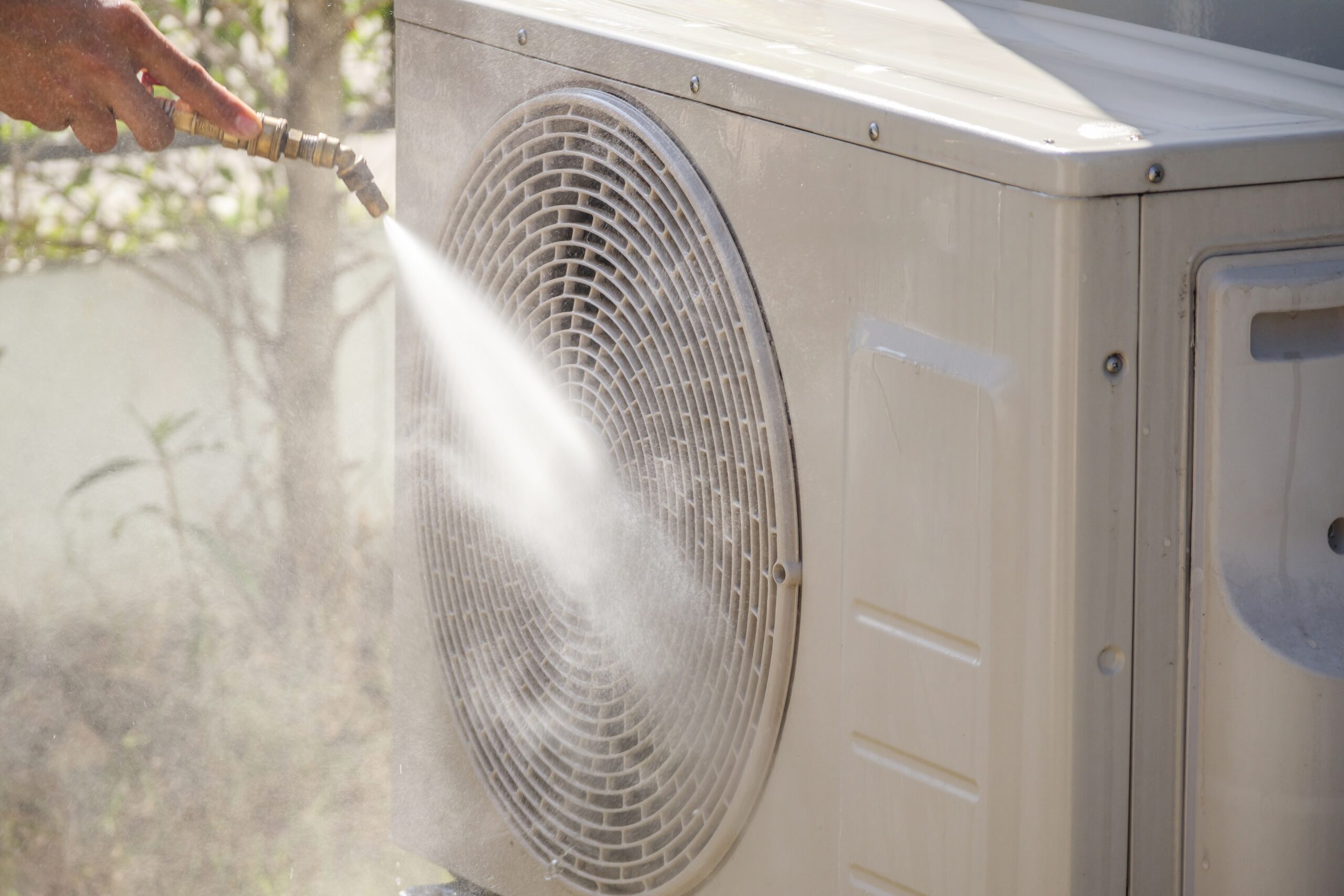
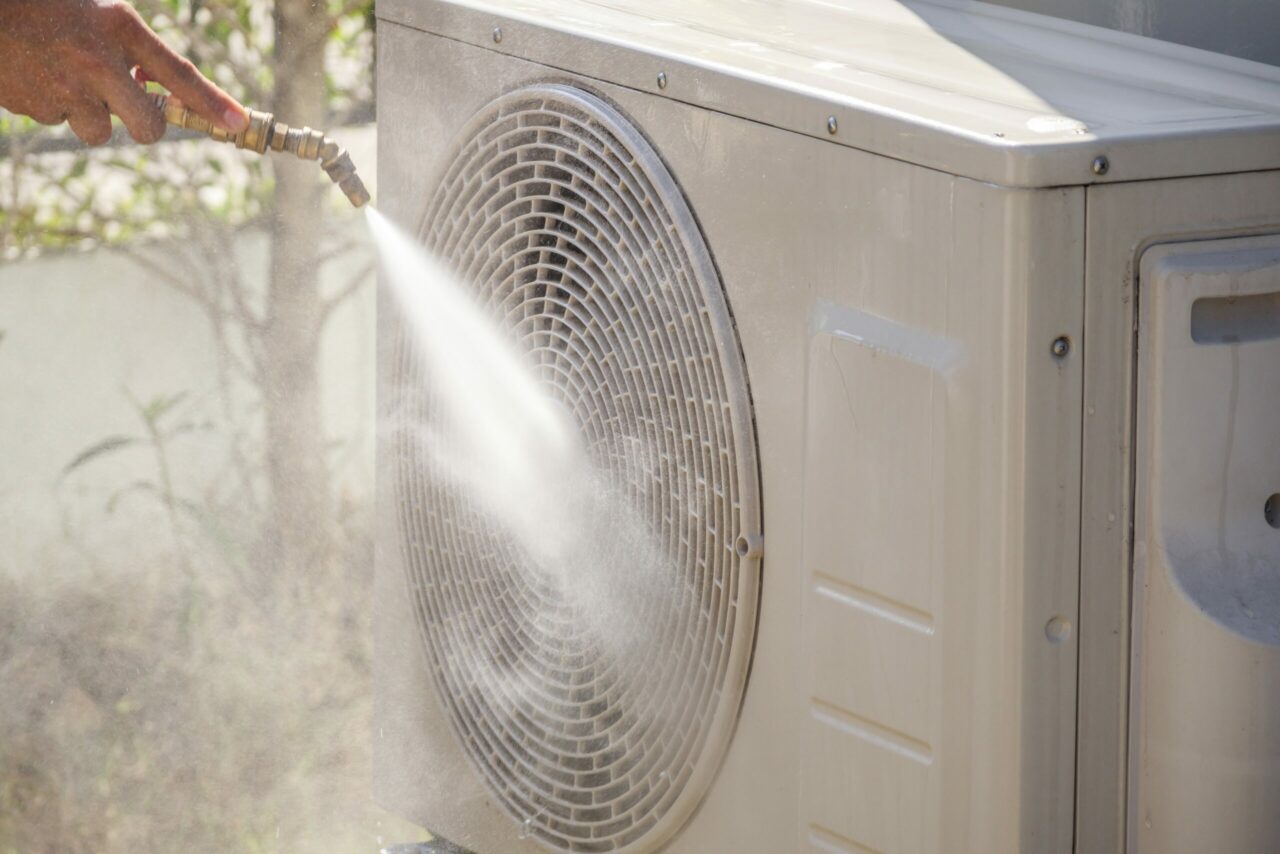
The condenser unit outside has one job: take the heat pulled from inside the house and dump it into the outdoor air. When the coils are caked in cottonwood, pollen, grass clippings, or general grime, heat cannot escape efficiently. Studies on condenser coil fouling show that heavily dirty coils can reduce system efficiency by 20%, which means longer run times, higher electric bills, and a compressor working at sustained elevated temperatures that shortens its lifespan.
A thorough condenser cleaning takes about 30 minutes. Do it every spring before the first real heat wave.
What Is Needed Before Starting
- Non-contact voltage tester
- Garden hose with adjustable spray nozzle
- Fin comb to straighten bent fins
- Foaming AC coil cleaner (recommended for heavy buildup)
- Work gloves
- Soft-bristle brush for debris removal
Do not use a pressure washer. Do not use a standard air compressor. Both flatten the aluminum fins and create airflow restrictions worse than the original fouling.
Step 1: Shut Off Power Completely
Find the disconnect box mounted near the outdoor unit. Pull the handle or flip it to off. Then cut power at the main electrical panel as well. The capacitor inside a condenser stores a significant electrical charge and can release it even after the unit stops running. A non-contact voltage tester confirms power is off before touching anything.
Step 2: Inspect Before Cleaning
- Fins: check for sections bent or matted flat. A fin comb straightens them.
- Fan blade: confirm it spins freely with no cracked or missing sections.
- Refrigerant lines: look for oily residue on the copper lines, a telltale sign of a refrigerant leak.
- Electrical connections: check for visibly corroded or loose wire connections at the contactor.
- Clearance: confirm at least 18 to 24 inches of clear space on all sides.
Step 3: Remove Loose Debris
Before wetting anything, remove loose debris from the top and sides. Leaves and cottonwood that pack against the coil from the outside can usually be peeled away by hand or with a soft-bristle brush. Do not push debris into the coil.
Step 4: Apply Coil Cleaner for Heavy Buildup
For a lightly dirty coil, a garden hose rinse is enough. For a coil that is visibly matted or has not been cleaned in more than a year, a foaming coil cleaner does significantly better work. Apply per the product’s instructions. Most formulations foam on contact, penetrate the debris, and rinse clean without scrubbing. Let it dwell for five minutes.
Step 5: Rinse From the Inside Out
This is where most people get it wrong. Rinse the coil from the inside of the unit outward, not from the outside in. Spraying from the outside pushes dirt deeper into the coil. Set the hose to a moderate fan spray. Work in sections around the circumference. Rinse until the water runs clear.
Step 6: Straighten Bent Fins
After rinsing, go around the coil with a fin comb and straighten any bent sections. The fins are aluminum and bend easily, so use light pressure. A fin comb with multiple tooth spacings covers different coil densities.
Step 7: Flush the Condensate Drain
While the system is down, flush the condensate drain line. Pour a cup of white vinegar down the access port on the indoor air handler. For condensate systems needing more attention, browse condensate removal pumps at SupplyHouse for both standard and mini split applications.
Step 8: Reassemble and Restart
Replace the disconnect, restore power at the panel, and wait five minutes before starting the system. Start it and confirm the outdoor fan is spinning, the compressor is running, and the discharge air from the house is noticeably cooler than the supply air temperature.
How Often to Clean the Condenser
| Environment | Cleaning Frequency |
| Average suburban home | Once per year (spring) |
| Heavy cottonwood or pollen area | Twice per year (spring and fall) |
| Near construction or heavy dust | Monthly inspection, clean as needed |
| Coastal or salt-air environment | Twice per year minimum |
Frequently Asked Questions
How often should an AC condenser unit be cleaned?
Once per year minimum, in spring before heavy use begins. In high-pollen areas or near construction, twice per year is reasonable. Check the unit monthly and clear any visible debris accumulation between full cleanings.
What happens if the AC condenser is never cleaned?
Fouled coils force the compressor to run longer and hotter. Over time: higher electric bills, reduced cooling capacity on hot days, and significantly shorter compressor lifespan. A compressor replacement runs $1,200 to $2,500 in parts. The cleaning that prevents it takes 30 minutes.
Can a pressure washer be used on condenser coils?
No. Pressure washers bend and flatten the aluminum fins, creating permanent airflow blockages. Use a garden hose at moderate pressure, always rinsing from the inside of the coil outward.
Why does water pool around the AC unit after cleaning?
That is normal during the rinse process. A small amount of condensate draining from a running unit is also normal. A large continuous puddle unrelated to cleaning or normal operation can indicate a drain line blockage.
Should the area around the condenser be landscaped differently?
Minimum 18 to 24 inches of clear space on all sides is standard. Shade on the condenser from trees or structures is actually beneficial. A unit shaded from direct afternoon sun runs more efficiently.
Is there a difference between cleaning the condenser and the evaporator coil?
Yes, significantly. The condenser is the outdoor unit and is straightforward to clean. The evaporator coil is inside the air handler and requires removing access panels. Evaporator coil cleaning is a professional job in most cases. Keeping the filter clean is the primary way to protect the evaporator coil from fouling.
Does cleaning the condenser actually cool the house better?
On a measurably dirty coil, yes. Research shows fouled condensers reduce efficiency meaningfully. The difference is most noticeable on the hottest days, when the system is working closest to its design limits.
Cleaning the condenser is the single highest-impact seasonal maintenance task on a central AC system. Thirty minutes of work each spring restores rated cooling capacity, cuts run time, and extends compressor life. The tools are basic, the process is straightforward, and the alternative is a premature compressor replacement that costs more than a few years of skipped cleanings combined. Check out the spring startup guide on the SupplyHouse blog for everything else the system needs before summer.